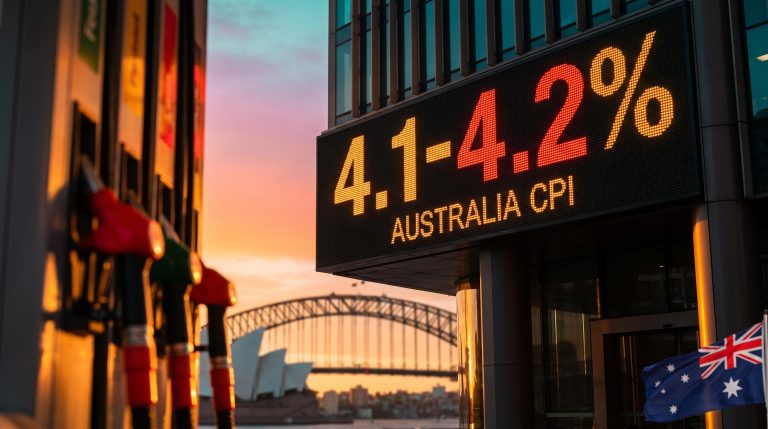
The dollar pushed toward ¥158.00 in Asian trade on Wednesday, its fourth consecutive daily gain against the yen. The move arrived hours before a Federal Reserve decision, two days before a Bank of Japan (BoJ) meeting, and while vote counting in Israel kept oil prices moving, three forces now shaping any near-term USD/JPY forecast.
Each of these catalysts pushes on the same currency pair through a different channel. Oil feeds Japan’s import bill, the Fed sets the dollar side of the interest rate gap, and the BoJ controls the yen side.
When all three arrive within a single week, the pair’s next direction is likely to be set in days rather than months.
Here is which catalyst matters most, the price levels worth watching, and the structural logic that explains why the yen reacts the way it does.
Why is oil pushing the yen lower while the Israeli vote is still undecided?
The oil channel
The chain starts with crude. According to CNBC TV18, Brent traded near $114.36 and WTI near $100.24 in early Asian trade, rebounding after two sessions of declines. The Straits Times reported Brent up more than 85% in 2026.
Japan imports most of its energy, so every dollar added to crude enlarges its import bill. That worsens Japan’s terms of trade, meaning the price of what it sells abroad falls relative to the price of what it buys. It can also push inflation higher without any matching rise in domestic demand, which leaves the BoJ facing price pressure it did not create.
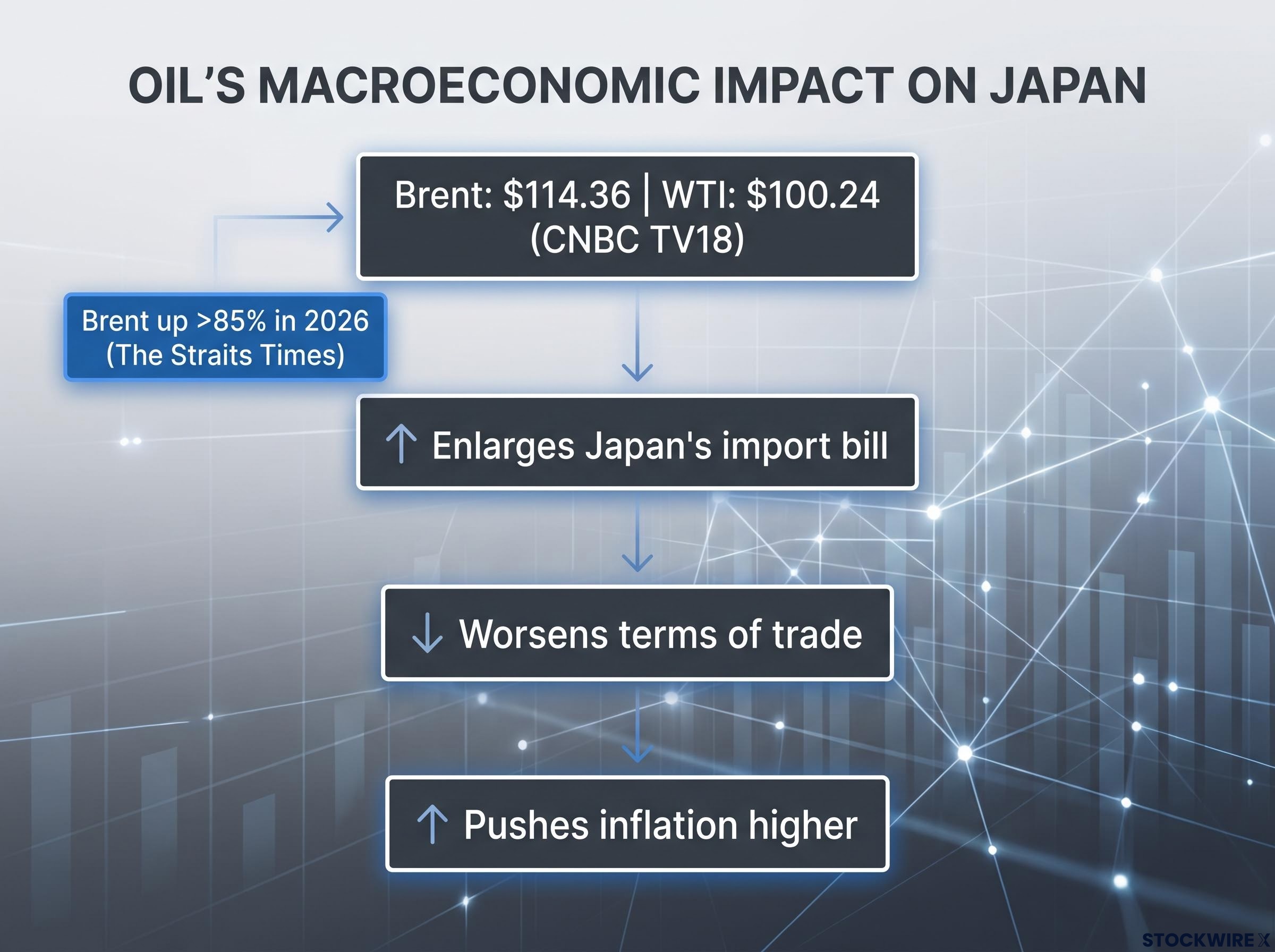
TradingKey and FXStreet analyst Akhtar Faruqui both linked the yen’s slide to these rising import costs.
The election variable
The next link in the chain is Israel. Exit polls showed a close race between Benjamin Netanyahu and opposition leader Gadi Eisenkot, with no bloc holding a clear majority.
- A Netanyahu win or continued influence could preserve the oil risk premium.
- An Eisenkot-led government could lower the risk of escalation.
- The result was still unresolved in the latest reports on 28 October.
Market view Robert Yawger of Mizuho Securities suggested a Netanyahu loss could make it harder for Donald Trump to continue alone (reported, not independently confirmed).
The uncomfortable part is that the result cuts both ways for the yen. Escalation can support the yen as a safe haven, but a heavier energy bill can easily outweigh that effect. For you, this means a headline from Jerusalem can move your USD/JPY exposure within hours, even though oil may not look like a currency input at first glance.
The same oil shock can push the pair in opposite directions on different days because the yen responds to competing channels, including US rates, risk sentiment and intervention risk, alongside energy costs.
What do the Fed and BoJ decisions mean for the USD/JPY forecast?
The two meetings
Both central banks are expected to hold. Neither hold is likely to be the real story.
| Central bank | Policy rate | Meeting date | Expected outcome | December hike pricing |
|---|---|---|---|---|
| Federal Reserve | 3.75%-4.00% | 28 October | Hold (about 92.8%, CME FedWatch) | 76.2%-84.4% |
| Bank of Japan | 1.25% | 30 October | “Hawkish pause” | Most economists polled expect 1.50%, mainly in December |
Source note: December Fed probabilities vary with the timing of each CME FedWatch snapshot. Reuters poll figures are not independently confirmed.
A Reuters poll found that 94 of 100 economists expected a Fed hold and all 100 expected a December hike (unverified). Fed Chair Kevin Warsh said on 16 October that he did not “prejudge” meetings.
On the Japanese side, the BoJ raised rates by a combined 50 basis points in June and September (one basis point equals 0.01 percentage points). Roughly 70% of economists (54 of 78) expect the rate to reach 1.50% this quarter. Governor Kazuo Ueda said underlying inflation was “quite close” to 2%, and Deputy Governor Ryozo Himino described it as near target (both unverified).
The gap between roughly 4% in the US and 1.25% in Japan rewards the carry trade, which means borrowing in the low-yielding yen to hold higher-yielding dollars. A “hold” headline from either bank is therefore not neutral for you. The tone each bank strikes on December will decide whether that carry advantage persists or begins to erode.
A shift in the carry trade matters well beyond the currency pair, because traders unwinding yen-funded positions must sell the assets they bought, which can amplify volatility in equities, credit and emerging markets.
Intervention as a ceiling
Tokyo’s history acts as a soft cap on the pair, although no intervention near ¥158 had been confirmed by 28 October.
MUFG set a weekly range of 154.50-158.50 and warned that a sustained break above 158.50 would be difficult.
The precedents show why that cap tends to bend rather than hold. Japan intervened near ¥152 in 2022 and again after the pair hit ¥160.245 in 2024. Both times the yen rallied only briefly, because the interest rate gap stayed wide.
What are the key levels and scenarios, and what structural forces sit behind them?
The chart read
FXStreet’s daily chart points to a mildly bullish setup:
- Spot: 158.00
- 50-period EMA: 157.96
- Nine-period EMA: 157.76
- 14-day RSI: about 52
- Distant support: FXS Fed Sentiment Index base near 127.51, a long-term macro reference rather than a near-term target
An exponential moving average (EMA) is an average price that gives more weight to recent sessions. The relative strength index (RSI) measures momentum, and a reading near 52 means the pair is not overbought. With price holding above both EMAs, buyers appear to be stepping in on dips.
For you, the cluster at 157.8-158.0 is the line that separates a routine pullback from a genuine change in trend.
Three scenarios
| Scenario | Trigger | USD/JPY implication | Key risk |
|---|---|---|---|
| Yen rebound | December BoJ hike, hawkish Outlook Report, oil below $100 | Gap narrows, short covering | A hawkish Warsh offsets the move |
| Dollar strength | Fed keeps December live, BoJ only pauses | Retest of 159-160 | Intervention |
| Intervention | Rapid, one-sided move toward ¥160 | Sharp initial reversal | Rate gap unchanged |
The structural forces behind the yen
- Policy divergence: Ultra-loose BoJ policy from 2013 to 2024 weakened the yen, and its gradual unwinding now offers support.
- Yield gap: The 2024 shift has begun narrowing the gap between US and Japanese bond yields, which had long favoured the dollar.
- Safe-haven status: The yen tends to strengthen during market stress.
Unlike in 2022, Japan is now in a tightening cycle. If markets believe that cycle will continue, it could give the yen more durable support. It also explains why a break lower would likely need a policy catalyst, not just one bad trading session.
The structural forces behind the yen operate across different time horizons, with BoJ policy and safe-haven flows driving short-term moves while yield differentials and Japan’s net creditor position shape the medium and long-term picture.
What the next 72 hours can settle, and what they cannot
Today’s Fed decision is the catalyst most likely to move the pair first, followed by Friday’s BoJ meeting. Oil and the Israeli count remain the wildcard running underneath both.
The holds themselves matter less than the tone each bank sets on December. Watch ¥158.50 and the ¥160 zone, where yen strength or official action is most likely to appear.
For the BoJ, forward guidance carries more weight than the decision itself: hawkish phrasing can extend yen gains, while cautious wording risks a sell-the-news reaction even when the policy rate is unchanged.
The signals to track are Warsh’s wording, the BoJ Outlook Report and whether Brent holds above or below $100. Figures reflect reports as of 28 October 2026 and may change as results and decisions come in.
This article is for informational purposes only and should not be considered financial advice. Investors should conduct their own research and consult with financial professionals before making investment decisions. Past performance does not guarantee future results. Financial projections are subject to market conditions and various risk factors.