
ClearVue Locks in Global Solar Panel Certifications Opening Door to Revenue
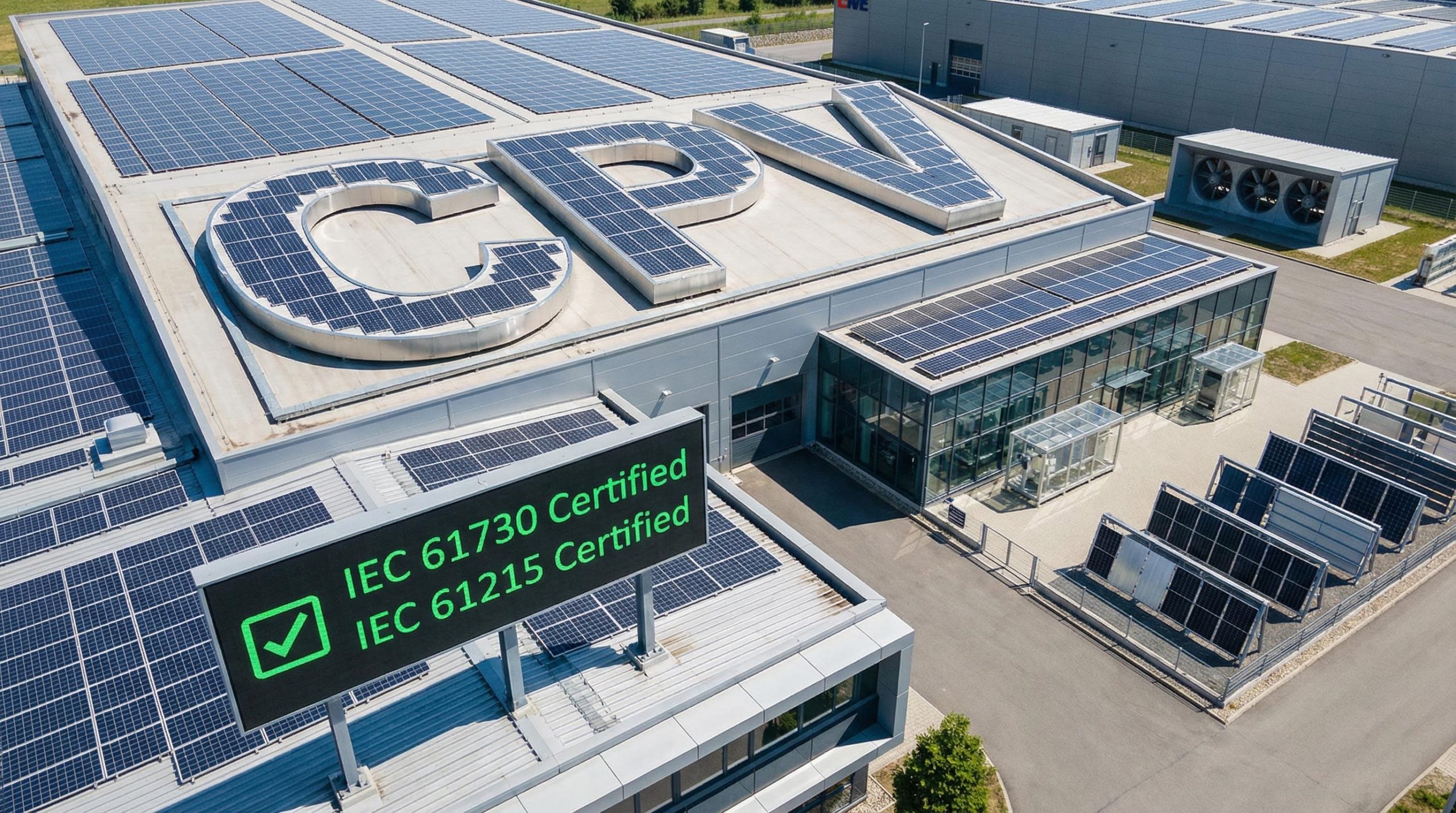
ClearVue Technologies (ASX: CPV) has achieved ClearVue IEC Certification Achievement for its metal-backed solar panels, with certifications to IEC 61730 (2023) and IEC 61215 (2021) now secured in partnership with Helios Power Co. Ltd. The company has commenced Australian Clean Energy Council (CEC) certification, removing a critical barrier to commercial deployment in domestic markets.
ClearVue secures global certification milestone, advancing commercial deployment
The newly certified metal-backed solar panels meet IEC 61730 (2023) safety standards and IEC 61215 (2021) performance requirements. IEC certification represents a globally recognised benchmark for photovoltaic module safety, durability and performance, positioning the ClearVue-Helios solution for specification in commercial building projects worldwide.
Fire safety classification has been achieved at IEC 61730 / UL 790 Class A, the highest rating available. The certification process validates both the safety profile and technical performance of the building-integrated photovoltaic (BIPV) rooftop and car park solar solutions developed through the strategic partnership.
Australian CEC certification for the domestic market commenced immediately following IEC certification achievement. CEC approval is specifically required for commercial solar installations across Australia, representing the final regulatory step before full-scale market deployment in the company’s home jurisdiction.
The certification milestone unlocks revenue opportunities across global markets where IEC standards are recognised. Developers, building owners and engineering partners can now specify the certified products in commercial projects with regulatory confidence.
Product advantages driving market differentiation
The metal backplate innovation delivers distinct performance and longevity benefits compared to traditional photovoltaic installations:
- Weatherproof barrier extending existing roof lifespan by protecting underlying roofing materials from environmental exposure
- Fire safety Class A rating according to IEC 61730 / UL 790 standards, meeting stringent building code requirements
- Improved wind load and typhoon resistance versus standard rooftop PV panels through enhanced structural integrity
- Steel backsheet option allows maintenance access with trafficable surface capable of supporting personnel weight
- Aluminium option enables installation on structurally limited roofs unable to accept traditional solar panel loading
The dual material approach addresses two distinct market segments. Steel-backed panels suit commercial rooftops requiring regular maintenance access, whilst aluminium variants target heritage buildings, older structures and installations where weight constraints prevent conventional solar deployment.
Thermal transmission reduction represents an additional benefit. The metal backplate barrier limits heat transfer from solar panels into the building envelope, potentially reducing cooling loads in commercial applications.
When big ASX news breaks, our subscribers know first
Understanding IEC certification and why it matters for solar technology
IEC certification functions as the international quality benchmark for photovoltaic technology. IEC 61730 addresses safety standards, covering electrical safety, fire performance and module construction integrity. IEC 61215 relates to design qualification and performance, testing modules under standardised conditions to verify power output, durability and long-term reliability.
Global recognition of IEC standards means certified products can be specified across multiple jurisdictions without requiring separate testing programmes in each market. Engineers, developers and building owners rely on IEC certification as evidence that solar technology meets established safety and performance thresholds.
For investors, certification represents the regulatory foundation enabling commercial deployment. Products lacking IEC certification face specification barriers in institutional and commercial projects where compliance documentation is mandatory. Each certification milestone expands the addressable market and removes friction from the sales process.
CEC certification, now underway, specifically addresses Australian market requirements. The Clean Energy Council maintains Australia’s approved solar product list, and CEC certification is required before commercial installation can proceed domestically.
| Certification | Status |
|---|---|
| IEC 61730 (2023) — Safety | Achieved |
| IEC 61215 (2021) — Performance | Achieved |
| UL 790 Class A Fire Safety | Achieved |
| CEC (Australia) | In Progress |
Strategic partnership with Helios Power deepens
The certification achievement reflects an integrated collaboration combining ClearVue’s technical expertise with Helios Power’s manufacturing capabilities and safety-first design approach. The partnership creates a unified market offering spanning Australia, Singapore, Hong Kong and additional global markets identified for BIPV deployment.
Manufacturing partnership structure reduces ClearVue’s capital expenditure requirements whilst accessing established production facilities. Helios Power brings proven system integration capabilities and quality assurance processes, enabling scaled production without requiring ClearVue to build dedicated manufacturing infrastructure.
Douglas Hunt, Chief Executive Officer & Managing Director
“Helios is a highly capable manufacturing and system integration partner, and this visit has reinforced the strength of our collaboration. We are creating a unified market offering that combines ClearVue’s technical expertise across Australia, Singapore, Hong Kong and other global markets with Helios’ advanced manufacturing capabilities and safety-first design philosophy.”
The CEO’s reference to “this visit” indicates ongoing operational engagement between the partners, with direct collaboration on production processes and quality control protocols. Such operational integration supports consistent product delivery as commercial deployment accelerates.
Geographic reach through the partnership addresses key Asia-Pacific markets where BIPV adoption is advancing. Singapore and Hong Kong represent high-density urban markets with strong building performance requirements and net zero carbon commitments driving integrated solar specification.
R&D collaboration targeting deployment acceleration and international expansion
Ongoing research and development workstreams focus on commercial outcomes that improve installation economics and expand market applicability:
- Improving installation efficiency to reduce on-site labour requirements and accelerate project completion
- Enhancing product performance and electrical safety through design iteration and component optimisation
- Reducing installation costs via simplified mounting systems and streamlined connection protocols
- Supporting certification of new products for international markets beyond current approved jurisdictions
The cost reduction focus addresses a critical commercialisation factor. BIPV solutions historically carry installation cost premiums compared to conventional rooftop solar. Work streams targeting installation efficiency and cost reduction aim to narrow this gap, improving project economics for building owners evaluating specification decisions.
The R&D programme is designed to accelerate overseas deployment and support certification of new products for international markets. Each additional jurisdiction requires specific certification pathways, and the partnership is structured to address these requirements proactively.
The next major ASX story will hit our subscribers first
Next steps and commercial pathway
CEC certification for the Australian market represents the immediate priority following IEC certification achievement. Domestic market deployment requires CEC approval before commercial installation can commence, making this certification the final regulatory step for Australian projects.
The commercial pathway follows a logical sequence: certification achievement removes regulatory barriers, enabling partner deployment across identified projects, which converts into commercial revenue as installations proceed. Each certification milestone expands the universe of projects where ClearVue technology can be specified.
Douglas Hunt, Chief Executive Officer & Managing Director
“Advancing our certification programme is a critical priority for ClearVue as we move towards full commercial deployment. The progress we are making on IEC and CEC certification pathways directly supports the long-term reliability of our products and gives our partners, developers and building owners the confidence they need to specify ClearVue technology in their projects. With each certification milestone we strengthen our competitive position in the BIPV market.”
Management’s focus on completing certification programmes, supporting partner deployment and converting commercial opportunities reflects the transition from development-stage activity to commercial execution. The certification foundation is now established internationally, with Australian approval underway to unlock domestic deployment.
Competitive positioning in the BIPV market strengthens with each certification achieved. As the regulatory framework solidifies, attention shifts to project pipeline conversion and revenue generation from certified product deployment.
Don’t Miss the Next Industrial Tech Breakthrough
Join 20,000+ investors getting FREE breaking ASX news delivered to your inbox within minutes of release, complete with in-depth analysis. Click the “Free Alerts” button at StockWire X to stay ahead on industrial technology developments the moment market-moving announcements break.