
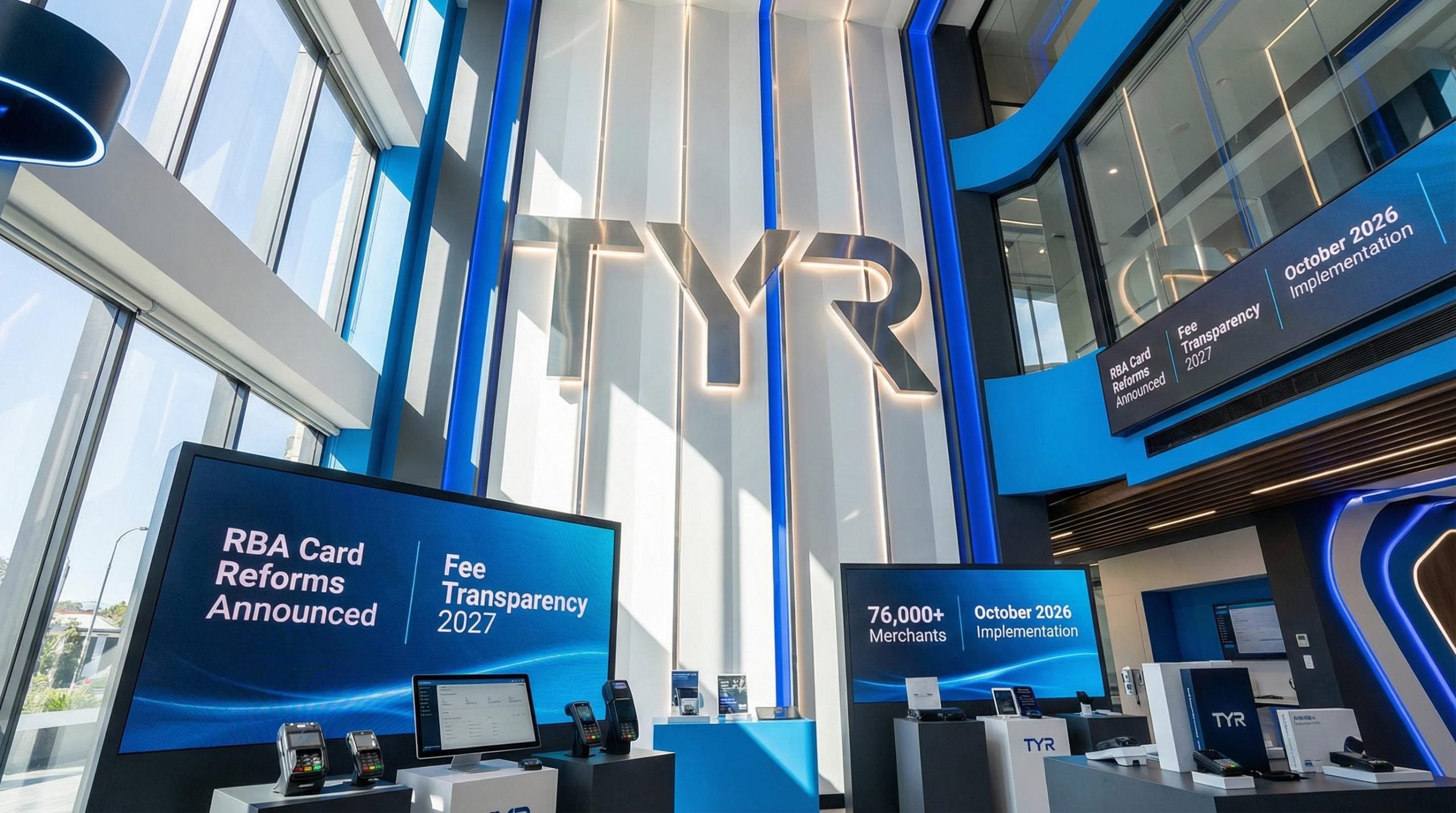
Tyro positioned to benefit as RBA overhauls card payment rules
Tyro Payments Limited (ASX: TYR) has welcomed the Reserve Bank of Australia’s finalised Review of Merchant Card Payment Costs and Surcharging, which introduces sweeping reforms to card payment structures effective 1 October 2026. The company confirms the announced measures will not impact near-term financial guidance or medium-term targets, positioning the changes as a structural market shift that aligns with its existing transparent pricing model.
The reforms target core elements of Australia’s payments ecosystem, including the elimination of surcharging on domestic cards, lower interchange fee caps, and mandatory fee transparency for large acquirers and card schemes. For Tyro’s 76,000+ merchants across hospitality, retail, services, and health sectors, the changes create a regulatory environment that management believes favours the company’s vertical-specific solutions and clear pricing structures.
Chief Executive Officer Nigel Lee described the reforms as creating an environment that plays to Tyro’s strengths, noting that merchants currently locked into opaque bundled pricing structures may now reassess their providers as fee transparency becomes mandatory across the industry.
When big ASX news breaks, our subscribers know first
What the RBA reforms mean for payments
The RBA’s review delivers four targeted interventions designed to lower costs for consumers and improve pricing clarity for businesses. The measures represent the most significant restructuring of Australia’s card payment framework in recent years.
Surcharging on debit, prepaid, and credit cards will end for eftpos, Mastercard, and Visa transactions from 1 October 2026. The move responds to consumer frustration with card payment surcharges and aims to simplify the checkout experience across physical and digital transactions.
The reforms also lower the maximum interchange fees that businesses pay for consumer credit and debit card payments, introduce a cap on interchange fees for foreign-issued cards, and require large acquirers and schemes to publish their fees. This final measure enables merchants to compare providers on a like-for-like basis, something that has historically been difficult under bundled pricing models.
| Reform | Effective Date |
|---|---|
| Surcharging ban (domestic cards) | 1 October 2026 |
| Lower interchange caps (domestic) | 1 October 2026 |
| Interchange cap (foreign cards) | 1 April 2027 |
| Fee transparency requirements | 1 April 2027 |
The phased implementation provides industry participants with runway to adapt systems and commercial models. For merchants, the transparency requirements create a clear benchmark to evaluate whether their current provider offers competitive economics.
Why Tyro sees competitive advantage
Tyro’s business model has operated on cost-plus and card-based pricing structures that align with the transparency objectives the RBA now mandates industry-wide. While competitors using surcharge-led or bundled pricing may face disruption, Tyro’s existing commercial framework requires no fundamental restructuring.
Management views the reforms as a growth catalyst rather than compliance burden. The company’s vertical-specific solutions across hospitality, retail, services, and health create integrated payment experiences that differentiate Tyro in a market where merchants will soon have clear tools to compare providers.
Nigel Lee, CEO, Tyro Payments
“Tyro’s business model has always focused on building vertical-specific solutions with clear pricing and economics. As the market now shifts away from surcharge-led and more opaque bundled pricing structures, we expect merchants subject to those structures to reassess their payments providers.”
The CEO’s framing suggests Tyro anticipates a period of merchant switching activity as businesses reassess their payment providers in light of new fee transparency requirements. The company confirmed it is well positioned, both technologically and commercially, to support existing and new merchants through the transition.
With 450+ integration partners, Tyro’s ecosystem creates switching costs for existing merchants while transparent pricing may attract businesses seeking clarity in a comparison-driven market.
Financial guidance unchanged
Tyro explicitly stated the announced measures do not impact its near-term financial guidance or medium-term targets. The company did not revise any numerical guidance in the announcement, indicating management confidence that its economics are already aligned with the new regulatory structure.
The absence of guidance revision suggests Tyro’s existing pricing model absorbs the reforms without margin headwinds, contrasting with providers that may need to restructure commercial terms to comply with surcharging bans and transparency requirements.
Implementation timeline and what comes next
The RBA has outlined an implementation pathway that gives industry participants time to adapt systems and commercial structures:
- 1 October 2026: Surcharging ban and lower domestic interchange caps take effect for eftpos, Mastercard, and Visa cards.
- 1 April 2027: Interchange cap on foreign-issued cards and fee transparency requirements commence for large acquirers and card schemes.
The phased approach provides Tyro with runway to position for merchant acquisition ahead of full implementation. The April 2027 transparency requirements may trigger a second wave of merchant reassessment once fee comparison tools become widely available.
Management noted that Tyro already operates pricing models aligned with the transparency objectives, and systems and operational capability are ready to support the reforms as they take effect.
Tyro’s market position
Tyro serves 76,000+ merchants across Australia with in-store, online, and on-the-go payment solutions. The company focuses on vertical-specific sectors including hospitality, retail, services, and health, creating integrated payment experiences through 450+ partnerships.
The company’s scale and sector-specific integrations create switching costs for existing merchants while the transparent pricing model becomes a potential draw for businesses seeking clarity as mandatory fee disclosure takes effect across the industry in 2027.
Tyro confirmed the announcement was authorised for release by its Chief Executive Officer pursuant to ASX Listing Rule 15.5.
Get Financial News Before the Market Reacts
Join 20,000+ investors receiving FREE breaking ASX news delivered to your inbox within minutes of release, complete with in-depth analysis. Click the “Free Alerts” button at StockWire X to start receiving alerts the moment announcements hit the market.