
Telix Pharmaceuticals FDA Accepts Brain Cancer Imaging Agent NDA for Sept Review
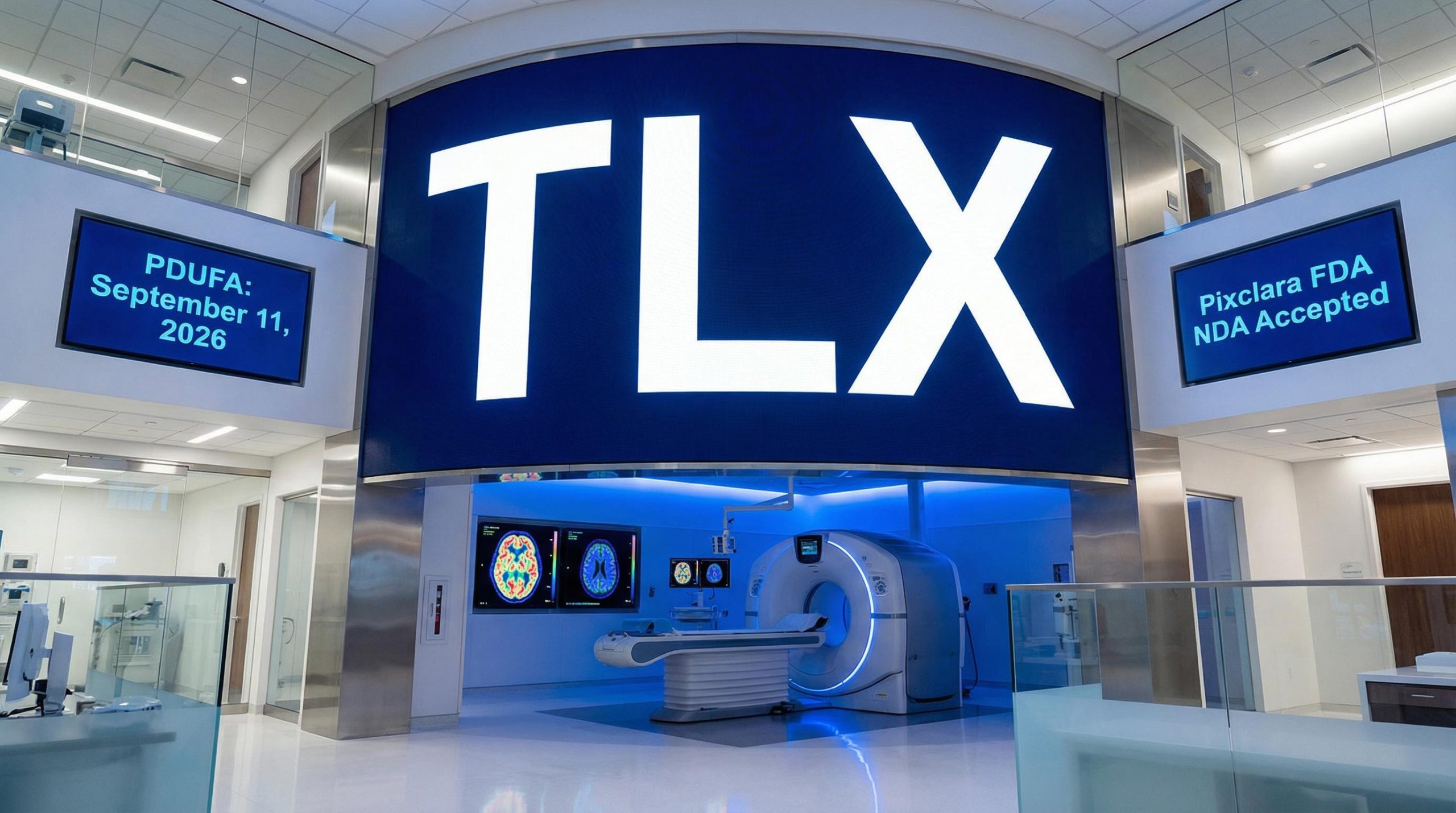
Telix Pharmaceuticals (ASX: TLX) has announced that the United States Food and Drug Administration (FDA) has accepted the company’s resubmitted New Drug Application (NDA) for TLX101-Px (Pixclara), a brain cancer imaging agent, with a target decision date of 11 September 2026. The Telix Pixclara FDA NDA acceptance marks a significant regulatory milestone for the investigational Positron Emission Tomography (PET) agent designed to characterise recurrent or progressive glioma from treatment-related changes in both adult and paediatric patients.
The FDA’s Prescription Drug User Fee Act (PDUFA) goal date provides a defined timeline for regulatory review following the NDA resubmission on 13 March 2026. Pixclara has been granted both Fast Track and Orphan Drug designations by the FDA, reflecting the significant unmet medical need in glioma imaging. The agent utilises 18F-FET (Floretyrosine F 18) technology, which is already recommended in international clinical practice guidelines including the National Comprehensive Cancer Network (NCCN) Guidelines for Central Nervous System Cancers.
FDA accepts Telix’s NDA for Pixclara brain cancer imaging agent
The FDA’s acceptance of the resubmitted NDA for TLX101-Px represents a critical step toward potential approval of the first 18F-FET PET imaging agent in the United States for glioma characterisation. The assigned PDUFA goal date of 11 September 2026 establishes a clear regulatory timeline for investors and clinicians awaiting potential market authorisation.
Pixclara is designed to address a significant diagnostic gap in neuro-oncology by helping clinicians distinguish actual tumour progression from treatment-related changes in patients with recurrent or progressive glioma. This distinction has profound implications for treatment decisions, as mischaracterisation can lead to either unnecessary interventions or delayed therapeutic adjustments in patients with aggressive brain cancers.
The regulatory pathway has been expedited through the FDA’s Fast Track designation, granted in April 2024, which is specifically designed to facilitate development and expedite review of drugs treating serious conditions with unmet medical needs. Combined with the Orphan Drug designation received in October 2020, Pixclara benefits from regulatory mechanisms intended to bring important new diagnostics to patients more rapidly.
Kevin Richardson, CEO of Telix Precision Medicine, stated that the FDA’s acceptance reflects constructive engagement with the agency and positions the company to urgently bring the product to market for patient benefit, pending final approval.
When big ASX news breaks, our subscribers know first
Why glioma imaging matters for patients and investors
Gliomas represent the most common form of central nervous system cancer originating from glial cells. These diffusely infiltrative tumours affect surrounding brain tissue and present significant diagnostic and therapeutic challenges that position Pixclara to address a substantial market opportunity.
Glioma disease burden statistics:
- Gliomas account for approximately 30% of all brain and central nervous system tumours
- Represent 80% of all malignant brain tumours
- Approximately 24,000 new glioma cases diagnosed annually in the United States
- Glioblastoma (GBM) survival: 12-15 months from diagnosis
- Recurrence occurs in almost all GBM patients despite standard treatment (surgical resection, radiotherapy, and chemotherapy)
The clinical challenge centres on accurately assessing disease status following treatment. Current imaging methods often struggle to differentiate between actual tumour progression and treatment-related changes such as inflammation, necrosis, or pseudo-progression. This diagnostic uncertainty complicates clinical decision-making and can impact patient outcomes.
18F-FET PET imaging addresses this limitation through its mechanism of action: the agent targets L-type amino acid transporters (LAT1 and LAT2), which are overexpressed in tumour cells but not in treatment-related changes. This biological specificity enables more accurate characterisation of disease status compared to conventional imaging approaches.
The addressable patient population of 24,000 annual U.S. glioma diagnoses, combined with near-universal recurrence in glioblastoma patients, positions Pixclara for meaningful commercial opportunity upon approval. The existing international guideline recommendations for 18F-FET PET imaging suggest established clinical acceptance, potentially facilitating U.S. market adoption.
Expert clinicians highlight diagnostic gap Pixclara addresses
Leading neuro-oncology specialists have emphasised the critical unmet need that Pixclara aims to address, providing clinical validation for the imaging agent’s potential utility in standard practice.
Thomas Hope, MD, Vice Chair of the Department of Radiology and Biomedical Imaging at the University of California San Francisco (UCSF), noted the critical unmet need in improving imaging capabilities for residual glioma after treatment. Dr Hope stated that UCSF has worked with Telix for three years to leverage clinical data to help make FET-PET available to patients in the United States.
Patrick Wen, MD
E. Antonio Chiocca, MD, PhD, Family Endowed Chair in Neuro-Oncology at Mass General Brigham Cancer Institute“Distinguishing tumor progression from treatment-related change remains one of the most challenging aspects of glioma care. PET imaging with 18F-FET is an important tool in clinical practice worldwide, and the FDA’s acceptance of this application is a meaningful step toward broader access for patients and clinicians in the United States.”
The endorsements from Dr Hope at UCSF and Dr Wen at Mass General Brigham carry significant weight given their institutions’ prominence in neuro-oncology research and treatment. These clinical perspectives validate both the diagnostic challenge and the potential role of 18F-FET PET imaging in addressing it.
The statement that FET-PET is already “an important tool in clinical practice worldwide” indicates established international adoption, which may support payer acceptance and clinical uptake if U.S. approval is granted. The technology is not experimental globally but rather represents an established diagnostic approach seeking U.S. market access.
For investors, clinical champion support from leading academic medical centres often correlates with stronger adoption curves post-approval, as these institutions frequently serve as early adopters and training centres for new diagnostic technologies.
The next major ASX story will hit our subscribers first
Pixclara’s role in Telix’s broader oncology pipeline
TLX101-Px represents more than a standalone diagnostic opportunity within Telix’s portfolio. The imaging agent targets L-type amino acid transporters (LAT1 and LAT2), the same biological pathway targeted by Telix’s investigational therapy candidate TLX101-Tx (iodofalan 131I).
This alignment creates a potential theranostic pairing where the diagnostic agent (Pixclara) could serve dual functions: identifying patients likely to benefit from the targeted therapy and assessing treatment response. TLX101-Tx is currently under investigation in the pivotal IPAX-BrIGHT trial (ClinicalTrials.gov ID: NCT07100730) for patients with recurrent glioblastoma.
The theranostic approach reflects Telix’s broader strategic positioning in precision oncology, where imaging and therapeutic agents are developed in tandem to enable more personalised treatment selection and monitoring. If both agents secure regulatory approval, the combination could offer clinical synergies and potential commercial advantages through integrated diagnostic and therapeutic pathways.
Regulatory milestones achieved:
- Orphan Drug designation granted October 2020
- Fast Track designation granted April 2024
- NDA resubmitted 13 March 2026
- FDA acceptance with PDUFA date 11 September 2026
The company has noted that FY 2026 financial guidance does not include any revenue contribution from TLX101-Px, indicating management’s conservative approach to commercialisation timelines pending regulatory approval and subsequent market launch activities.
Neither TLX101-Px nor TLX101-Tx has received marketing authorisation in any jurisdiction to date, meaning both remain investigational products subject to regulatory review and approval processes.
Key dates and next steps
The regulatory pathway ahead centres on the FDA’s review process through the assigned PDUFA goal date. This timeline provides investors with a defined near-term catalyst for the company’s neuro-oncology programme.
| Milestone | Date |
|---|---|
| NDA Resubmission | 13 March 2026 |
| FDA Acceptance | 10 April 2026 |
| PDUFA Goal Date | 11 September 2026 |
The September PDUFA date represents the FDA’s target decision deadline, though final approval timing can vary based on the agency’s review requirements. The acceptance of the NDA for filing indicates that the FDA has determined the application is sufficiently complete to permit substantive review.
Kevin Richardson
CEO, Telix Precision Medicine“The FDA’s acceptance of our NDA resubmission is an important milestone for Telix. We appreciate the FDA’s constructive engagement and look forward to working closely with the Agency to urgently obtain approval and then bring this product to market for the benefit of patients.”
Richardson’s reference to “constructive engagement” with the FDA suggests ongoing dialogue during the resubmission process, which may indicate regulatory alignment on key aspects of the application. The stated urgency to bring the product to market reflects both the unmet medical need and the commercial opportunity the company seeks to address.
For investors, the defined PDUFA date provides visibility on a near-term regulatory catalyst whilst the existing Fast Track and Orphan Drug designations may offer competitive advantages through regulatory exclusivity provisions if approval is granted.
Get Healthcare News Before the Market Reacts
Join 20,000+ investors receiving FREE ASX healthcare alerts within minutes of release, complete with expert analysis of breakthrough announcements like Telix’s FDA milestones. Click the “Free Alerts” button at Big News Blast to access breaking biotech news and in-depth coverage the moment market-moving developments are announced.