
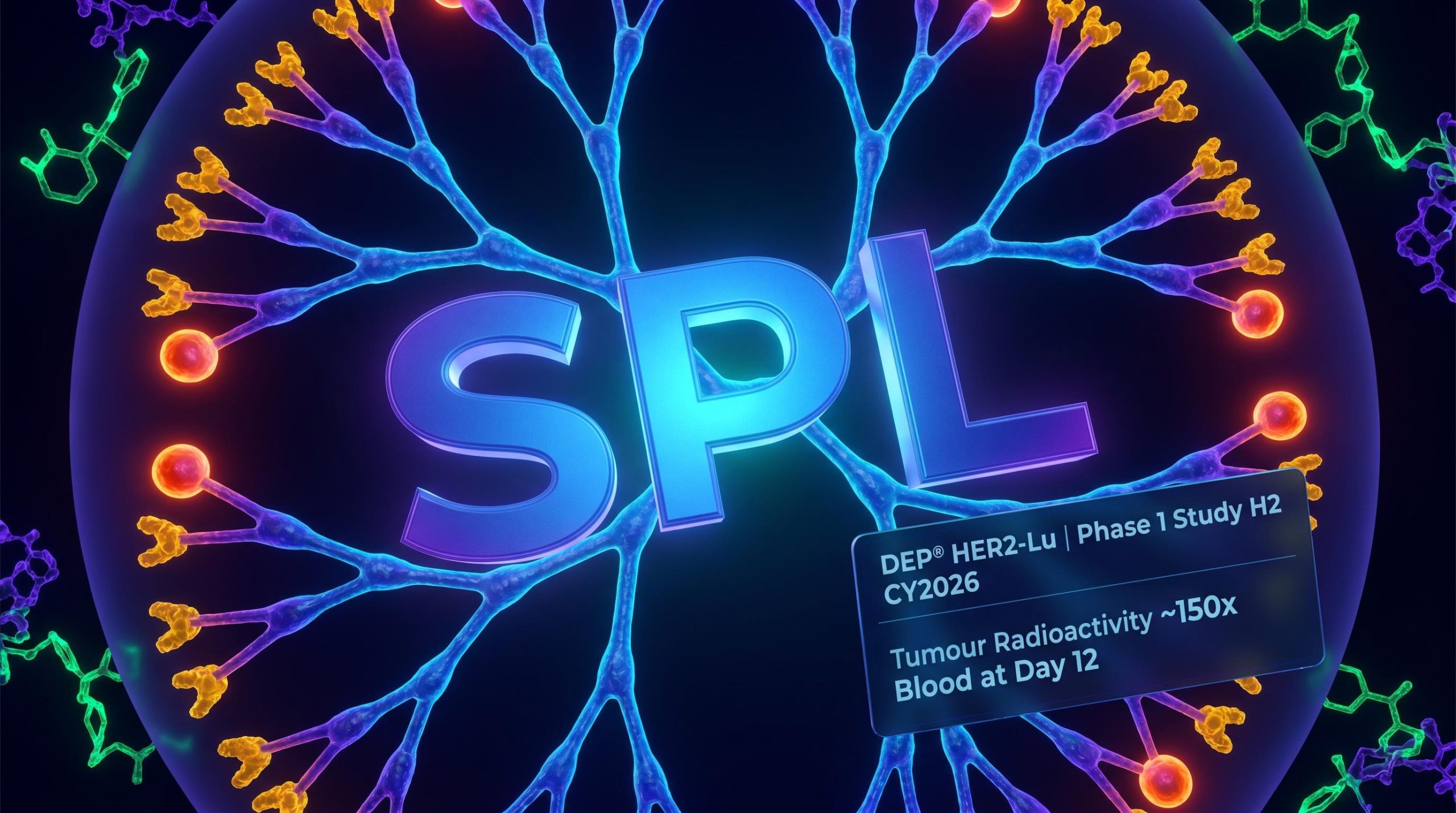
Starpharma’s DEP® HER2-Lu clears key preclinical hurdle, Phase 1 study set for H2 CY2026
Starpharma (ASX: SPL) has announced positive preclinical data for its DEP® HER2-lutetium (DEP® HER2-Lu) radiotherapy candidate, reporting highly favourable biodistribution and encouraging anti-tumour activity that support progression toward a planned first-in-human (FIH) Phase 1 study.
Released on 2 July 2026, the data showed anti-tumour and survival effects that were comparable to Enhertu® in preclinical models, with the FIH study expected to commence in H2 CY2026. Starpharma will host an investor webinar on Tuesday, 7 July 2026 at 2:00pm AEST to discuss the findings.
When big ASX news breaks, our subscribers know first
What the preclinical data showed
The candidate demonstrated three core results in preclinical HER2-positive cancer models: strong tumour uptake and retention, low kidney accumulation, and short blood circulation time. Together, these outcomes support the target profile for radioligand therapy.
Critically, the DEP® dendrimer component improved biodistribution versus a non-DEP® HER2-targeting construct (HER2-VHH-Lu). The candidate maintained high tumour levels relative to blood and major organs from 48 hours to 12 days post-dose. At 12 days, tumour radioactivity was approximately 150 times greater than blood levels.
DEP® HER2-Lu was well tolerated in these studies. A formal GLP toxicology study using non-radiolabelled DEP® HER2 showed no abnormal clinical findings and no significant changes in haematology parameters.
Anti-tumour activity and survival benefit were also observed in a HER2-low expressing preclinical model. While the planned FIH study is expected to initially focus on HER2-positive cancers, these HER2-low findings may support future evaluation across a broader HER2-expressing patient population.
| Preclinical Result | Detail | Why It Matters |
|---|---|---|
| Tumour uptake & retention | High; ~150x blood at day 12 | Payload reaches target |
| Kidney exposure | Low vs HER2-VHH-Lu | Reduces dose-limiting toxicity |
| Anti-tumour activity | Statistically significant | Efficacy signal |
| Survival benefit | 50% survival @ d57 vs 12.5% Enhertu® | Competitive efficacy in this preclinical model |
How radioligand therapy and DEP® technology work
Radioligand therapies are designed to deliver radiation directly to cancer cells by attaching a radioactive payload to a targeting molecule. The aim is to concentrate the therapeutic effect on tumour tissue while limiting exposure to healthy organs.
DEP® HER2-Lu is designed to combine three components:
-
HER2-targeting nanobody (VHH): a single-domain antibody that homes in on HER2-positive cancer cells.
-
DEP® dendrimer platform: Starpharma’s proprietary nanoscale delivery technology intended to improve biodistribution.
-
Lutetium-177: the therapeutic radioisotope that delivers the radiation payload.
Why does biodistribution matter to investors? Off-target exposure, particularly to the kidneys and blood, can limit how much of a radioligand therapy can be safely dosed, which in turn affects its clinical utility. By selectively delivering to tumours while sparing healthy organs, the DEP® platform aims to improve the therapeutic potential of radioligand therapy.
Professor Tony Lahoutti, Head of the Department of Nuclear Medicine, University Hospital (UZ) Brussel
“In radioligand therapy, off-target exposure, especially to the kidneys and blood, can limit dosing and clinical utility. The preclinical data for DEP® HER2-Lu clearly show a favourable biodistribution profile that also achieves encouraging anti-tumour activity and survival benefit.”
The market opportunity and unmet need
The candidate is initially being developed for patients with advanced HER2-positive cancers, including gastric and gastro-oesophageal junction cancers and other HER2-expressing advanced cancers following prior HER2-targeted therapy. This addresses a significant unmet medical need.
Key market figures cited in the announcement include:
-
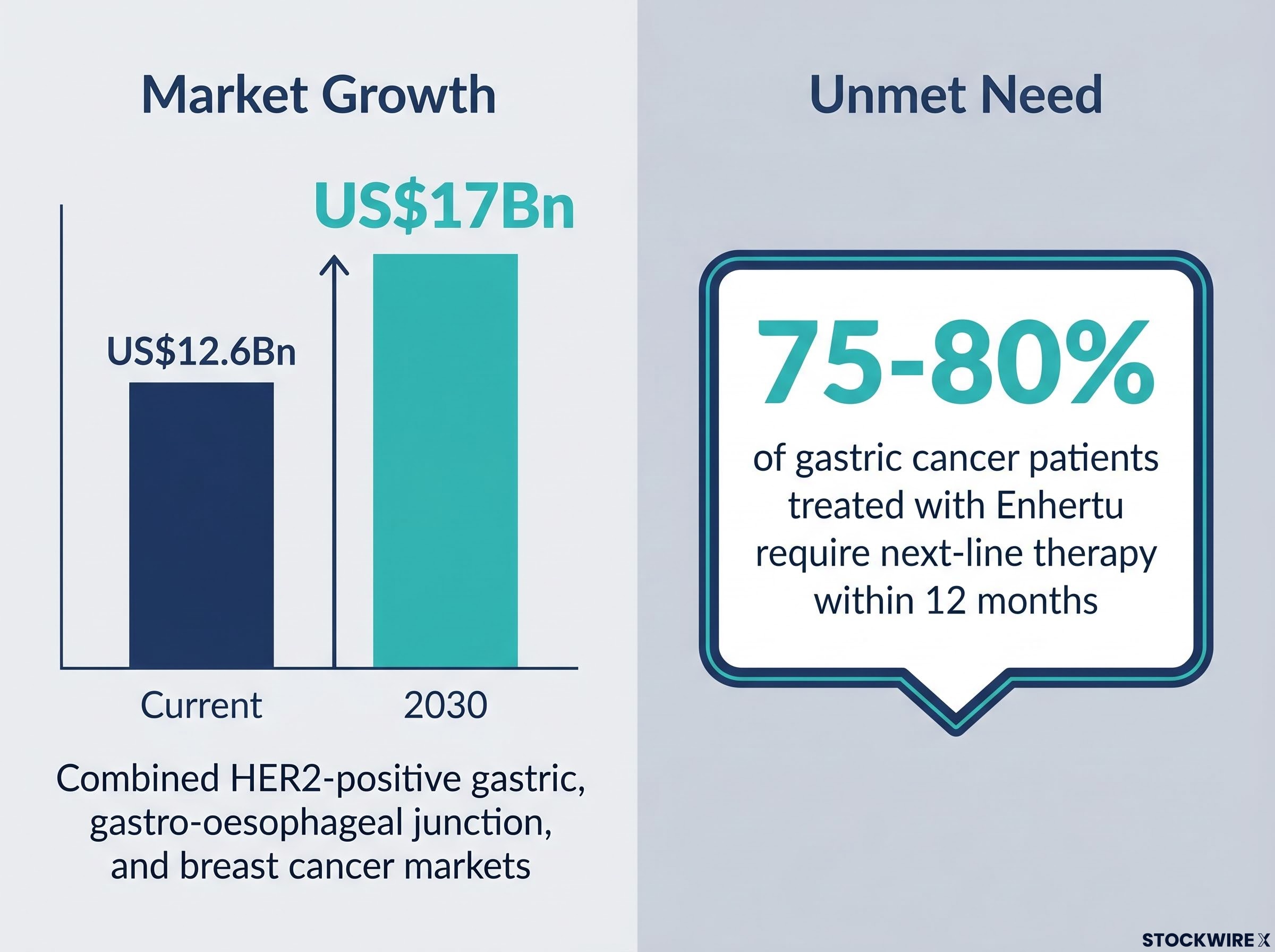
An estimated 75–80% of gastric cancer patients treated with Enhertu® require next-line therapy within 12 months.
-
The combined HER2-positive gastric and gastro-oesophageal junction cancer and HER2-positive breast cancer markets are currently valued at US$12.6Bn.
-
These markets are expected to grow to US$17Bn by 2030.
For investors, the data position DEP® HER2-Lu within a large and growing market that carries clear next-line treatment demand, where a substantial proportion of patients progress beyond existing HER2-directed therapies within a year.
Path to the clinic and next steps
Starpharma’s planned FIH Phase 1 study is expected to commence in H2 CY2026 and initially enrol up to 15 patients with advanced HER2-positive cancers, providing the first clinical evaluation of the candidate.
The study will assess:
-
Safety
-
Tolerability
-
Pharmacokinetics
-
Biodistribution
-
Organ radiation dosimetry
On the regulatory front, in April 2026 the FDA indicated that Starpharma’s existing preclinical data package, together with data generated from the planned FIH study, should be adequate to support future US clinical studies under an Investigational New Drug application. This feedback provides regulatory alignment and supports Starpharma’s planned development pathway.
The FDA regulatory alignment for DEP HER2, secured through a formal Type C guidance meeting in April 2026, also confirmed that the unmet medical need designation opens the door to potential Fast Track designation and other accelerated development pathways.
Beyond this candidate, Starpharma noted the data support the potential broader application of its DEP® dendrimer technology to improve the delivery and biodistribution of radiotherapeutic payloads across additional tumour targets.
Cheryl Maley, Chief Executive Officer, Starpharma
“With supportive FDA feedback and Phase 1 preparations well advanced, DEP® HER2-Lu is positioned to generate important clinical data in advanced HER2-positive cancers from H2 CY2026.”
Investor webinar
Starpharma will host an investor webinar covering the DEP® HER2-Lu preclinical data, broader radiopharmaceutical platform progress and a related patent update. The webinar is scheduled for Tuesday, 7 July 2026 at 2:00pm AEST, with registration available via the link in the announcement.
Don’t Miss the Next Healthcare Breakthrough on ASX
Big News Blast delivers FREE breaking ASX healthcare news and in-depth analysis directly to your inbox within minutes of release. Join 20,000+ investors who stay ahead of market-moving announcements the moment they drop. Click the “Free Alerts” button at StockWire X to start receiving real-time alerts today.