
Radiopharm Hits 90% Success Rate in RAD101 Brain Metastases Imaging Trial
Key Takeaways
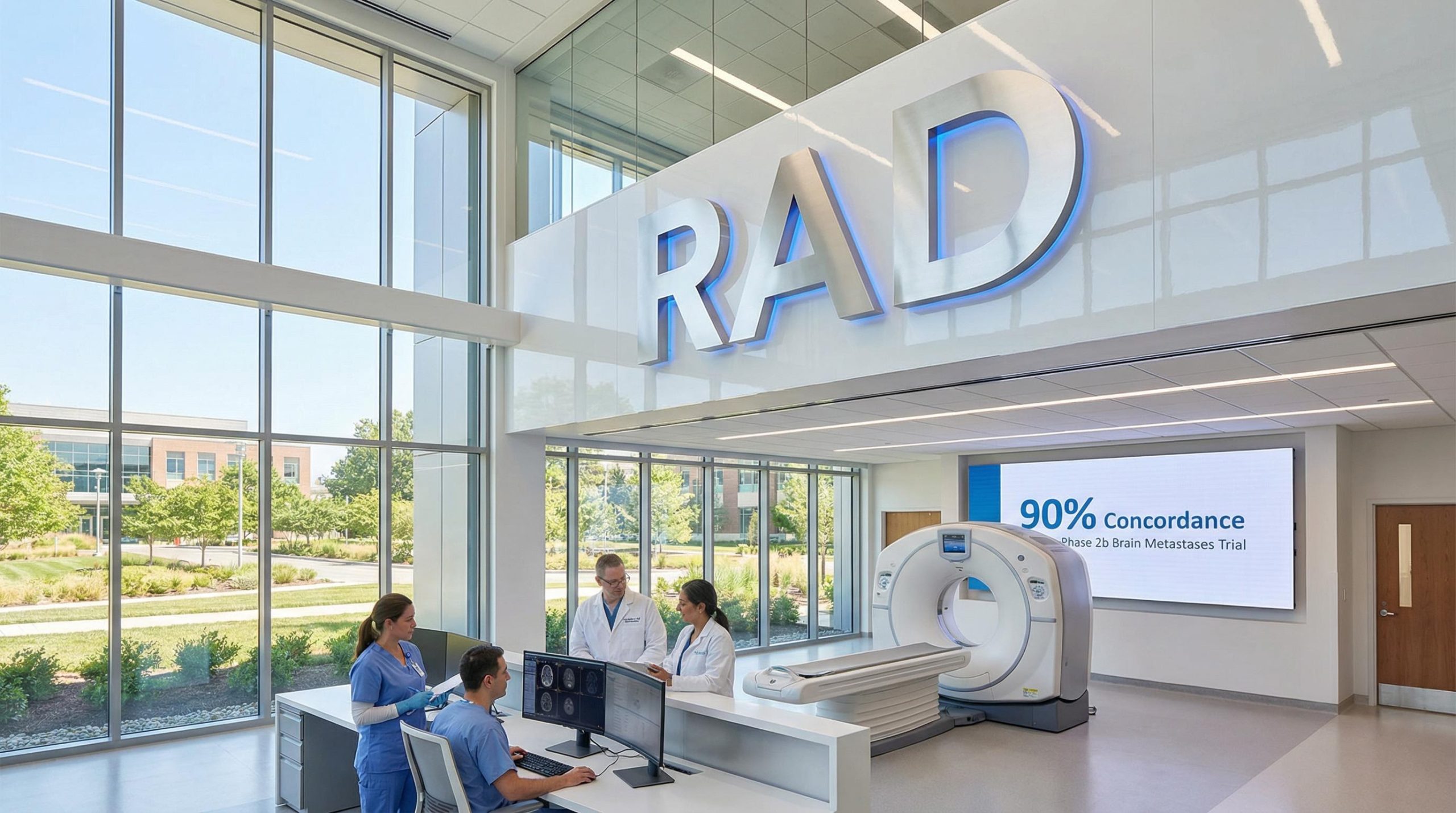
Radiopharm Theranostics (ASX: RAD) reports a 90% concordance rate in its Radiopharm RAD101 Brain Metastases Trial second interim analysis, meeting the primary endpoint and setting up a pivotal June 2026 full-study data readout.
- 18 of 20 evaluable patients achieved concordance between RAD101 PET imaging and MRI scans, meeting the trial's primary endpoint with a 90% success rate.
- Early sensitivity and specificity signals from the first five patients with six-month follow-up or biopsy data suggest RAD101 can reliably differentiate active tumour from radiation necrosis.
- FDA Fast Track Designation for RAD101 supports an expedited regulatory pathway and more frequent FDA interactions during development.
- Final data from the complete 30-patient cohort is expected by June 2026, representing the next major value inflection point for investors.
- The U.S. market opportunity is substantial, with more than 300,000 patients diagnosed annually with cerebral metastases and significant limitations in current MRI-based imaging.
Radiopharm hits 90% success rate in RAD101 brain metastases imaging trial
Radiopharm Theranostics (ASX: RAD) has reported that 90% of patients (18 out of 20) in the second interim analysis of its Radiopharm RAD101 Brain Metastases Trial achieved concordance between PET imaging and MRI scans, meeting the study’s primary endpoint. The U.S. Phase 2b multicentre trial is evaluating RAD101, a novel small-molecule imaging agent targeting fatty acid synthase (FASN) and radiolabelled with Fluorine-18, for diagnosing suspected recurrent brain metastases from solid tumours.
The interim results showed significant and selective tumour uptake in brain metastases, with images confirming metabolic activity in areas where MRI findings were equivocal. This addresses a critical diagnostic challenge, as current contrast-enhanced MRI scans have limitations in distinguishing recurrent cancer from radiation necrosis during follow-up surveillance. For clinical-stage companies, demonstrating that a lead imaging asset can meet primary endpoints at interim analysis represents material de-risking of the path toward pivotal trials and potential commercial approval.
Early sensitivity and specificity data emerging
The second interim analysis also revealed positive trends in secondary objectives. The first five patients with available six-month follow-up and/or biopsy data show encouraging signals for sensitivity and specificity, two fundamental measures of any diagnostic test’s performance. Sensitivity refers to an imaging test’s ability to correctly identify patients with disease (true positive rate), whilst specificity measures its ability to correctly identify patients without disease (true negative rate).
These early indicators, though based on a small subset of patients, suggest RAD101 may reliably differentiate between active tumour and treatment effects. The company plans to release final data from the full 30-patient study by June 2026, which will provide more robust evidence of RAD101’s diagnostic accuracy.
Riccardo Canevari, CEO and Managing Director
“The strength and consistency of these interim results further validate the potential of RAD 101 to address one of the most challenging diagnostic gaps in neuro-oncology. With 90% concordance demonstrated to date and encouraging early signals in sensitivity and specificity, we are increasingly confident in RAD 101’s ability to support more accurate and timely treatment decisions for patients with brain metastases.”
When big ASX news breaks, our subscribers know first
What is RAD101 and why does brain metastases imaging matter?
RAD101 is a small-molecule imaging agent that targets fatty acid synthase (FASN), a multi-enzyme protein that catalyses fatty acid synthesis. FASN is overexpressed in many solid tumours, including cerebral metastases, making it a clinically relevant biomarker for cancer detection. By targeting FASN activity, RAD101 aims to enable more accurate detection of cancer cells in the brain.
The diagnostic challenge this technology addresses is significant. Current MRI scans, whilst the preferred method for imaging intracranial metastatic disease, struggle to distinguish between recurrent tumour growth and radiation necrosis (tissue damage from previous treatment) during surveillance scans. This ambiguity can delay treatment decisions or lead to inappropriate interventions. RAD101’s FASN-targeting approach offers a potential solution by revealing metabolic activity that indicates active cancer, allowing clinicians to differentiate viable tumour from treatment-related changes.
The market opportunity is substantial. In the U.S. alone, more than 300,000 patients are diagnosed annually with cerebral metastases. The incidence of intracranial metastatic disease continues to increase, partly due to improvements in systemic therapies that provide more durable control of primary tumours, allowing patients to live longer but increasing the likelihood of brain metastases developing. This growing patient population, combined with the limitations of current imaging methods, creates a clear unmet medical need that RAD101 is positioned to address.
Why accurate brain metastases imaging matters:
- Current MRI limitations: Contrast-enhanced MRI struggles to distinguish recurrent tumour from radiation necrosis in follow-up surveillance scans
- Treatment decision impact: Ambiguous imaging results can delay optimal patient care or lead to unnecessary interventions
- RAD101’s targeting approach: By revealing FASN-driven metabolic activity, RAD101 may provide the clarity needed to guide timely and appropriate treatment decisions
Trial design and path to completion
The Radiopharm RAD101 Brain Metastases Trial is a U.S. multicentre, open-label, single-arm Phase 2b study evaluating the diagnostic performance of RAD101 in 30 individuals with confirmed recurrent brain metastases from solid tumours of different origins. The trial’s primary objective is to assess concordance between RAD101-positive lesions and those identified through conventional MRI imaging with gadolinium in participants with suspected recurrent brain metastases.
Secondary endpoints include measuring the accuracy, sensitivity, and specificity of RAD101 in identifying tumour recurrence versus radiation necrosis in brain metastases previously treated with stereotactic radiosurgery (SRS). These metrics will determine how reliably RAD101 can differentiate active cancer from treatment-related tissue changes, a critical capability for any diagnostic imaging agent seeking clinical adoption.
The study has now completed its second interim analysis with 20 patients evaluable, demonstrating the 90% concordance rate that met the primary endpoint. Final data from the complete 30-patient cohort is expected by June 2026, which will provide the evidence base needed to design a pivotal trial and advance RAD101 toward regulatory approval.
| Milestone | Status | Timeline |
|---|---|---|
| First interim analysis | Complete | Previously reported |
| Second interim analysis | Complete | March 2026 |
| Full 30-patient data | Pending | June 2026 |
| Pivotal trial planning | Next step | Post-data readout |
FDA Fast Track Designation supports regulatory pathway
RAD101 holds U.S. Food and Drug Administration (FDA) Fast Track Designation to distinguish between recurrent disease and treatment effect in brain metastases originating from solid tumours of different origins, including leptomeningeal disease. Fast Track is a regulatory support mechanism designed to expedite the development and review of therapies or diagnostics that address serious conditions and fill an unmet medical need.
The designation provides several benefits, including more frequent interactions with the FDA during development, the opportunity for accelerated approval if certain criteria are met, and eligibility for priority review if relevant clinical data support it. For clinical-stage biotechnology companies, Fast Track Designation can materially shorten development timelines and reduce regulatory risk, providing investors with greater visibility on the pathway to potential commercialisation.
The next major ASX story will hit our subscribers first
What comes next for Radiopharm
The company expects final data from the full 30-patient study by June 2026. These results will guide the design of a pivotal trial, the final clinical step before seeking regulatory approval. The June readout represents a near-term catalyst that will determine RAD101’s commercial viability and inform Radiopharm’s broader strategic planning.
To discuss the interim results, Radiopharm is hosting a webinar on Wednesday, 25 March 2026 at 9:00am AEDT (Sydney, Melbourne) / Tuesday, 24 March 2026 at 6:00pm EST (U.S.). The session will feature CEO and Managing Director Riccardo Canevari, Chief Medical Officer Dr Dimitris Voliotis, and Dr Harshad Kulkarni from BAMF Health in Grand Rapids, Michigan, providing clinical and strategic context for the interim findings.
Beyond RAD101, Radiopharm maintains a diversified pipeline spanning peptides, small molecules, and monoclonal antibodies. The clinical programme includes:
- RAD101: Phase 2b brain metastases imaging (lead asset)
- Four Phase 1 trials in solid tumours including lung, breast, and brain metastases
- Platform technologies targeting diagnostic and therapeutic applications in oncology
The company is listed on both ASX (RAD) and NASDAQ (RADX), providing access to Australian and U.S. capital markets. The dual listing broadens the investor base and enhances liquidity, particularly important for clinical-stage biotechnology companies requiring ongoing capital to fund development programmes.
For investors, the June 2026 data readout provides clear visibility on the next value inflection point. Positive full-study results would validate the interim findings, support pivotal trial initiation, and potentially attract partnership interest from larger diagnostic or pharmaceutical companies seeking to license or commercialise RAD101 in key markets.
Get Healthcare News Before the Market Reacts
Join 20,000+ investors receiving FREE breaking ASX healthcare alerts within minutes of release, complete with expert analysis. News like this Radiopharm trial update lands in your inbox the moment it breaks. Click the “Free Alerts” button at Big News Blast to start getting ahead of market-moving announcements.