

FDA clears Vanderbilt trial of HMBD-002 in AML and MDS
Percheron Therapeutics Limited (ASX: PER) has announced that the US Food and Drug Administration (FDA) has provided approval for Vanderbilt Health to commence the investigator-sponsored trial (IST) of HMBD-002 in combination with venetoclax and azacitidine. The study covers patients with acute myeloid leukaemia (AML) and myelodysplastic syndrome (MDS).
The company describes the letter as an important regulatory milestone that clears the US regulatory pathway for the study to advance. HMBD-002 clinical trial material has also been manufactured and released to support the study, and the collaboration with Vanderbilt Health was announced on 28 August 2026.
Key facts from the 2 November 2026 announcement:
- FDA clearance: Safe to Proceed letter received for the IST
- Lead institution: Vanderbilt Health
- Combination therapy: HMBD-002 with venetoclax and azacitidine
- Trial material: HMBD-002 manufactured and released
With regulatory clearance received and trial material released, the program has moved closer to commencing the study.
When big ASX news breaks, our subscribers know first
How the Vanderbilt Health study is structured
Trial design and who does what
Vanderbilt Health will lead the design and execution of the investigator-sponsored, multi-centre study. It will be led by Dr Somedeb Ball, Assistant Professor in the Division of Hematology and Oncology at Vanderbilt Health.
The study is proposed to investigate HMBD-002 in combination with azacitidine and venetoclax in up to 20 patients with relapsed or refractory AML or AML / MDS. It is aimed at determining the optimal dose of HMBD-002 to use in combination with venetoclax and azacitidine.
| Item | Detail |
|---|---|
| Lead institution | Vanderbilt Health |
| Principal investigator | Dr Somedeb Ball, Assistant Professor, Division of Hematology and Oncology |
| Patient numbers | Up to 20 patients with relapsed or refractory AML or AML / MDS |
| Objective | Determine the optimal dose of HMBD-002 in combination with venetoclax and azacitidine |
| Percheron’s contribution | HMBD-002, technical assistance and financial grant support |
Percheron’s role and data access
Percheron is providing HMBD-002, technical assistance and financial grant support. It will have full access to the resulting clinical data to inform future clinical development, regulatory interactions and partnering discussions.
For investors, the structure pairs an externally led study with Percheron’s access to the resulting clinical data.
For readers wanting the background to the collaboration, the original Vanderbilt clinical research agreement is covered in our detailed coverage of the Vanderbilt AML and MDS trial, including the grant structure and recruitment targets.
Dr Michael Baker, CEO and MD
“AML remains a devastating disease for many patients despite significant advances in treatment. With a five-year relative survival rate of approximately 33% there remains a clear need for new therapeutic approaches that can improve outcomes for patients. The Vanderbilt study provides an exciting opportunity to evaluate HMBD-002 in combination with venetoclax and azacitidine, two established AML therapies, and investigate whether targeting VISTA can further improve therapeutic outcomes…”
Understanding VISTA and the unmet need in AML
What is VISTA and why target it
VISTA (V-domain Ig suppressor of T cell activation) is an immune checkpoint regulator. HMBD-002 is a monoclonal antibody targeting it.
Percheron cites a strong scientific rationale for investigating VISTA inhibition in myeloid malignancies. VISTA is highly expressed in AML and has been associated with recurrence and resistance to therapy, and AML expression levels are associated with poor prognosis in patients.
Experimental VISTA inhibition has also demonstrated preclinical activity in AML models (Kim et al, 2024, J Clinical Investigation). Venetoclax and azacitidine are described by the company as established AML therapies, so the study will investigate whether targeting VISTA can further improve therapeutic outcomes alongside them.
A disease with significant unmet need
AML is an aggressive malignancy affecting the blood and bone marrow and is the most common form of acute leukaemia in adults. An estimated 22,720 people will be diagnosed with AML in the United States in 2026, and approximately 11,500 people will die from the disease.
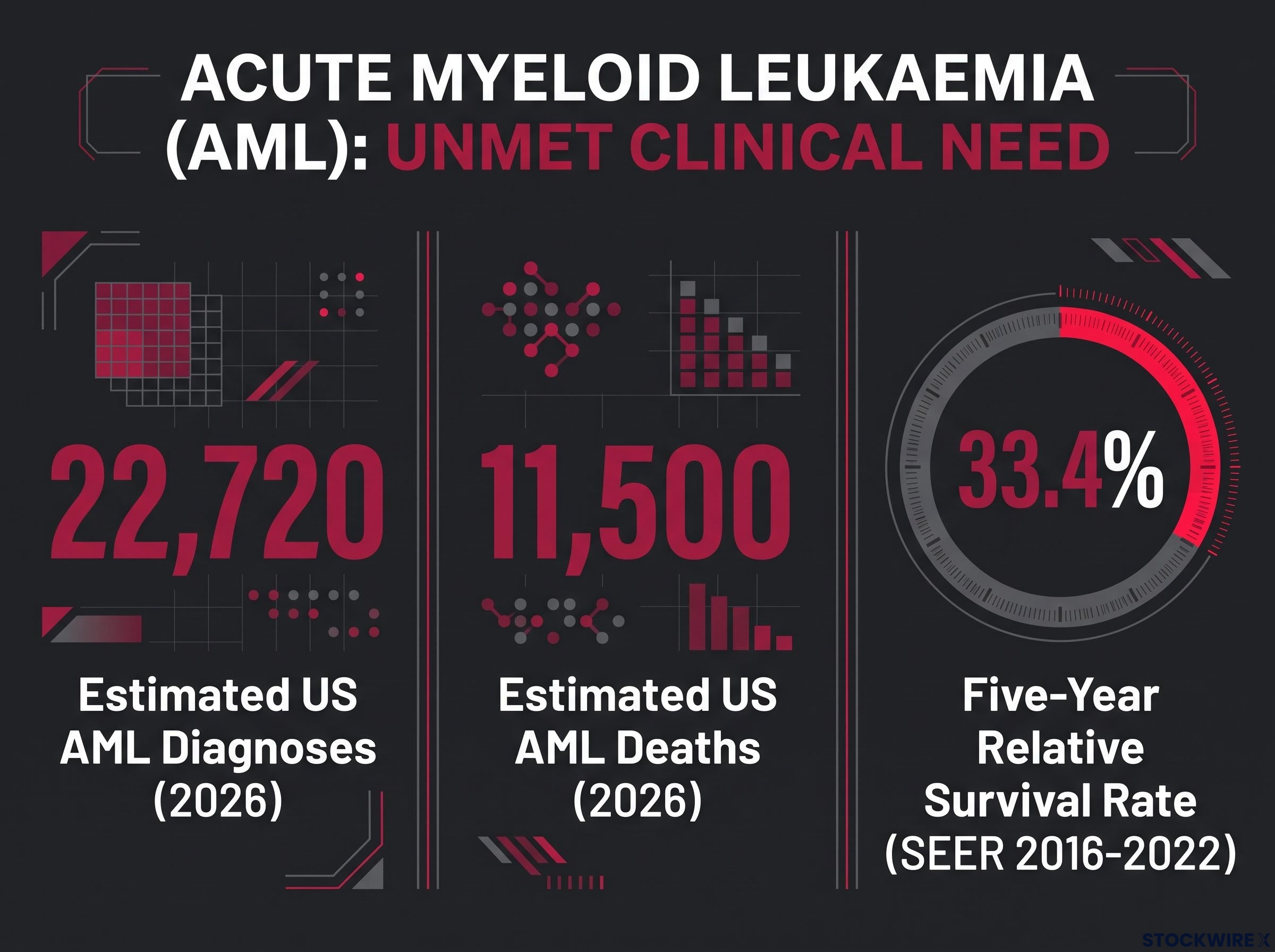
US National Cancer Institute SEER data report a five-year relative survival rate of 33.4% for AML, based on patients diagnosed between 2016 and 2022. According to the announcement, these outcomes underscore the continued need for new therapeutic approaches, particularly for patients with high-risk, recurrent or treatment-resistant disease.
What happens next for Percheron
Percheron expects to provide further updates regarding the study design around the time of commencement.
HMBD-002 is the company’s lead program. It has completed a phase 1 clinical trial in patients with advanced cancer, showing the drug is generally safe and well tolerated, and Percheron aims to commence further clinical trials in CY2026.
The Phase I results across 48 patients set a recommended dose of 720mg weekly and showed 27.5% disease stabilisation in a heavily pre-treated population, forming the clinical foundation for the AML combination study.
Don’t Miss the Next Biotech Breakout
Get FREE breaking ASX healthcare news delivered to your inbox within minutes of release, complete with in-depth analysis. Join 20,000+ investors already receiving real-time alerts from Big News Blast. Click the “Free Alerts” button to stay ahead of the market the moment news breaks.