

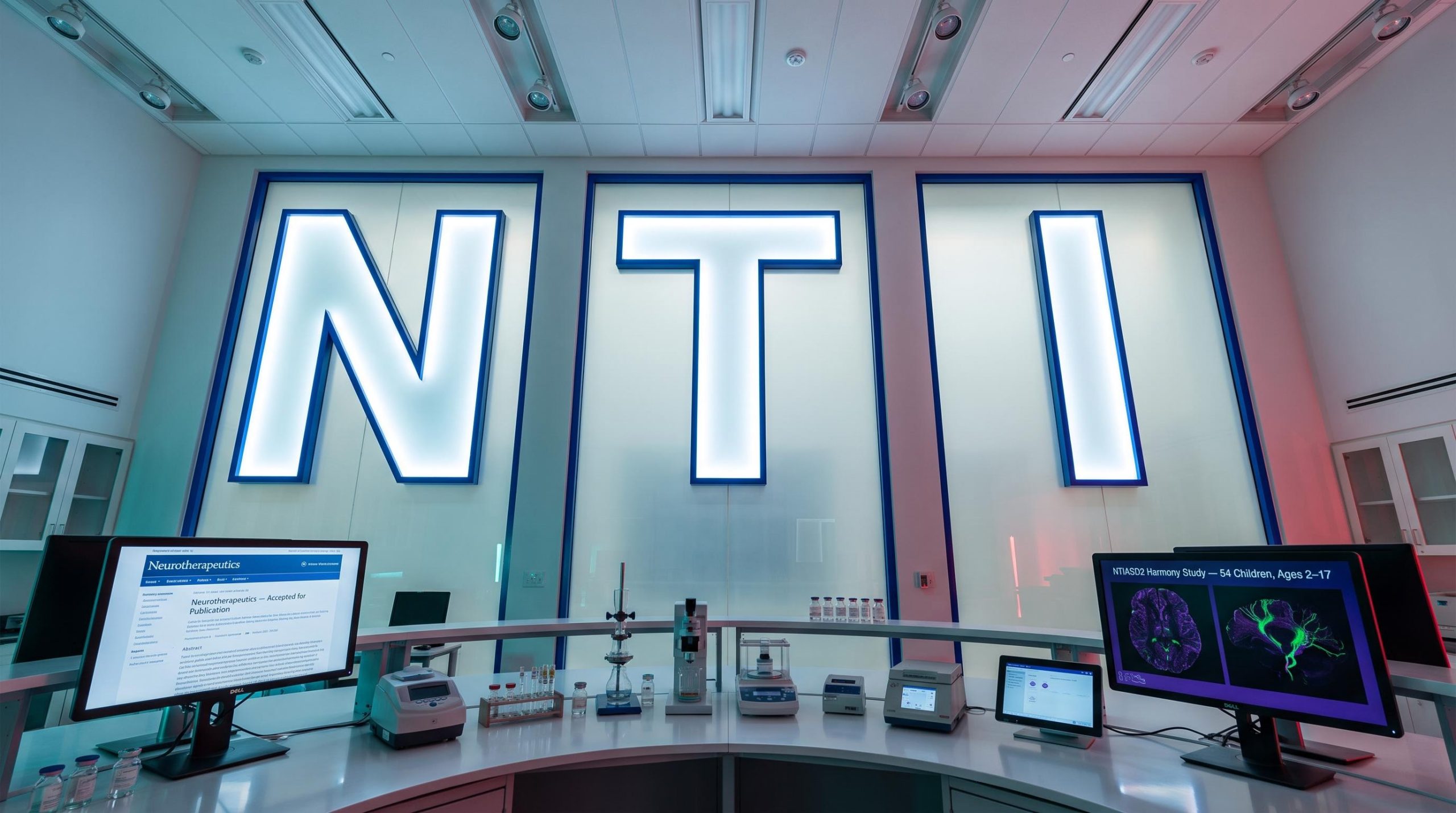
Peer-reviewed publication validates Neurotech’s Phase II/III autism trial
Neurotech International (ASX: NTI) has had results from its Phase II/III clinical trial of lead candidate NTI164 in children with Autism Spectrum Disorder (ASD) accepted for publication in Neurotherapeutics, the official journal of the American Society for Experimental Neurotherapeutics.
The manuscript, titled “NTI164, a novel medicinal cannabis extract, improves core symptoms of autism spectrum disorder: Results from a double-blind, randomised, controlled trial (The Harmony Study),” reports the findings of the Company’s NTIASD2 clinical trial.
Neurotech is a clinical-stage biopharmaceutical company focused on paediatric neurological disorders, with NTI164 as its lead candidate. The acceptance provides independent, external scientific scrutiny of the trial, a credibility milestone that increases visibility among clinicians, researchers and potential partners.
When big ASX news breaks, our subscribers know first
Inside the Harmony Study
The Harmony Study was a randomised, double-blind, placebo-controlled Phase II/III trial designed to evaluate the efficacy and safety of NTI164 in children with ASD. The key parameters disclosed are as follows:
-
54 children with Autism Spectrum Disorder (ASD)
-
Aged 2 to 17 years
-
Design: randomised, double-blind, placebo-controlled
-
Outcome: “clinically meaningful and statistically significant results across a range of validated measures”
-
Safety: “excellent safety profile”
According to the Company, the manuscript underwent independent peer review, providing external scrutiny of the trial methodology, analysis and findings. This distinction matters for investors: the underlying data was previously reported in April and July 2024, and the current milestone represents third-party validation of that data rather than a fresh trial readout.
Dr Anthony Filippis, Managing Director and CEO, Neurotech International
“Acceptance of our Phase II/III autism data by Neurotherapeutics represents another important external validation of NTI164 and the quality of Neurotech’s clinical development program. The Phase II/III study generated clinically meaningful and statistically significant results across a range of validated measures, supported by an excellent safety profile. Having these findings reviewed and accepted by a leading international scientific journal strengthens the evidence base for NTI164 and increases the visibility of our work among clinicians, researchers and potential partners.”
Why peer-reviewed publication matters
Peer review is a process in which independent experts in a relevant field examine a study’s methods, data and conclusions before publication. Acceptance by a high-impact journal signals that the work has withstood this external scrutiny.
For investors, this form of validation carries practical weight. Independent verification helps de-risk the science, can strengthen credibility with regulators and potential commercial or licensing partners.
The Harmony Study acceptance also adds to a growing body of peer-reviewed NTI164 data spanning multiple paediatric neurological indications, reinforcing the mechanistic rationale behind the candidate.
A growing evidence base across paediatric indications
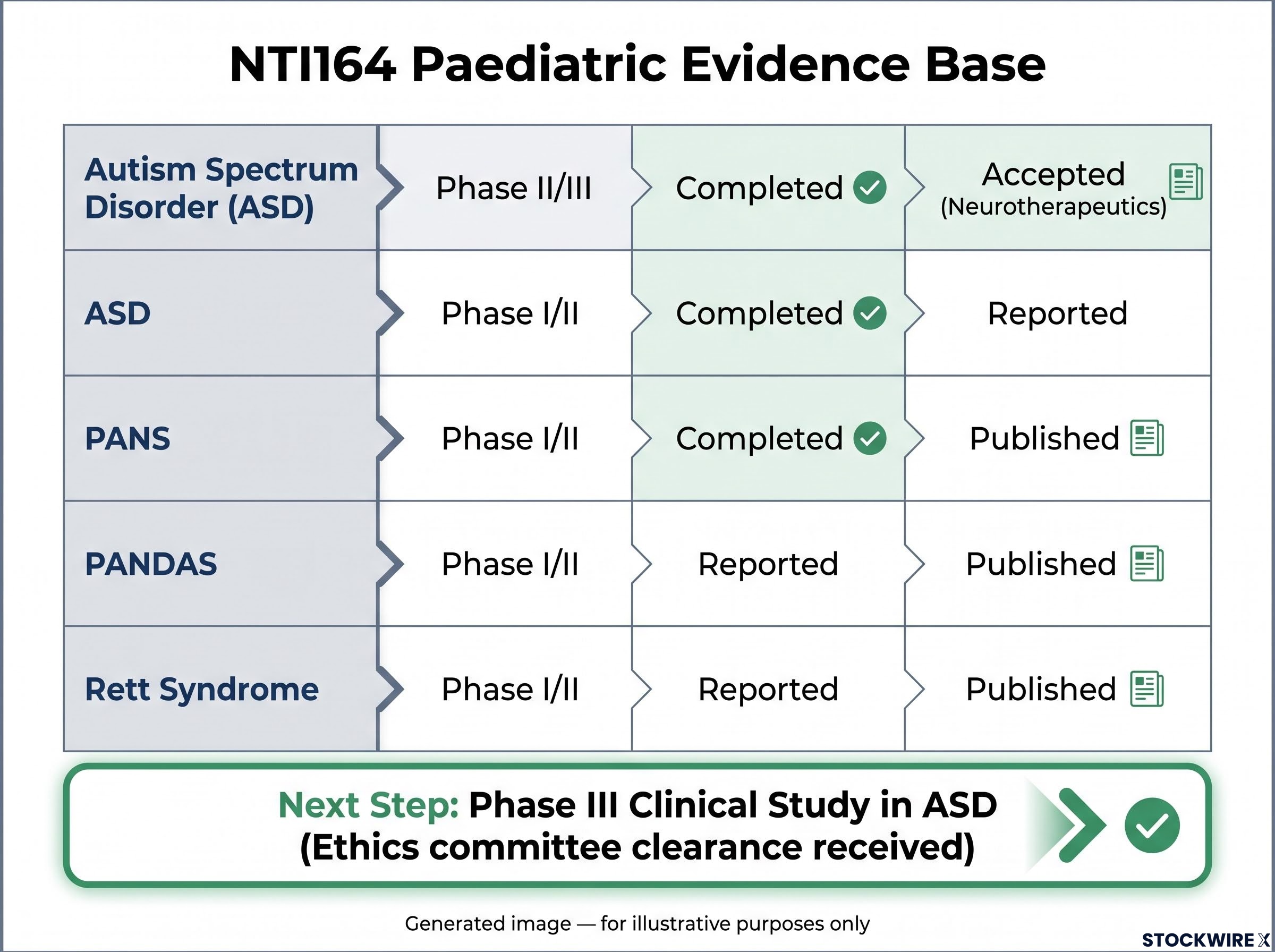
Neurotech positions NTI164 as a broad-spectrum oral cannabinoid drug therapy supported by peer-reviewed data across several conditions. The table below summarises the breadth of the programme as disclosed.
| Indication | Trial Phase | Status | Peer-Review / Publication |
|---|---|---|---|
| Autism Spectrum Disorder (ASD) | Phase II/III | Completed | Accepted — Neurotherapeutics |
| ASD | Phase I/II | Completed | Reported |
| PANS | Phase I/II | Completed | Published |
| PANDAS | Phase I/II | Reported | Published |
| Rett Syndrome | Phase I/II | Reported | Published |
NTI164 is described as a proprietary, multi-constituent, GMP-grade standardised formulation containing CBDA-rich extracts and select minor cannabinoids. According to the Company, preclinical and earlier clinical findings have demonstrated its potential to modulate neuroinflammatory signalling, immune dysregulation and upstream biological mechanisms implicated in neurodevelopmental disorders.
NTI164 PANS trial data published in the same journal demonstrated statistically significant efficacy across anxiety, OCD, tics, and quality of life measures in a paediatric orphan indication with no approved treatments, reinforcing the mechanistic rationale that carries across Neurotech’s broader programme.
What comes next for Neurotech
The only forward-looking development disclosed is that Neurotech has received human ethics committee clearance for a Phase III Clinical Study in ASD.
The publication acceptance strengthens the evidence base ahead of that next development stage. For investors, mounting peer-reviewed validation increases visibility among potential partners and supports the path toward later-stage development of NTI164.
For readers wanting to track how the Phase III programme has progressed since ethics clearance, our full explainer on the Beyond Harmony Phase 3 trial activation covers the Monash Children’s Hospital site opening, the 150-patient adaptive trial design, and the timeline for additional site initiations.
Don’t Miss the Next ASX Healthcare Breakthrough
Big News Blast delivers FREE breaking ASX healthcare news directly to your inbox within minutes of release, complete with in-depth analysis. Join 20,000+ subscribers already staying ahead of the market. Click the “Free Alerts” button at StockWire X to get the next market-moving announcement the moment it drops.