
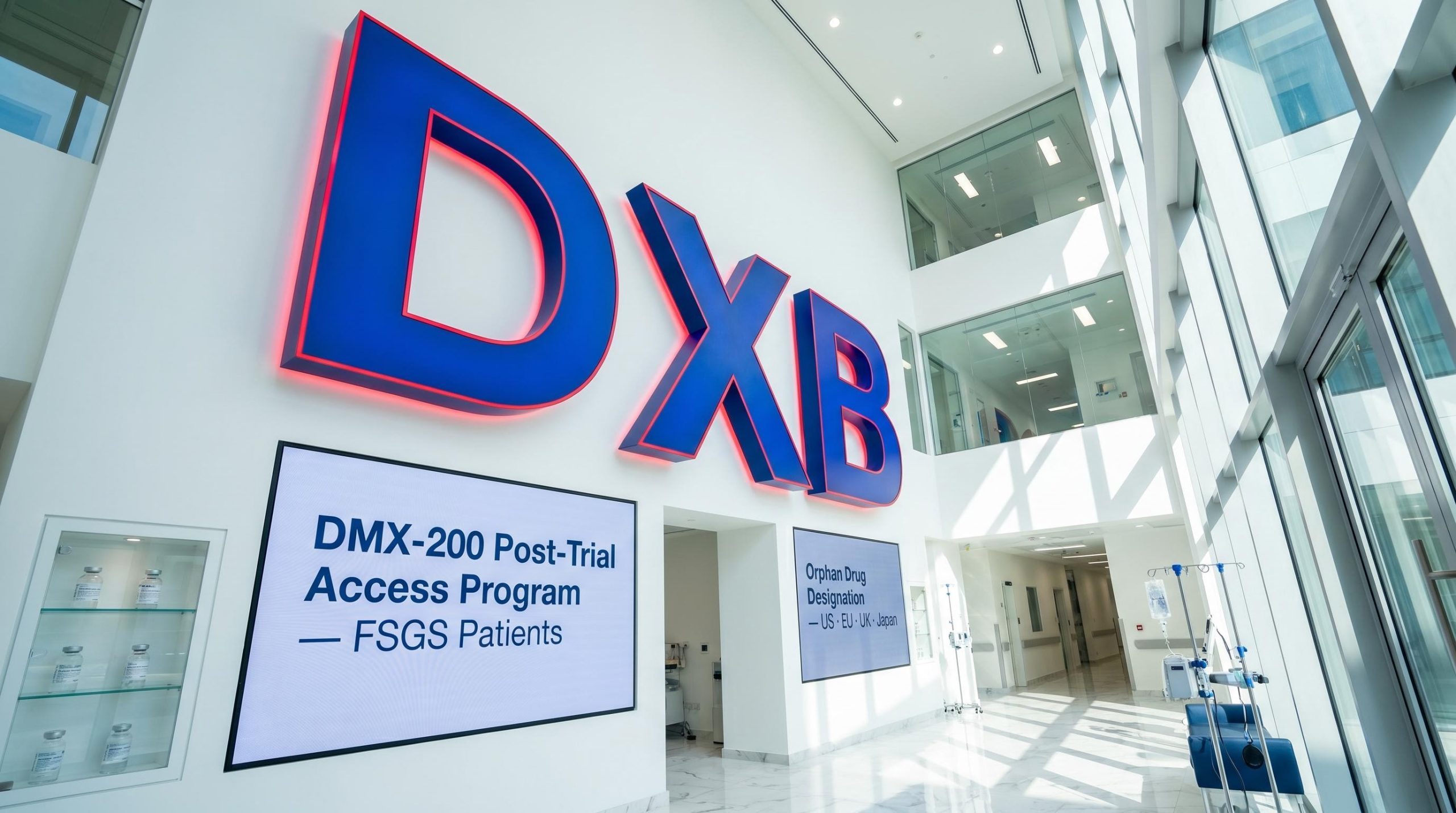
Dimerix opens post-trial access to DMX-200 for FSGS patients
Dimerix (ASX: DXB) has announced that its investigational kidney therapy DMX-200 will be made available to eligible patients through post-trial access pathways in key territories, supporting continuity of care for a population with high unmet medical need.
Patients who have completed the ACTION3 Phase 3 trial and the Open Label Extension (OLE) study may continue receiving DMX-200 in consultation with their treating physician. Importantly, this access does not constitute regulatory approval. DMX-200 remains an investigational medicine, and efficacy has not been confirmed.
When big ASX news breaks, our subscribers know first
How post-trial access works
Post-trial access refers to continued treatment for eligible participants after a clinical trial or open-label extension concludes, where a treating physician considers ongoing therapy appropriate and no suitable alternative is available. The mechanics vary by territory.
- Access is subject to applicable local regulatory frameworks.
- Depending on jurisdiction, treatment may be delivered via expanded access, compassionate use, special access or equivalent pathways.
- Dimerix’s commercial partners are responsible for applicable post-trial access arrangements in their respective territories, including covering the cost of supply of DMX-200.
- Dimerix is responsible for territories where a commercialisation partner has not yet been appointed.
Dimerix commercial partnerships now span five regional agreements with aggregate potential milestone payments of up to AU$1.9 billion, a structure that also determines which partners bear supply costs under post-trial access arrangements in their respective territories.
Data collection under the program is limited primarily to safety data. The structure carries a subtle financial benefit: with partners bearing supply costs in licensed territories, Dimerix’s cost exposure is limited to unlicensed markets.
Dr David Fuller, Chief Medical Officer, Dimerix
“We are committed to ensuring that patients with FSGS, who have participated in our clinical program, have the opportunity to continue treatment with DMX-200 where appropriate. The post-trial access pathways reflect both the unmet medical need in this patient population and the encouraging patient experience observed to date with DMX-200.”
Understanding FSGS and why DMX-200 matters
Focal segmental glomerulosclerosis (FSGS) is a rare, serious kidney disorder marked by progressive scarring of the glomeruli, the tiny filtering units inside the kidney. This scarring leads to proteinuria (excess protein leaking into the urine), a gradual loss of kidney function, and often end-stage renal disease. The condition is increasingly understood to have an inflammatory component, with monocyte and macrophage activation contributing to glomerular injury.
DMX-200 is a chemokine receptor (CCR2) antagonist, a drug designed to block a specific inflammatory signalling pathway. It is administered to patients already receiving an angiotensin II type I receptor (AT1R) blocker, the standard of care for hypertension and kidney disease.
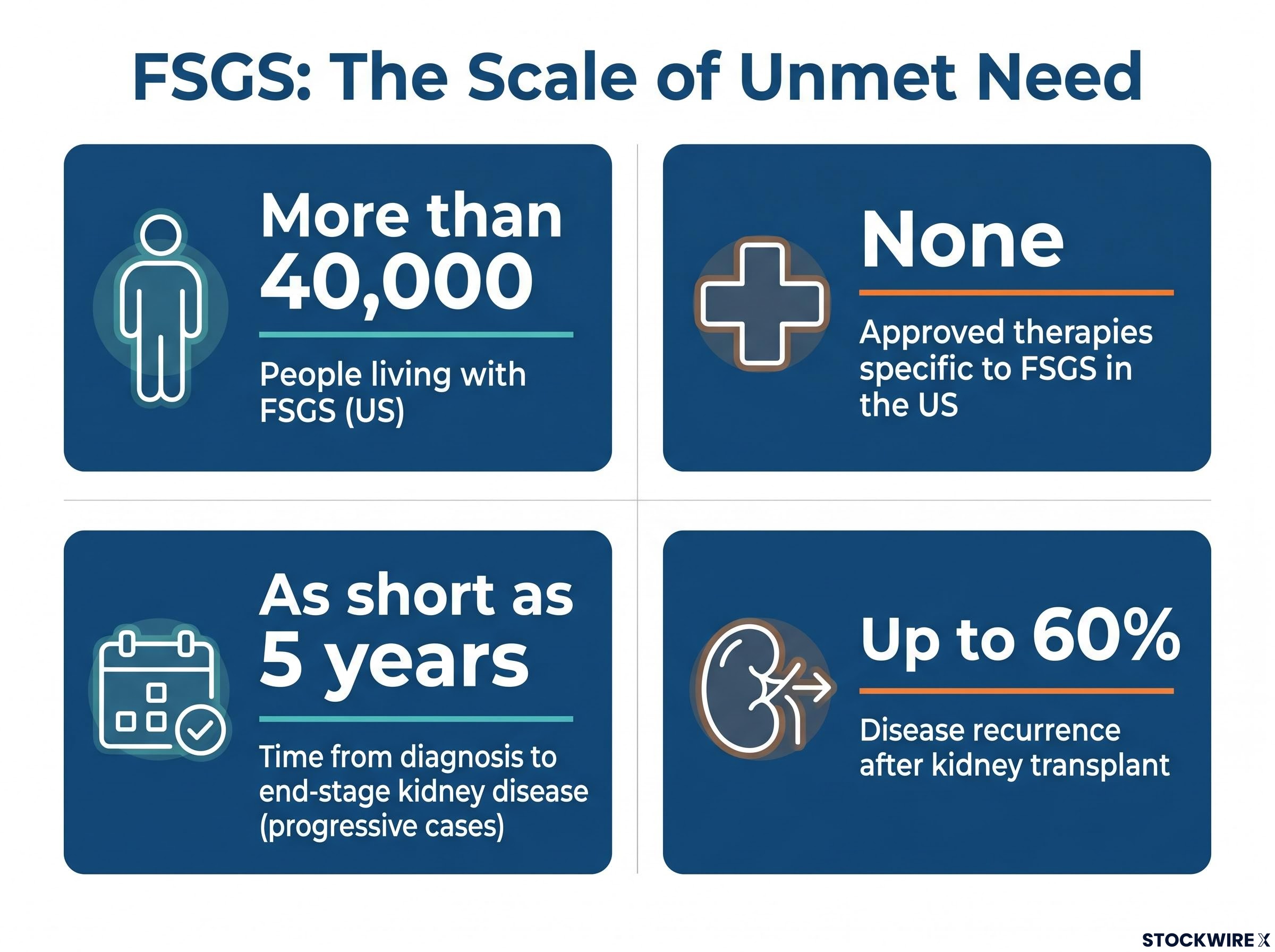
The scale of the unmet need is significant.
| Metric | Detail |
|---|---|
| People living with FSGS (US) | More than 40,000 |
| Approved therapies specific to FSGS in the US | None |
| Time from diagnosis to end-stage kidney disease (progressive cases) | As short as 5 years |
| Disease recurrence after kidney transplant | Up to 60% of cases |
The absence of any FSGS-specific approved therapy in the US underscores the commercial opportunity for DMX-200 should it ultimately reach approval.
The ACTION3 Phase 3 study and DMX-200’s protection
ACTION3 is a pivotal Phase 3, multi-centre, randomised, double-blind, placebo-controlled study assessing the efficacy and safety of DMX-200 in FSGS patients receiving a stable dose of an angiotensin II receptor blocker (ARB). Once the ARB dose is stable, patients are randomised to receive either DMX-200 (120mg capsule, twice daily) or placebo over a 2-year treatment period.
The percent change in proteinuria is the primary endpoint, with the study also capturing kidney function via eGFR slope. The trial is designed to generate sufficient evidence to support marketing approval.
Proteinuria endpoint confirmation from the FDA, which accepted percent reduction in proteinuria versus placebo as the basis for traditional approval via the 505(b)(1) pathway, established regulatory clarity that strengthens the trial’s commercial readout profile ahead of March 2028.
Beyond the clinical programme, DMX-200 carries several value drivers:
-
Granted patents in various territories until 2032, with applications submitted globally that may extend protection to 2042.
-
Orphan Drug Designation granted in the United States, Europe, the UK and Japan.
-
Identified via Dimerix’s proprietary Receptor Heteromer Investigation Technology (Receptor-HIT) platform.
A long intellectual property runway combined with orphan status enhances the potential commercial value of DMX-200 should it reach the market.
What this means for investors
The introduction of a post-trial access programme reflects DMX-200’s advanced clinical stage and the encouraging patient experience observed to date, as noted by the Chief Medical Officer. That said, this is not confirmation of efficacy, which remains dependent on the outcome of the ACTION3 trial. The pathway does, however, position eligible patients for continuity of care ahead of any potential future regulatory approval.
For shareholders, the commercial-partner cost-sharing structure is a modest positive, limiting Dimerix’s supply-cost exposure in licensed territories. The broader thesis remains intact: a Phase 3 asset targeting a rare disease with no specifically approved therapies and an addressable population of more than 40,000 patients in the US alone.
Don’t Miss the Next ASX Healthcare Breakthrough
Big News Blast delivers FREE breaking ASX healthcare news directly to your inbox within minutes of release, with in-depth analysis already done. Join 20,000+ subscribers staying ahead of market-moving announcements the moment they drop. Click the “Free Alerts” button at StockWire X to get started today.