

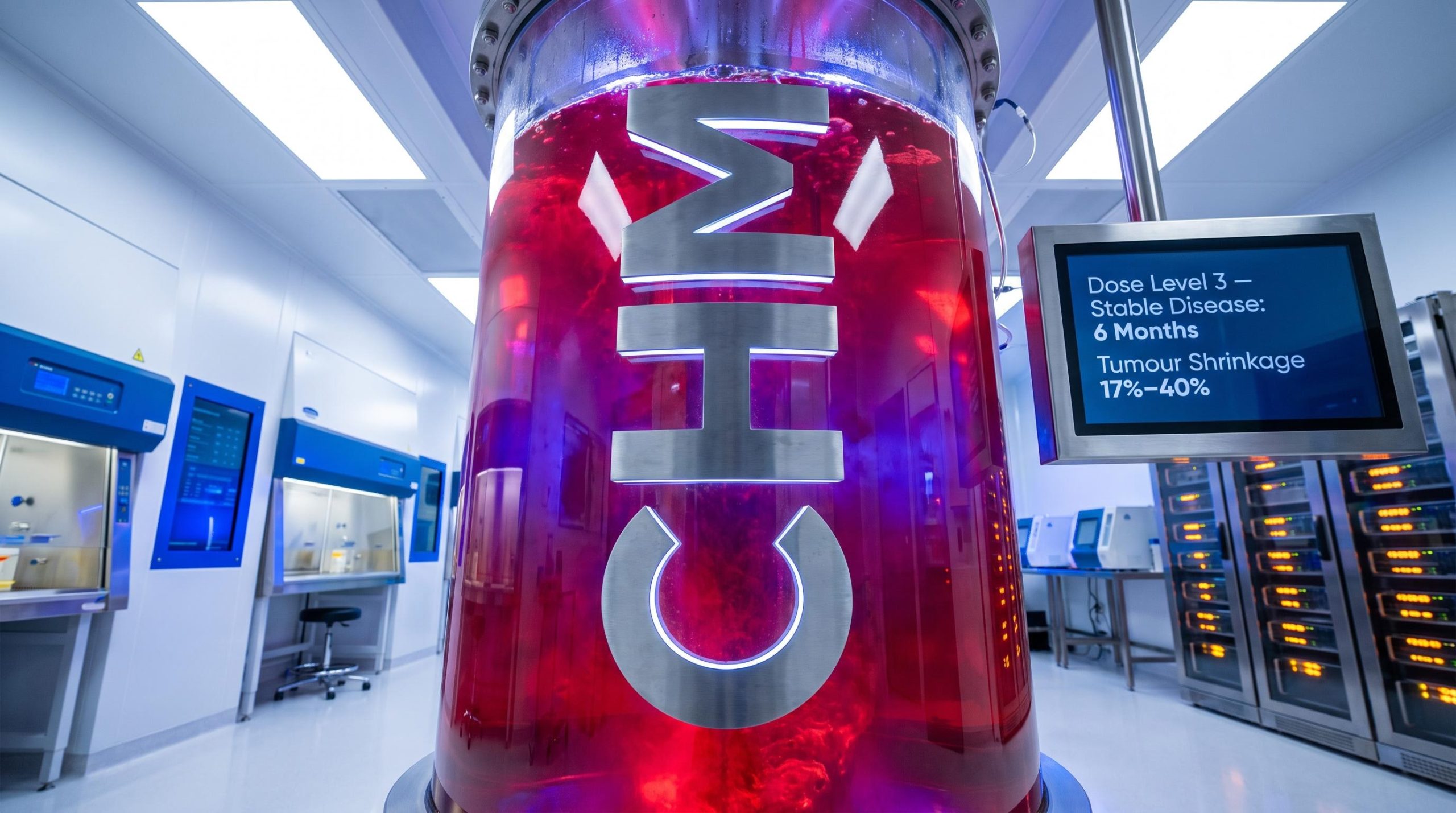
Chimeric reports fresh Dose Level 3 efficacy signals in CDH17 CAR-T trial
Chimeric Therapeutics (ASX: CHM) has reported new interim efficacy data from its ongoing Phase 1/2 clinical trial of CHM CDH17, with two of four patients treated at the highest dose showing early anti-tumour activity. The update covers Dose Level 3, equal to 450 million CAR-T cells.
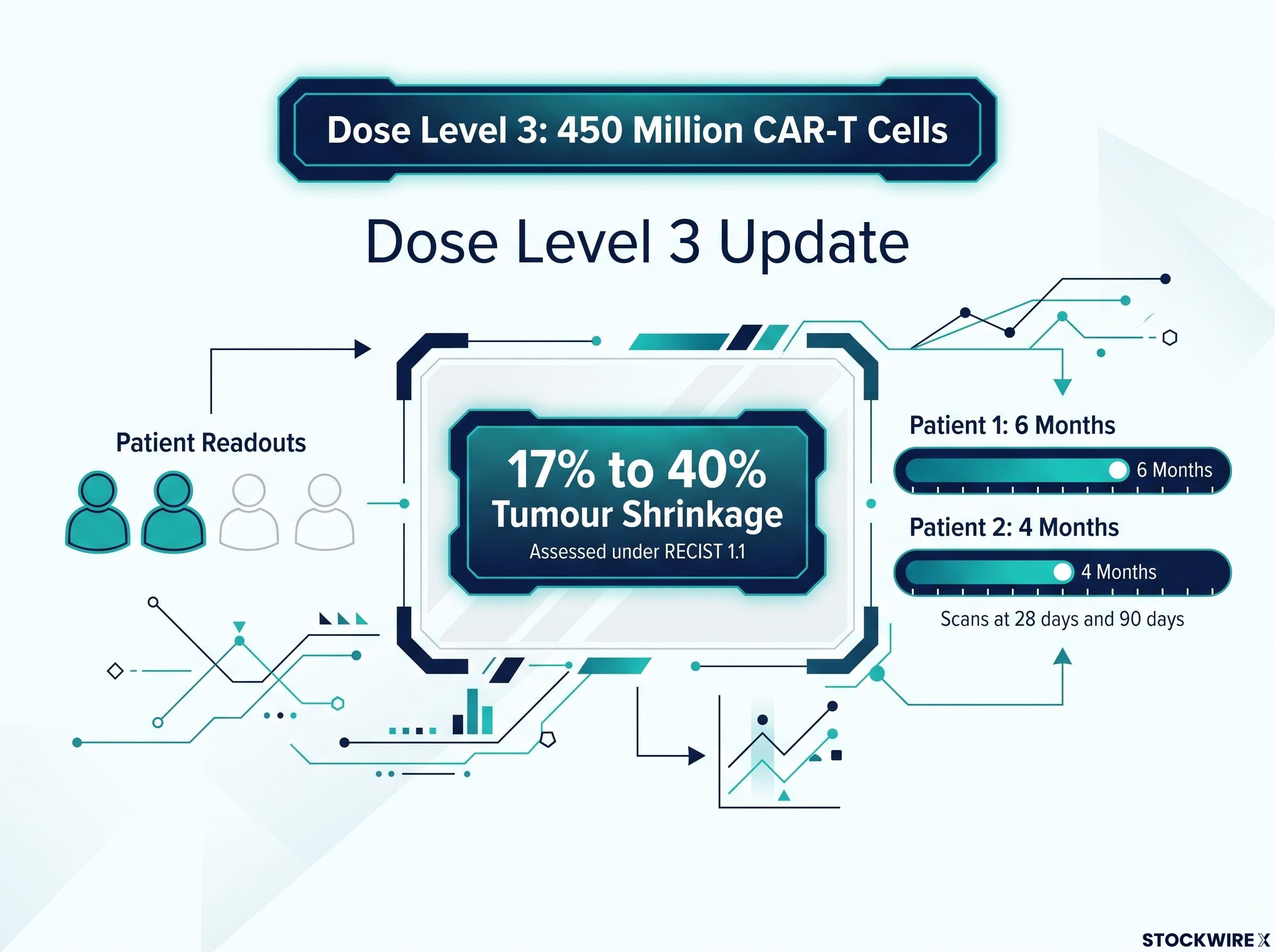
The preliminary readouts point to tumour shrinkage ranging from 17% to 40% in individual lesions. One patient has maintained Stable Disease for six months and another for four months, each assessed under RECIST 1.1 criteria.
These figures represent a continued maturation of the dataset. Patient follow-up remains ongoing, and the results extend the interim data reported to the ASX on 31 May 2026.
When big ASX news breaks, our subscribers know first
Breaking down the Dose Level 3 results
Four patients have now been treated at Dose Level 3. Each patient receives a scan at 28 days following treatment and again at 90 days. Two of the four have preliminary readouts to date, with the remaining two still to report.
Key details from the current update include:
-
Each patient is scanned at 28 days and again at 90 days post-treatment
-
Two of the four Dose Level 3 patients have preliminary data
-
Data from the remaining two patients is to be reported as it becomes available
On safety, the profile continues to be monitored for any new toxicities or safety signals. Aside from the single dose limiting toxicity reported on 31 May 2026, no additional safety signals have arisen to date.
| Metric | Patient 1 | Patient 2 | Assessment Standard |
|---|---|---|---|
| Tumour shrinkage (individual lesions) | Within the reported 17%–40% range | Within the reported 17%–40% range | RECIST 1.1 |
| Stable Disease duration | Six months | Four months | RECIST 1.1 |
For context, the earlier readout reported on 31 May 2026 described 82% disease control at the 28-day assessment, covering 9 of 11 evaluable patients, alongside the one dose limiting toxicity. That data represents the prior milestone, while the current announcement reflects additional patients treated at Dose Level 3.
The 82% disease control rate reported across 11 evaluable patients at ASCO on 1 June 2026 established the baseline from which the current Dose Level 3 data builds, with CAR-T cells persisting in peripheral blood for up to 15 months post-infusion across all treated patients.
What CDH17 CAR-T therapy is and why it matters
CAR-T therapy uses a patient’s own T cells, a type of immune cell, which are engineered in a laboratory to recognise and attack cancer. Because the cells come from the patient, the approach is described as autologous.
CHM CDH17 is a first-in-class, 3rd generation CAR-T therapy that targets CDH17. This is a biomarker associated with poor prognosis and metastases in the most common gastrointestinal tumours.
The Study (NCT06055439) is a Phase 1/2 trial designed to determine a recommended Phase 2 dose and evaluate safety and objective response rate. It targets patients with advanced colorectal cancer, gastric cancer, and intestinal neuroendocrine tumours (NETs). The Phase 1 portion is expected to enrol up to 15 evaluable patients, leading to dose selection and indication-specific Phase 2 cohorts.
CHM CDH17 was invented at the University of Pennsylvania in the laboratory of Dr Xianxin Hua. Preclinical evidence was published in 2022 in Nature Cancer, demonstrating tumour eradication across seven types of cancer in mice.
For investors, efficacy signals in hard-to-treat gastrointestinal cancers carry weight because these indications typically have limited treatment options once patients relapse. Any durable disease control at the highest dose helps inform the broader clinical value of the platform, though the data remains preliminary.
Leadership perspective and the road ahead
Management framed the update around a platform thesis rather than a single asset, pointing to potential value across multiple cell therapy modalities.
Dr Bradley Glover, Non-Executive Chairman
“The continued maturation of the CHM CDH17 clinical dataset reinforces our conviction that this program represents a differentiated cell therapy platform rather than a single clinical asset. We believe the biology and clinical experience generated through this study has the potential to support future development across multiple cell therapy modalities, expanding the long-term strategic value of the CDH17 platform and creating additional opportunities for patients and shareholders.”
Next steps and timelines
The company outlined the following forward path:
-
Manufacturing is complete for the fifth patient at Dose Level 3, with dosing expected in the coming weeks
-
The sixth and final patient in the Study is expected to be dosed by the end of 2026, subject to funding
-
Further data from the remaining two Dose Level 3 patients is to be reported as it becomes available
The funding qualifier attached to the sixth patient is material and has been flagged by the company as a condition of that dosing timeline.
Beyond CHM CDH17, Chimeric holds a diversified portfolio spanning four clinical-stage programs, including CHM CORE-NK, described by the company as a potentially best-in-class NK cell platform.
The CHM CORE-NK AML trial reported a 60% complete response rate in frontline high-risk patients at MD Anderson Cancer Center, more than doubling the 20-30% benchmark of current standard of care and underscoring the breadth of Chimeric’s cell therapy pipeline beyond the CDH17 program.
Don’t Miss the Next Healthcare Breakthrough on ASX
Big News Blast delivers FREE breaking ASX healthcare news directly to your inbox within minutes of release, complete with in-depth analysis already done for you. Join 20,000+ investors staying ahead of market-moving announcements. Click the “Free Alerts” button at StockWire X to get the next significant update the moment it hits.