
BlinkLab Lands Morocco Gov’t Deal to Screen 600,000 Kids Annually for Autism
Key Takeaways
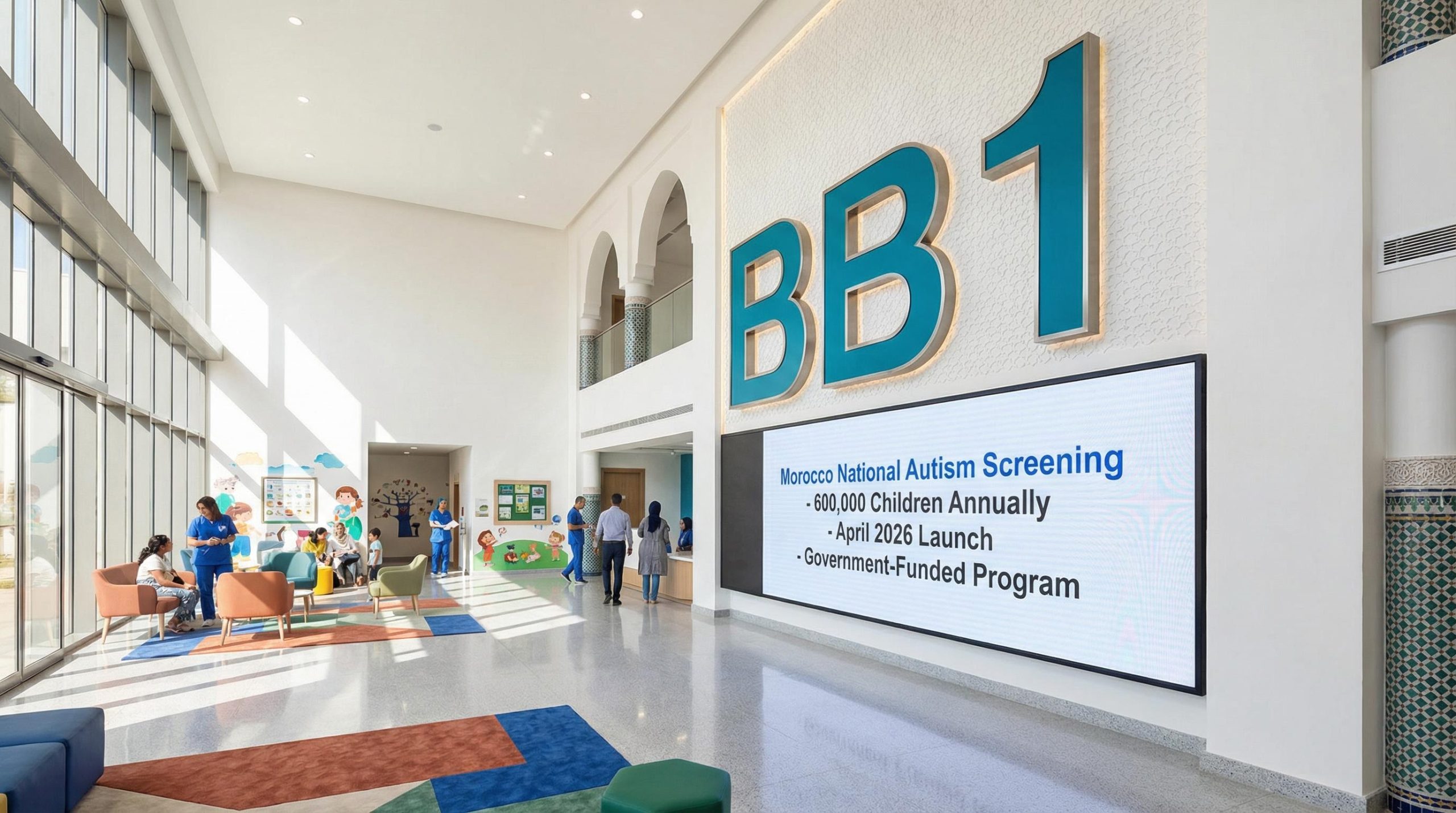
BlinkLab (ASX: BB1) has secured a landmark government-backed contract to deploy its Dx1 autism screening platform across Morocco's 3,000 public healthcare centres, targeting 600,000 children born annually — a zero-capex deal that builds real-world validation ahead of the company's FDA clearance pathway.
- BlinkLab's Dx1 platform has been selected for Morocco's nationwide government-funded autism screening program, targeting approximately 600,000 children born annually across 3,000 public primary healthcare centres.
- The agreement runs until 29 August 2028 under a formal multi-ministry framework, with all local implementation, equipment, and data hosting costs borne by the Moroccan government and Foundation Mohammed V for Solidarity — requiring zero capital outlay from BlinkLab.
- BlinkLab retains full ownership of all platform intellectual property, generated data, and any improvements to its technology developed during the program.
- The program is not designed to generate immediate revenue but instead provides large-scale real-world validation intended to strengthen BlinkLab's FDA clearance case and future commercial negotiations.
- Morocco's initiative includes a Center of Excellence for Autism Research and has been designed with an explicit regional expansion framework targeting North Africa and the Middle East.
Morocco selects BlinkLab for nationwide autism screening program
BlinkLab Limited (ASX: BB1) has announced its flagship Dx 1 test has been selected to support Morocco’s nationwide early autism screening initiative, a government-funded national program under a formal multi-ministry framework. The program will target approximately 600,000 children born annually in Morocco, with systematic screening commencing from 18 months of age. Morocco’s population of 38 million includes an estimated 400,000+ people currently affected by autism.
The initiative is being launched pursuant to the High Instructions of His Majesty King Mohammed VI and reflects Morocco’s national commitment to equitable healthcare access for persons with disabilities. The program is governed by a formal convention signed in Rabat on 29 August 2025 between the Foundation Mohammed V for Solidarity, the Ministry of Higher Education, Scientific Research and Innovation, the Ministry of Health and Social Protection, and the Ministry of Solidarity, Social Integration and the Family.
Morocco aims to establish itself as an international leader in early autism diagnosis, intervention and care through this initiative. The program will be implemented across approximately 3,000 public primary healthcare centres throughout the Kingdom, with initial screening centres commencing operations from April 2026 and phased national expansion thereafter. For context, Morocco’s 600,000 annual births compare to Australia’s approximately 290,000 births annually, highlighting the significant scale of the screening opportunity.
When big ASX news breaks, our subscribers know first
What is population-level autism screening and why does it matter?
Population-level autism screening refers to systematic early identification programs implemented at national scale, rather than fragmented approaches that rely on parents or clinicians to initiate assessments. By screening all children at a standardised age (in Morocco’s case, from 18 months), healthcare systems can identify developmental differences during critical periods of brain plasticity when early intervention programs deliver maximum benefit.
Early identification enables timely access to therapeutic support during the developmental window when neurological pathways are most responsive to intervention. Research indicates that children who receive structured support programs in their earliest years demonstrate improved clinical outcomes and require less intensive (and costly) support services in adulthood.
The economic case for early intervention is significant. As BlinkLab Non-executive Chairman Brian Leedman noted in the company’s announcement, “an adult receives more than three times the level of funding support than a child” under Australia’s National Disability Insurance Scheme (NDIS). This funding differential highlights the long-term cost implications of delayed diagnosis and intervention.
BlinkLab’s smartphone-based, AI-enabled digital approach offers a non-invasive screening method designed to support healthcare systems facing capacity constraints, long waitlists and inequities in access to specialist diagnostic services. The technology captures objective neurometric features through smartphone assessments, functioning as an adjunctive digital aid alongside established screening questionnaires.
Government-funded rollout and commercial structure
All clinical rollout and implementation costs for the program will be funded by the Moroccan government and the Foundation Mohammed V for Solidarity. BlinkLab will bear no material capital expenditure as part of this initiative, with the Foundation covering local implementation, data hosting costs, data transfer and the acquisition and installation of equipment and devices necessary for program delivery.
Critically, BlinkLab retains all rights, title and interest in any data generated via the platform during the screening program. Any improvements to BlinkLab’s intellectual property developed by the Foundation will be assigned to BlinkLab, and any intellectual property created as a direct result of the agreement will remain BlinkLab property.
The agreement’s commercial terms are structured for the initial deployment phase, with pricing and deployment models to be revisited with Moroccan government stakeholders following any future FDA clearance.
| Term | Detail | BlinkLab Benefit |
|---|---|---|
| Initial Term | Until 29 August 2028 | Three-year deployment window aligned with national framework convention period |
| Cost Structure | Foundation bears local implementation, data hosting, equipment costs | Zero capital outlay for BlinkLab during rollout phase |
| IP Ownership | BlinkLab retains all platform IP and data rights; any improvements assigned to BlinkLab | Full ownership of generated data and platform enhancements |
| Termination | 60 days written notice by either party | Flexible exit mechanism if program objectives are not met |
| Post-Term | Good faith negotiation of commercial terms including fees | Opportunity to establish revenue model after real-world validation |
The program is not intended to generate immediate revenue for BlinkLab. Instead, it is designed to prioritise large-scale adoption and real-world validation ahead of FDA clearance, positioning the company for commercial negotiations following regulatory approval.
Strategic significance for US market and FDA pathway
Although the Morocco program operates outside the United States, it holds direct strategic relevance to BlinkLab’s core US market strategy and clinical adoption pathway. Government-led national deployment complements the company’s ongoing FDA registrational clinical trial program by providing large-scale real-world evidence of the platform’s operational reliability, scalability and system-level utility.
This type of validation is increasingly relevant to regulators, payers and healthcare systems evaluating adoption pathways following regulatory clearance. Success within a government-endorsed national framework demonstrates BlinkLab’s ability to address healthcare system bottlenecks, capacity constraints and inequities in access to diagnostic services, all of which are critical considerations for US health systems and payers assessing post-FDA implementation.
Dr Henk-Jan Boele, Managing Director and CEO, BlinkLab Limited
“BlinkLab is honoured to support this important national initiative in Morocco to improve autism diagnosis and ongoing care. The CNMH autism centres in Morocco have extensive first-hand experience with our technology through prior collaborative clinical studies. This direct clinical experience highlighted BlinkLab’s operational ease of use and its high diagnostic accuracy, which in turn, drove the government’s decision to select BlinkLab’s Dx1 Platform for its nationwide screening program. It reflects high levels of confidence in our platform capacities, even prior to formal regulatory clearance. This outcome also highlights the commercial strength of our go-to-market strategy, where a robust, evidence-based scientific foundation is driving initial national-scale clinical adoption.”
Government adoption pre-FDA demonstrates commercial viability and de-risks US market entry by providing evidence that national healthcare systems will integrate the technology at scale when supported by clinical validation. This positions BlinkLab to present a compelling adoption case to US regulators and payers when seeking market authorisation.
Regional expansion and Center of Excellence
Morocco’s national framework has been explicitly designed with a broader regional outlook for North Africa and the Middle East. The government-endorsed model can be referenced by other countries across the region actively investing in digital health transformation within public healthcare systems, including early childhood screening initiatives.
CNMH and its affiliated centres form part of a broad national clinical network with existing bilateral collaborations with several Gulf States, providing established pathways for regional expansion discussions. Morocco’s initiative offers a structured, validated framework that neighbouring countries can adapt to their own healthcare contexts.
The program includes establishment of a Center of Excellence for Autism Research, Education and Training. Dr Henk-Jan Boele, BlinkLab’s Managing Director and CEO, and Prof Abdeslem El Idrissi, a member of BlinkLab’s Scientific Advisory Board, will join an international expert consortium supporting the program’s design and implementation.
The Center of Excellence will fulfil three core functions:
- Academic and clinical oversight of postgraduate capability-building programs within the broader Moroccan initiative
- Standardised training in Applied Behaviour Analysis (ABA) for healthcare professionals participating in the screening program
- International expert consortium advisory structure to support program design and implementation quality
The program aligns with guidelines and recommendations recognised by the World Health Organization (WHO), as well as Morocco’s national objectives for improving equitable access to services for people with disabilities and neurodevelopmental disorders. This international standards alignment supports the program’s potential as a reference model for other countries.
The regional expansion potential creates a government-endorsed, replicable model across MENA markets where digital health infrastructure investment is accelerating and early childhood screening initiatives are priorities for national health ministries.
Clinical foundation driving adoption
BlinkLab’s selection for the Morocco program builds on several years of successful collaboration with the Mohammed VI National Center for the Disabled (CNMH) in multi-centre clinical studies. The Foundation Mohammed V for Solidarity selected BlinkLab based on this direct clinical experience, which demonstrated the platform’s operational ease of use and diagnostic accuracy in real-world settings.
The company’s large-scale multi-centre study in collaboration with CNMH, announced in November 2024, validated BlinkLab’s accuracy in detecting autism in children. This research led to peer-reviewed publication in Autism Research journal in January 2026, providing independent scientific validation of the technology’s effectiveness.
BlinkLab’s assessments function as an adjunctive digital aid rather than a stand-alone diagnostic tool, used alongside established screening questionnaires. The smartphone-based approach enables rapid, standardised and objective detection of autism-related neurometric features in a non-invasive, low-risk format suitable for deployment across primary care, community and specialist healthcare settings.
Brian Leedman, Non-executive Chairman, BlinkLab Limited
“The deployment of BlinkLab’s smartphone technology as an early screening test for autism prior to regulatory approval is testament to the commercial possibilities of the Dx 1 platform. Early screening leads to early diagnosis and early intervention for families seeking support for children with developmental and behavioural difficulties. There is clear evidence that early intervention programs improve clinical outcomes and are highly cost-effective during adulthood. Morocco’s actions will serve notice to governments globally seeking to maximise the effectiveness of their healthcare systems.”
The evidence-based scientific foundation driving initial national-scale clinical adoption demonstrates the strength of BlinkLab’s go-to-market strategy, where peer-reviewed clinical validation precedes commercial deployment. This approach positions the technology for credible engagement with regulators, healthcare systems and payers evaluating adoption decisions.
The next major ASX story will hit our subscribers first
What comes next for BlinkLab
The Morocco program timeline provides near-term operational milestones whilst building toward commercial inflection following FDA clearance. Initial screening centres will commence operations from April 2026, with phased national expansion across Morocco’s approximately 3,000 public primary healthcare centres thereafter.
Key upcoming milestones include:
- April 2026: Initial screening centres operational in Morocco
- Phased rollout across Morocco’s 3,000+ public primary care settings throughout the national framework period
- August 2028: Agreement term expires; commercial terms including pricing and deployment models to be negotiated with Moroccan government stakeholders
- FDA registrational clinical trial pathway continues in parallel in the United States
The agreement’s initial term runs until 29 August 2028, aligned with the period of the national framework convention. Upon expiry, BlinkLab and the Foundation Mohammed V for Solidarity will negotiate new terms in good faith, including any associated fees for continued platform access.
This structure allows BlinkLab to demonstrate large-scale real-world utility and generate comprehensive clinical data without immediate revenue pressure, whilst establishing the foundation for commercial negotiations following regulatory clearance. The parallel FDA pathway means US market entry preparations continue independently of the Morocco deployment timeline, with each program supporting the other’s validation narrative.
Want the Next Healthcare Breakthrough in Your Inbox?
Join 20,000+ investors receiving FREE breaking ASX news within minutes of release, complete with in-depth analysis. Click the “Free Alerts” button at Big News Blast to get real-time alerts on healthcare, tech, finance and consumer sector announcements the moment they hit the market.