
Amplia presents mature ACCENT trial data at prestigious AACR conference
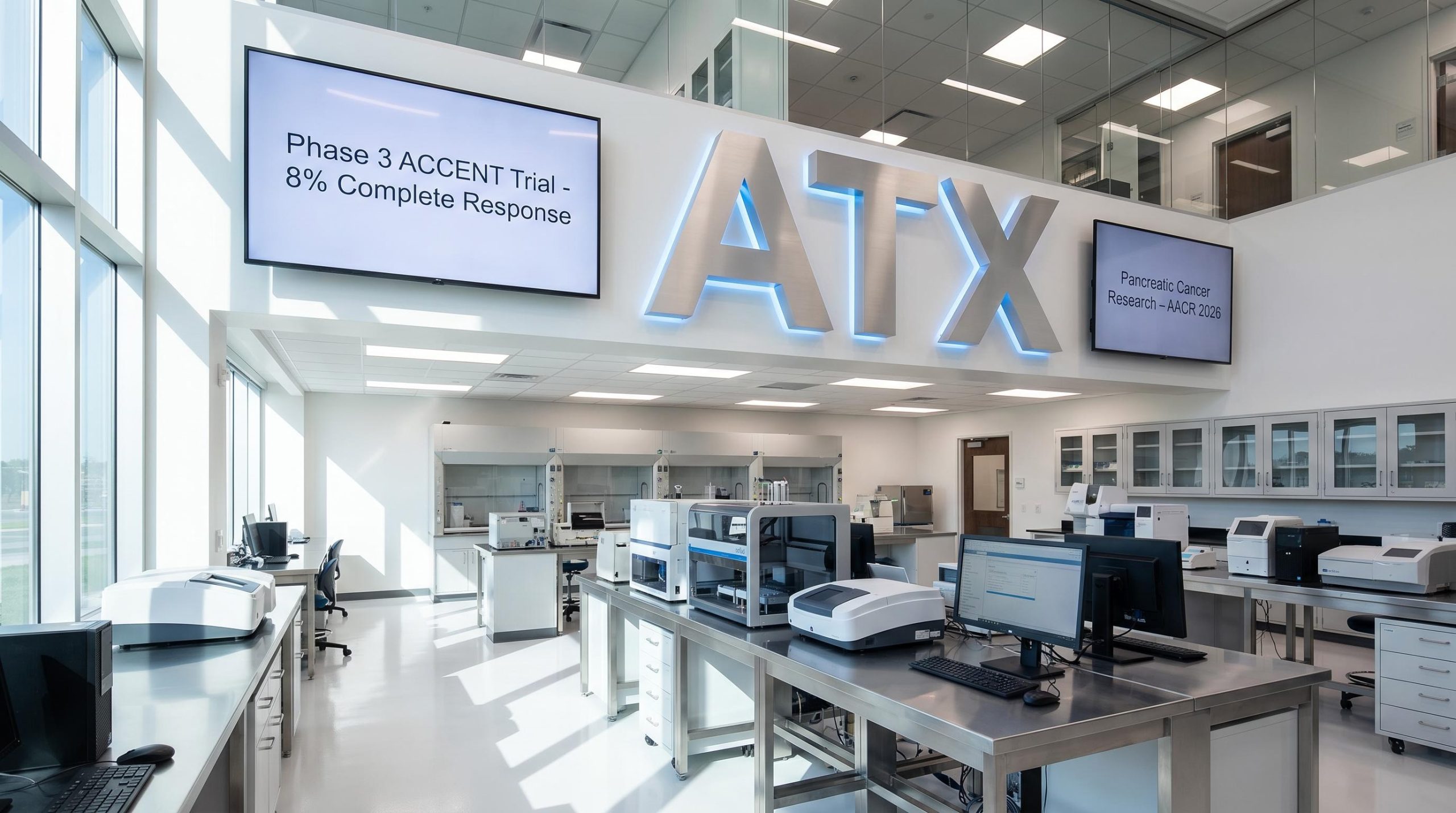
Amplia Therapeutics (ASX: ATX) has presented mature data from its ACCENT trial investigating narmafotinib in metastatic pancreatic cancer at the American Association of Cancer Research (AACR) annual meeting in San Diego. Dr Terrie-Anne Cock, Director of Translational Biology, delivered the presentation on 22 April 2026 as part of a mini-symposium entitled Advances in Precision Oncology. The data represents a more detailed analysis of previously reported results from 64 patients treated at the 400mg dose level, marking the company’s presence at one of the world’s most prestigious oncology conferences.
The AACR annual meeting provides a platform for emerging cancer therapies to be scrutinised by global pharmaceutical industry stakeholders, academic oncologists, and regulatory experts. Presentation at this forum validates the scientific credibility of Amplia’s clinical programme and positions the ACCENT trial data within the broader context of advances in precision oncology. For investors, this visibility represents an opportunity to attract partnership interest from larger pharmaceutical companies seeking novel mechanisms in pancreatic cancer treatment.
When big ASX news breaks, our subscribers know first
What is focal adhesion kinase inhibition?
Focal Adhesion Kinase (FAK) is an enzyme that becomes overactive in pancreatic cancer, and elevated FAK levels correlate with worse patient outcomes. The protein plays multiple roles in tumour biology: it enables cancer cells to proliferate and migrate more aggressively, creates fibrosis (scar tissue) in the tumour microenvironment that blocks drugs from reaching cancer cells, and suppresses immune cell reactivity against tumours. FAK inhibition addresses all three mechanisms simultaneously.
Narmafotinib is Amplia’s FAK inhibitor, positioned by the company as “best-in-class” based on its high potency, high selectivity for the FAK enzyme, and practical advantages. The drug is administered orally once daily, with a pharmacokinetic profile supporting dosing convenience (half-life of approximately 20 hours). Its low risk of drug-drug interactions allows it to be combined safely with standard chemotherapies, a critical factor for clinical feasibility in pancreatic cancer where combination treatment is the standard approach.
FAK inhibitors represent an emerging therapeutic class gaining attention in solid tumour treatment, particularly in fibrotic cancers where the tumour microenvironment acts as a physical and chemical barrier to treatment efficacy. Amplia’s focus on this mechanism positions the company within a scientifically validated area where multiple pharmaceutical firms are investigating similar targets, creating both competitive and partnership potential.
ACCENT trial delivers exceptional response rates
Complete response rate 40 times higher than chemotherapy alone
The ACCENT trial’s independently verified results demonstrate a 8% complete response rate (5 confirmed complete responses from 64 patients), compared to 0.2% for gemcitabine/nab-paclitaxel chemotherapy alone. The confirmed objective response rate reached 36% (23 of 64 patients), rising to 42% when unconfirmed responses are included. Disease control rate stood at 70% compared to 50% for chemotherapy alone. Among responding patients, average tumour volume reduction was approximately 69%.
Twelve patients remained on trial for more than 12 months, with four patients still on study at the data cut-off date of 17 March 2026. The depth and durability of responses exceed what is typically observed with standard-of-care chemotherapy regimens.
| Response Category | ACCENT Trial (Narmafotinib + Gem/nab-P) | MPACT Trial (Gem/nab-P alone) |
|---|---|---|
| Complete Response (CR) | 8% (5 patients) | 0.2% |
| Partial Response (PR) | 28% (18 patients) | 23% |
| Objective Response Rate | 36% | 23% |
| Disease Control Rate | 70% | 50% |
Response rates substantially exceeding standard chemotherapy provide the clinical foundation for advancing toward pivotal studies. The 8% complete response rate is particularly significant in metastatic pancreatic cancer, where complete responses to chemotherapy alone are rare. This level of efficacy, if replicated in larger controlled trials, would support regulatory approval pathways in jurisdictions including the United States and Australia.
Survival improvements over two months versus chemotherapy
Median overall survival (mOS) in the ACCENT trial reached 11.1 months, compared to 8.5 months for gemcitabine/nab-paclitaxel alone in the MPACT trial and 9.2 months in the NAPOLI trial. Median progression-free survival (mPFS) stood at 7.7 months, compared to 5.5 months for gemcitabine/nab-paclitaxel alone. The ACCENT trial’s mPFS also exceeds FOLFIRINOX chemotherapy, which achieved 6.4 months in the PRODIGE trial.
These improvements occurred despite intermittent dosing of narmafotinib—12 days of each 28-day cycle, representing 43% coverage after the first cycle. The company has indicated that subsequent trials will employ daily dosing given the tolerability observed to date, which management expects may further enhance efficacy through continuous target engagement.
Demonstrating survival benefits over established chemotherapy regimens is critical for regulatory approval pathways and commercial positioning. Metastatic pancreatic cancer has limited treatment options, and therapies that extend overall survival by more than two months while maintaining quality of life represent meaningful clinical advances. For investors, survival data forms the basis of health economic assessments that will determine pricing and reimbursement potential in markets including Australia, the US, and Europe.
Manageable safety profile with minimal additional burden
Narmafotinib displayed a manageable toxicity profile with no significant tolerability burden over chemotherapy alone. Narmafotinib-related adverse events were mostly gastrointestinal and predominately mild to moderate. The most common narmafotinib-related adverse events (any grade ≥5%) were:
- Nausea: 29.7%
- Vomiting: 20.3%
- Diarrhoea: 18.8%
- Gastroesophageal reflux disease: 10.9%
- Fatigue: 10.9%
Key Grade ≥3 adverse events were comparable to chemotherapy alone. Neutropenia occurred in 39% of ACCENT trial patients versus 38% in the MPACT trial (chemotherapy alone). Anaemia occurred in 17.2% versus 13% in the MPACT trial. These figures indicate that the addition of narmafotinib to standard chemotherapy does not materially increase the incidence of serious haematological toxicities that often limit treatment duration in pancreatic cancer patients.
A tolerable safety profile supports the feasibility of daily dosing in future trials, which management expects may further enhance efficacy. The absence of significant additional toxicity also improves the likelihood of regulatory approval and physician adoption, as combination regimens that substantially increase adverse events face barriers to uptake even when efficacy benefits are demonstrated.
Independent central review validates results
The data presented at AACR was based on independent central review, performed by a specialist global contract organisation with two independent experts, blinded to investigator assessments and patient clinical data. This contrasts with the previously reported investigator-read data, which was requested in real time to assess patient progress.
Independent central review represents a higher evidentiary standard than investigator-assessed results, as it removes potential bias from treating physicians who may have optimistic assessments of their patients’ responses. The fact that the central read confirmed five complete responses and an objective response rate of 36% strengthens the credibility of the efficacy data for regulatory discussions and partnership negotiations.
Regulatory agencies including the US Food and Drug Administration and Australia’s Therapeutic Goods Administration place greater weight on centrally reviewed imaging data when evaluating pivotal trial results. Amplia’s decision to conduct this independent review ahead of pivotal trial initiation demonstrates awareness of regulatory requirements and positions the company to engage more effectively with regulatory authorities.
Pathway to pivotal studies and kRAS combinations
Dr Chris Burns, CEO and Managing Director
“We are excited to present this mature ACCENT data at the AACR annual meeting. Being able to present the extremely promising clinical responses to colleagues and peers at one of the world’s most prestigious oncology conferences allows us to demonstrate the potential narmafotinib has in the treatment of this terrible disease. We are now focused on building on this promising data with additional clinical studies, including a pivotal study based on the ACCENT trial, as well as combination studies with the exciting new class of drugs called kRAS inhibitors.”
Subsequent trials will employ daily dosing of narmafotinib, versus the intermittent dosing used in the ACCENT trial. Management expects daily dosing may lead to improved responses through continuous FAK inhibition. The AMPLICITY trial has opened under an Investigational New Drug (IND) application at two Australian sites, investigating narmafotinib combined with FOLFIRINOX chemotherapy in advanced pancreatic cancer patients.
The company has outlined plans for combination studies with kRAS inhibitors, a new class of targeted therapies that have shown activity in pancreatic cancers harbouring KRAS mutations (present in approximately 90% of pancreatic cancers). Combining FAK inhibition with kRAS inhibition represents a mechanistically rational strategy, as FAK signalling can drive resistance to kRAS-targeted therapies. These combination studies position Amplia to participate in the evolving treatment landscape as kRAS inhibitors gain regulatory approval and clinical adoption.
Clear articulation of next clinical steps, including pivotal trial plans and novel combination strategies, provides visibility on the value creation pathway. For investors, the shift from Phase 2a proof-of-concept to pivotal trial development represents a significant inflection point in the company’s clinical programme, with potential to generate licensing or partnership interest from larger pharmaceutical companies seeking to expand their oncology portfolios.
Ready to Explore Amplia’s FAK Inhibition Pipeline Further?
The ACCENT trial’s independently verified complete response rate of 8%—40 times higher than chemotherapy alone—positions narmafotinib as a potentially transformative treatment for metastatic pancreatic cancer. With pivotal trials and kRAS combination studies now advancing, Amplia’s clinical programme enters a critical value-creation phase.
To access detailed trial data, upcoming development milestones, and management presentations on the regulatory pathway forward, visit Amplia’s investor centre. The company’s evolving partnership discussions and expanded clinical strategy warrant close attention from investors focused on precision oncology opportunities.