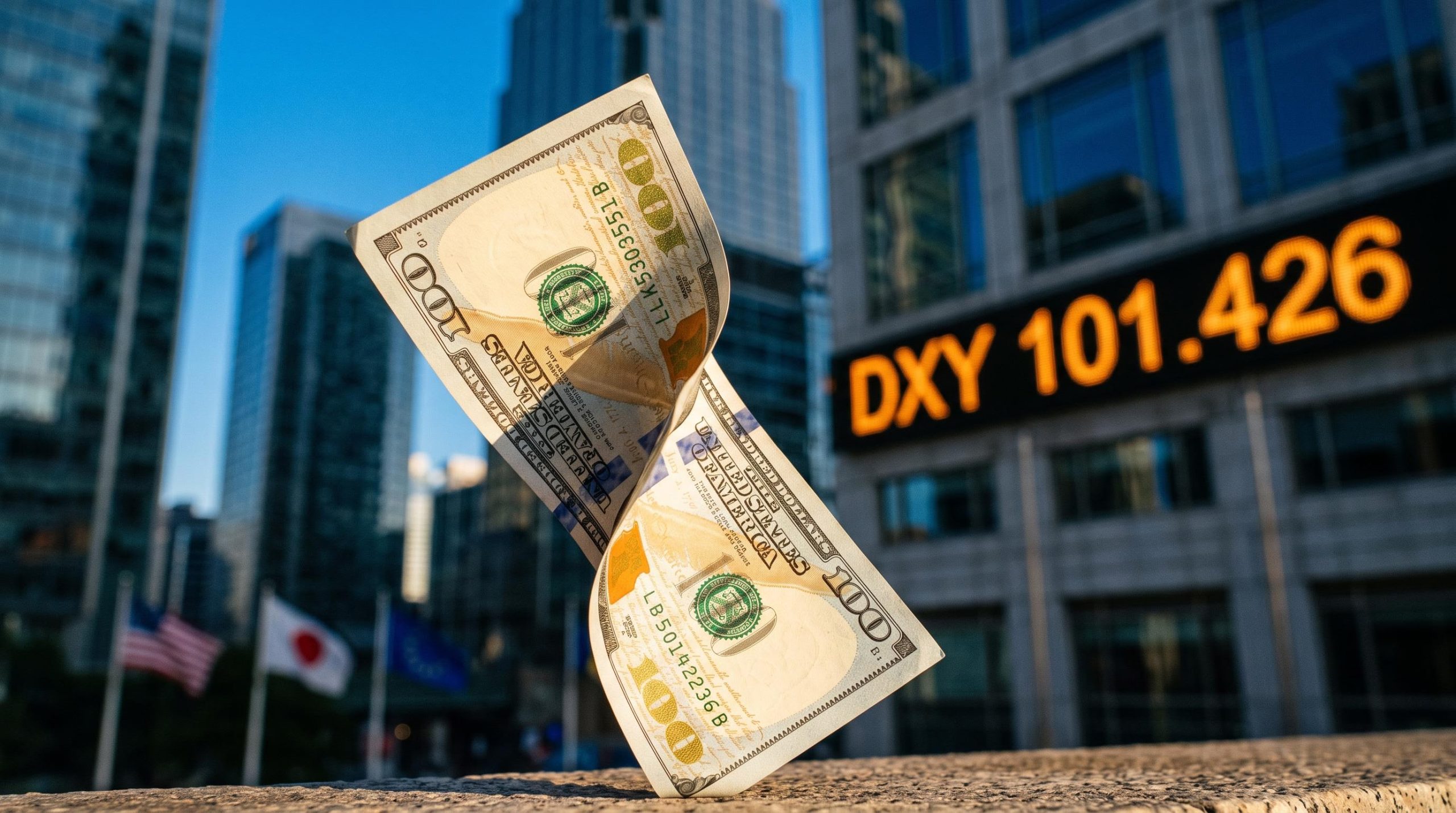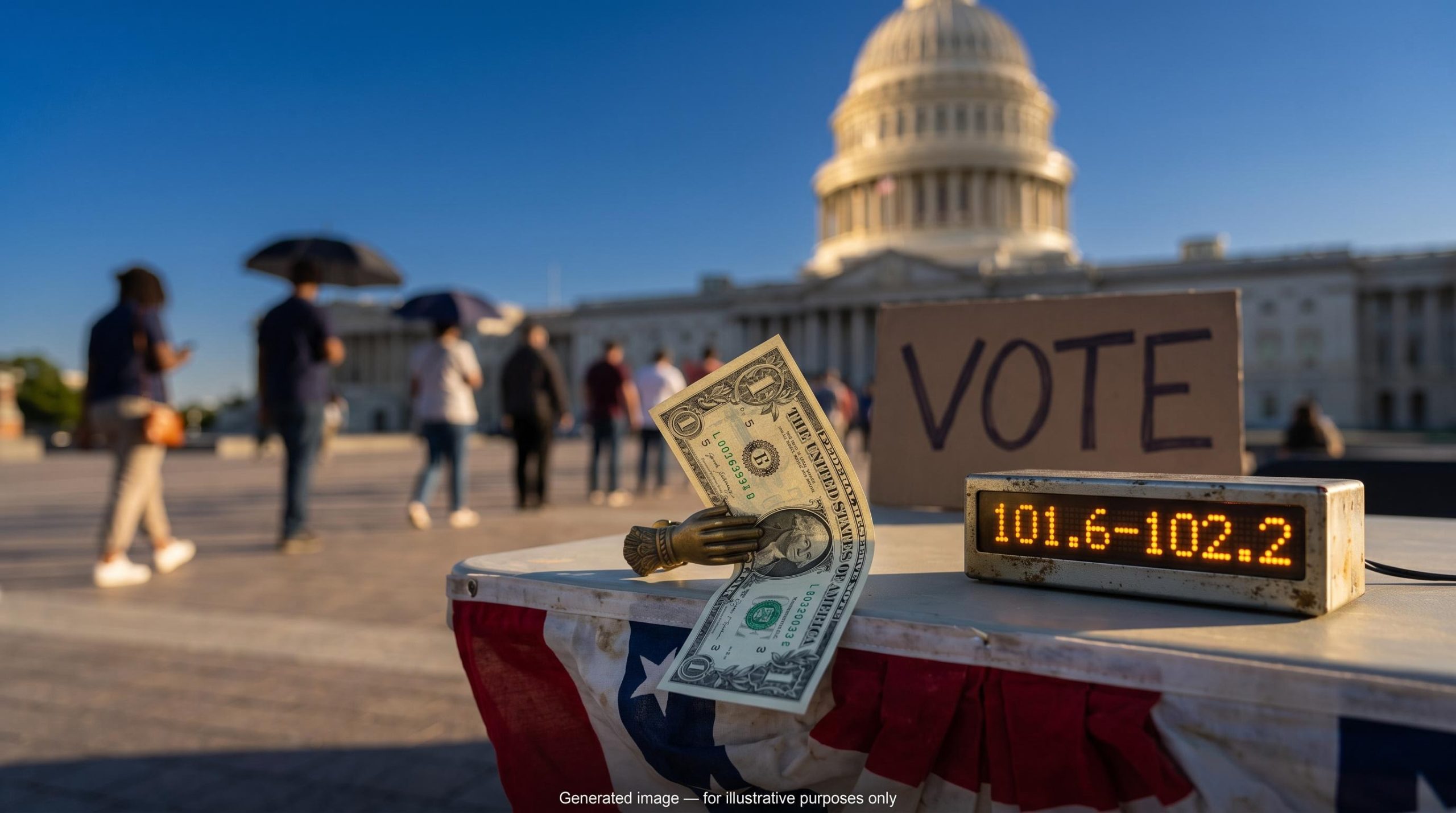
The obvious read is that next week’s vote decides where the Dollar goes. MUFG‘s Lee Hardman disagrees. He sees a heavy Republican defeat as something that would temper Dollar strength, not a game changer, and the currency was already drifting lower before ballots were counted.
That matters because the result of the US midterm elections is landing in a crowded week. The Federal Reserve held rates on 28 October and was read as less hawkish than feared. The Treasury Quarterly Refunding Announcement is due in the coming days.
US AI-related stocks are facing renewed selling at the same time, and forecasters see a Democratic House as close to settled. Each of these forces can push the Dollar on its own. Together, they can amplify or cancel each other.
Rather than a single prediction, this gives you a working map: what to watch this week, how each driver reaches the currency, and which combinations would confirm or overturn a softer Dollar.
Why is the Dollar softening before voters head to the polls?
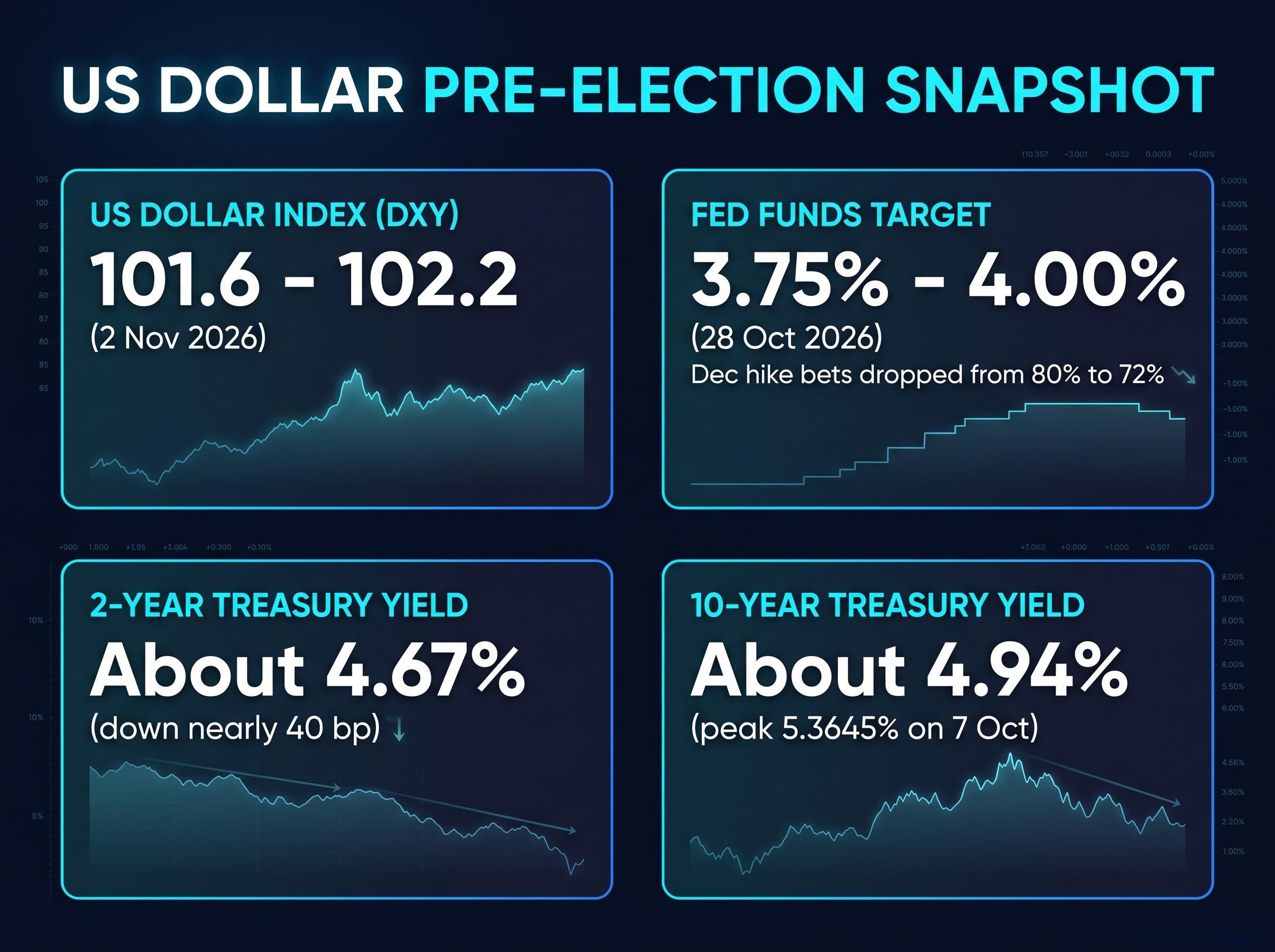
The Dollar entered 2 November modestly lower, with the US Dollar Index (DXY), a measure of the Dollar against a basket of major currencies, trading near 101.6-102.2. MUFG said the currency had corrected after losing upward momentum. The starting point was the Fed.
On 28 October, the Federal Open Market Committee held the federal funds target range at 3.75%-4.00% in a 10-2 vote. The statement was hardly soft: inflation “remains elevated” and activity is growing at a “strong pace”. Governor Lisa Cook and Cleveland Fed President Beth Hammack dissented in favour of an immediate 25 bp hike.
Markets heard something else.
Chair Kevin Warsh gave no firm commitment to a December increase, and the decision pushed action past the election and further data. Reuters reported the lack of a definitive signal reduced hike bets. Pricing for a December move eased from roughly 80% after the meeting to about 72% by 2 November.
Warsh’s approach of offering no firm commitment is deliberate, since the Chair has removed forward guidance altogether; that leaves inflation prints and speeches to drive repricing, and it helps explain why December odds can swing so quickly.
| Measure | Latest level | Date / source |
|---|---|---|
| US Dollar Index (DXY) | 101.6-102.2 | 2 November 2026 (MUFG, FXStreet) |
| 2-year Treasury yield | About 4.67%, down nearly 40 bp from late-September high | 28 October 2026 (Reuters); MUFG, 2 November |
| 10-year Treasury yield | About 4.94% (peak 5.3645% on 7 October) | Week ending before 2 November (FXCM); Reuters |
| Fed funds target range | 3.75%-4.00% | 28 October 2026 (FOMC) |
Sources differ on the 2-year yield on 28 October: one cited 4.776%, while a later check put it nearer 4.67%. Both agree it rose slightly that day and has since fallen almost 40 bp from its late-September peak. The 10-year, by contrast, sat at 5.047% straight after the decision, having touched 5.3645% on 7 October, a 24-year high according to Reuters.
The front end is where the Dollar earns its yield edge, and that edge is shrinking. What this tells you is that the market already prices a softer policy path, so the election arrives on weaker footing than the headlines imply.
When big ASX news breaks, our subscribers know first
How do the Fed, Treasury refunding and term premium reach the Dollar?
Think of the Dollar as a yield trade. Foreign investors hold dollar assets partly for the return, so anything that changes US yields changes the appeal of the currency. The chain runs like this:
- Fed tone sets the front end. A less hawkish Fed lowers expected short-term rates, shrinking the Dollar’s yield advantage.
- Treasury decides long-end supply. Shifting issuance from 20- and 30-year bonds towards bills reduces the supply of long-dated debt the market must absorb.
- Buybacks absorb duration. Repurchasing older, less liquid bonds removes some long-dated supply even if total borrowing stays high.
- Term premium adjusts. Term premium is the extra yield investors demand for holding long-dated bonds instead of rolling short ones, covering inflation, fiscal and supply uncertainty. Less expected long-end supply can compress it.
- Foreign demand follows. Lower yields and a thinner term premium cut the reward for holding dollar assets, so the Dollar can weaken even while the economy stays solid.
What to look for in this week’s announcement
Dealers expect unchanged coupon auction sizes totalling $125 billion: $58bn in 3-year notes, $42bn in 10-year notes and $25bn in 30-year bonds. Those numbers are unlikely to surprise anyone.
The guidance is the story. Dealers expect Treasury may prepare the market for lower 20- and 30-year issuance in 2027, offset by more bills and possibly shorter notes. Bills already made up about 22% of outstanding debt in September, above the roughly 20% long-run share referenced by the Treasury Borrowing Advisory Committee.
Buybacks are growing too. Treasury lifted the maximum long-dated nominal buyback from $2bn to at least $4bn per operation (its 19 August release, updated 2 October), and some market reporting cites $6bn in the 10-to-30-year sector.
Guidance outweighs auction sizes Andrew Wells of SanJac Alpha told Morningstar that unchanged coupon sizes were expected, and that the pace of buybacks and future maturity guidance mattered more than the immediate amounts.
If Treasury signals less long-bond supply, you should expect lower term premium and a softer Dollar. If it signals more, the reverse can hold. The wording of the guidance, not the headline figure, is the signal.
Treasury-driven easing depends heavily on how buybacks are funded, because drawing down the roughly $950 billion cash account injects reserves while bill-funded repurchases only swap duration, a distinction that shapes how far term premium can fall.
Does a Republican defeat actually move the Dollar?
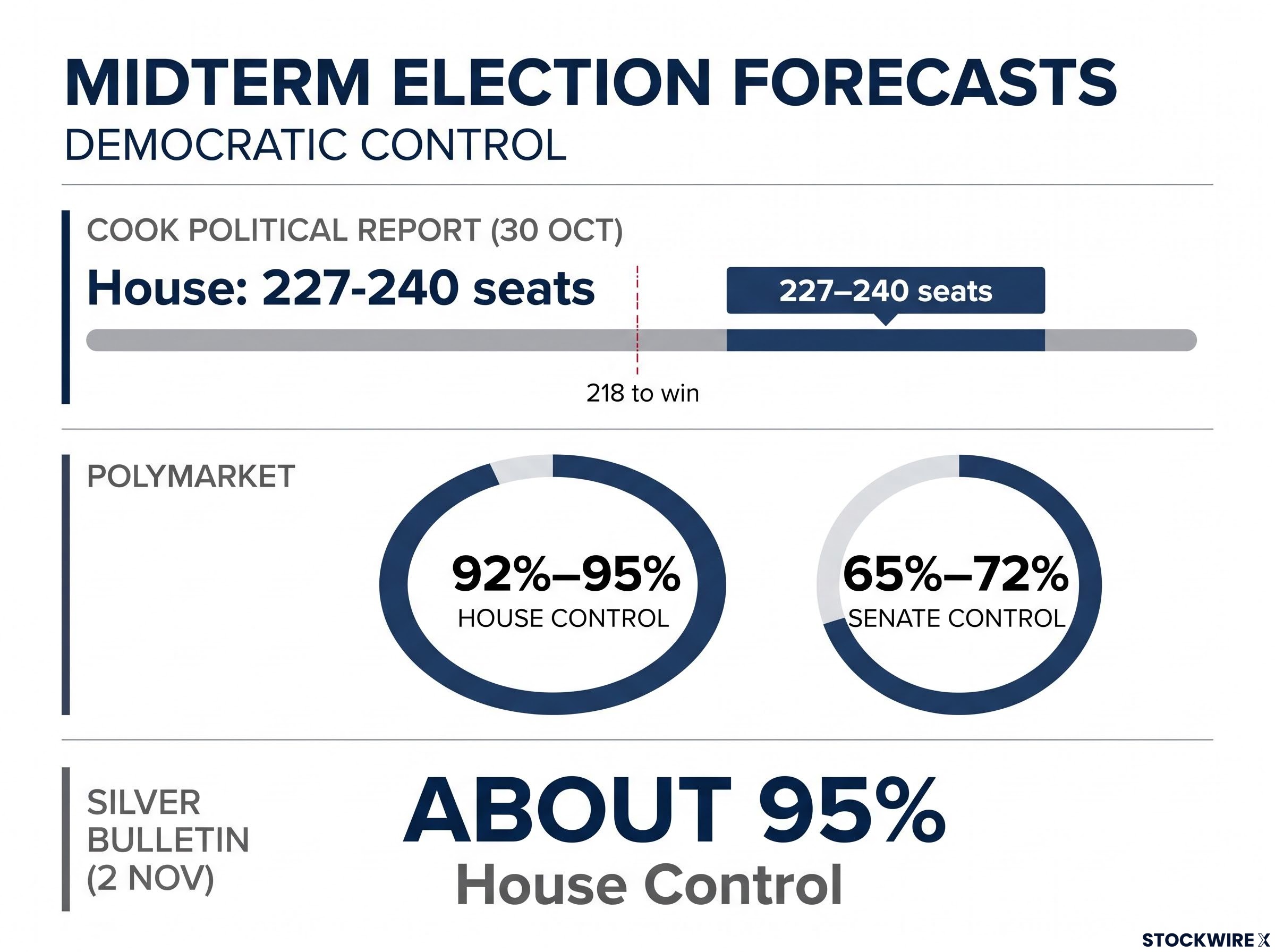
The intuitive story writes itself: Democrats win, the Dollar falls. Forecasters certainly expect Democrats to win the House.
| Source | House | Senate |
|---|---|---|
| Cook Political Report (30 Oct) | Democrats most likely 227-240 seats | Seven toss-ups; control competitive |
| Silver Bulletin (2 Nov) | About 95% Democratic control | Democratic edge (figure not independently confirmed) |
| Polymarket (late Oct to 2 Nov) | 92%-95% Democratic control | 65%-72% Democratic control |
| Polymarket, as cited by MUFG | 95% | 72% |
Hardman’s argument complicates the shortcut. Losing both chambers would make Trump effectively a lame duck and restrict further fiscal stimulus, which would temper Dollar strength. He does not see it as decisive.
History backs the caution. Reuters noted on 27 October that the president’s party has nearly always lost the House, the Senate or both over the past 80 years, yet an Endowus review found no consistent Dollar or 10-year yield reaction after midterms. A near-certain outcome is mostly in the price already.
The real mechanism is fiscal. Reuters reported on 30 October that fiscal deterioration was investors’ main pre-election concern, and divided government makes large tax cuts or spending packages harder to pass. That channel cuts both ways:
- Pushing the Dollar lower: less stimulus means smaller deficit and issuance expectations, easing pressure on yields.
- Offsetting support: policy stalemate, debt-ceiling stress and attention on less market-friendly post-Trump policies could trigger safe-haven demand.
The read you should take is that this is a fiscal-expectations story, not a directional rule. A surprise, either a Republican hold or an outsized Democratic sweep, would matter far more than the expected result.
Could an AI stock sell-off outweigh the election?
Hardman flagged a risk that may prove bigger than the vote itself: a deeper correction in US AI-related equities, which are already facing renewed selling. He sees that as a downside risk for the Dollar. Not everyone would agree on the direction.
One reading says equity stress drives investors into dollars and Treasuries as a safe haven. The other says the Dollar’s recent strength depended on foreign money chasing the US AI trade, and a sell-off removes that support.
Dollar strength “by default” Commentary carried by Reuters on 17 October argued the Dollar’s strength had been partly “by default”, supported by global capital flowing into the US AI theme rather than an unambiguously strong policy mix.
That second channel becomes more potent when combined with a softer Fed and a refunding that trims term premium. Each lowers the return on holding dollar assets at the same moment foreign equity inflows dry up.
Whether the AI trade holds up depends on AI lab revenue, since disclosures that track toward the thresholds investors expect support the inflow story, while shortfalls would put the foreign capital behind the Dollar’s strength at risk.
| Risk | Dollar-positive reading | Dollar-negative reading |
|---|---|---|
| Deeper AI correction | Risk aversion lifts safe-haven demand | Foreign inflows into AI equities reverse |
| Fed tone | Elevated inflation and two hike dissents keep December alive | No firm commitment; 2-year down nearly 40 bp |
| Treasury refunding | Maintained or heavier long-end supply lifts yields | Lower long-end issuance and bigger buybacks cut term premium |
| Republican defeat | Policy conflict prompts haven buying | Lame-duck administration cannot add stimulus |
| Result already priced | Limited immediate reaction | A surprise forces fast repricing |
There is no clean answer, but there is a diagnostic. Watch whether equity weakness arrives with falling or rising Treasury yields: falling yields alongside a weaker Dollar point to the inflow channel dominating, while a firmer Dollar points to haven demand winning.
A practical checklist for watching the Dollar this week
Pull the threads together and the evidence leans towards a modestly softer Dollar. A heavy Republican defeat would reinforce that bias, but on Hardman’s reading it would not set the direction alone. The interaction matters more than any single event.
- Refunding guidance on 20- and 30-year issuance and buybacks. Lighter long-end supply would signal lower term premium and a softer Dollar.
- December hike pricing, now about 72%. A slide would confirm the softer path; a jump back towards 80% would restore support.
- The 2-year and 10-year direction. A 10-year holding below the 4.94%-5.05% range alongside a falling 2-year would point to a weaker Dollar.
- The AI equity tape. Selling paired with falling yields would suggest foreign inflows are leaving.
- Surprises in the House and Senate results. A Republican hold or an outsized sweep would force repricing the forecasts have not covered.
What would change the view? A firm Fed signal for a December hike, or heavier long-end supply guidance from Treasury, could give the Dollar back its footing even with the DXY near 101.6-102.2 today. If neither appears, the drift is likely to keep its shape through the week.
An oil-driven inflation shock from sanctions enforcement is one counterweight, because it could overwhelm the modest downward pressure from buybacks on long yields and restore the yield support the Dollar needs.
These scenarios are speculative and subject to change based on market developments and policy decisions.
This article is for informational purposes only and should not be considered financial advice. Investors should conduct their own research and consult with financial professionals before making investment decisions.