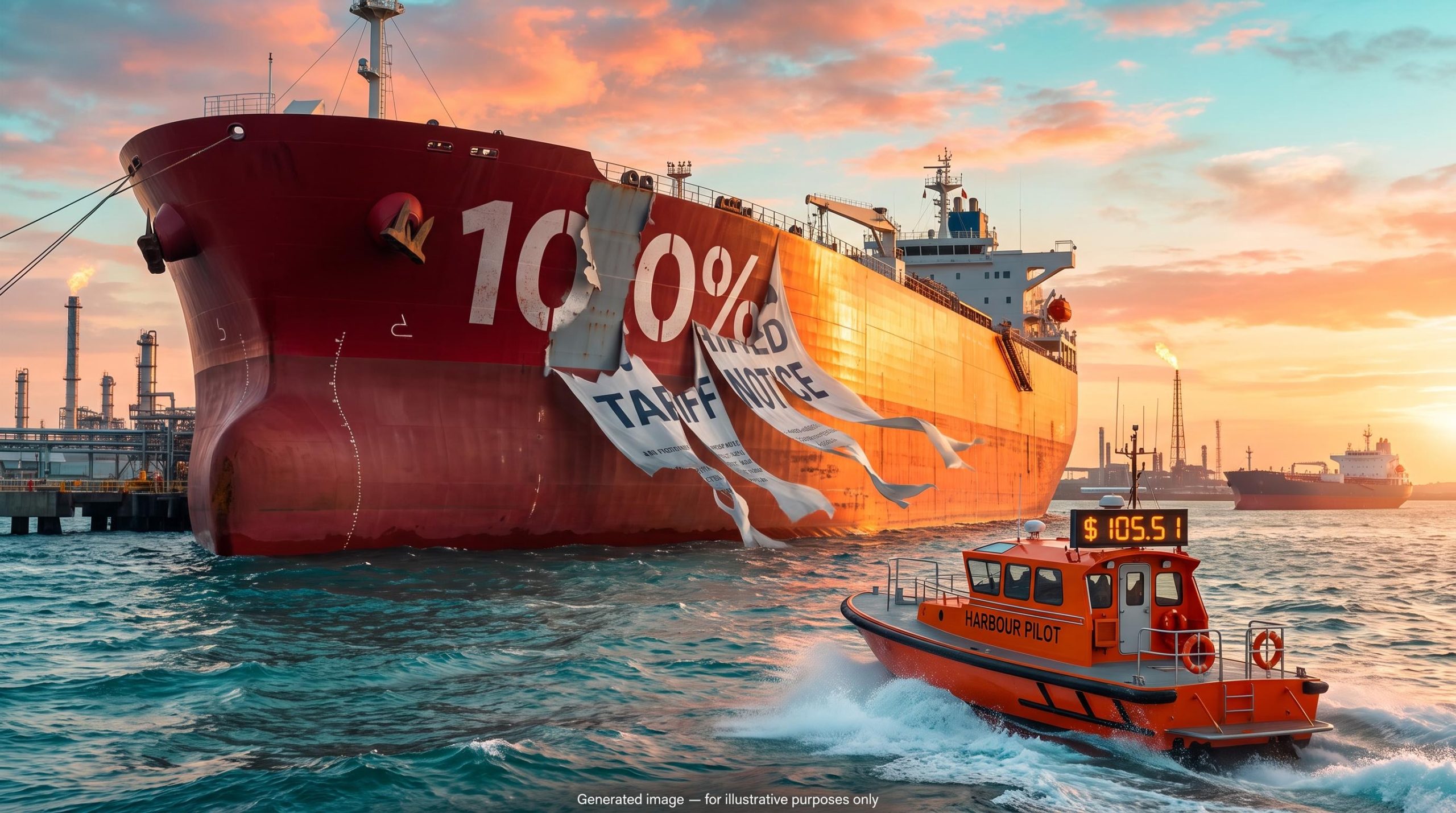
Brent crude was trading near $105.51 a barrel and WTI near $97.43 on 17 October 2026, after President Donald Trump waived the Russia sanctions and tariffs that were due to take effect within days. The Russia sanctions waiver switched off penalties of up to 100% on major buyers of Russian energy before a single duty was collected.
The executive order, released on 16 October, activates waiver authority inside the Lindsey O. Graham Sanctioning Russia and Iran Act of 2026, which Trump signed on 18 September. Trump told Congress in writing that the move served the US national interest.
The timing is political as well as legal. American households are absorbing higher fuel costs tied largely to the US-Israeli war on Iran, and Republicans are defending narrow control of both chambers weeks before the midterms.
Here is the price signal the waiver actually sent, which buyers stood to lose most, and the indicators that will show whether the calm holds.
Why did oil barely move after the Russia sanctions waiver?
A decision to suspend tariffs on the world’s biggest Russian crude buyers might be expected to jolt the market. It did not.
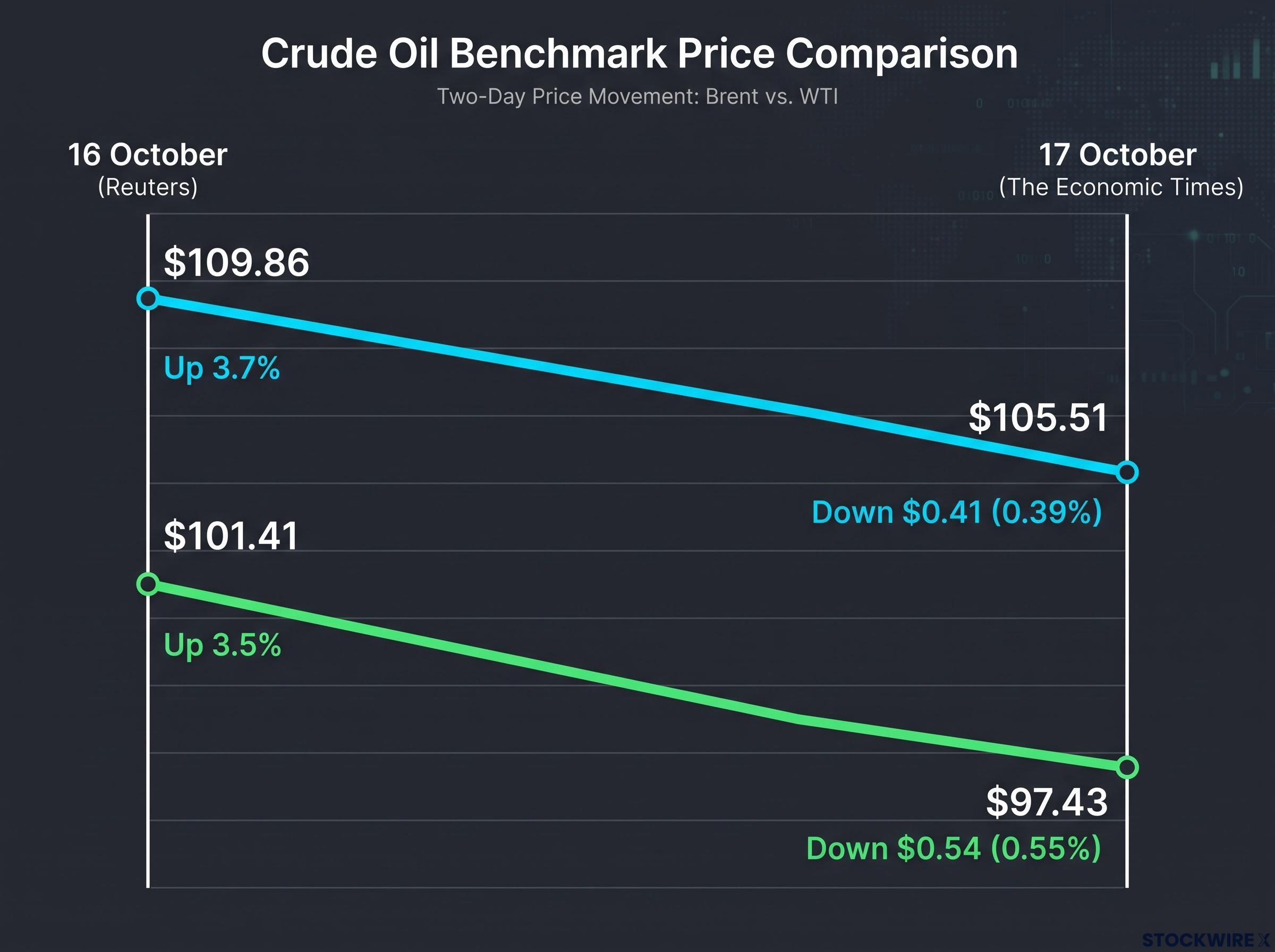
The snapshot depends on the source, and the two reports do not line up neatly. Reuters reported that Brent settled sharply higher on 16 October and briefly touched $110 on Middle East supply fears. The Economic Times then reported modestly lower prices the following day.
| Benchmark | Price | Change | Date/Source |
|---|---|---|---|
| Brent | $109.86 | Up 3.7% | 16 October, Reuters (settlement) |
| WTI | $101.41 | Up 3.5% | 16 October, Reuters (settlement) |
| Brent | $105.51 | Down $0.41 (0.39%) | 17 October, The Economic Times |
| WTI | $97.43 | Down $0.54 (0.55%) | 17 October, The Economic Times |
The waiver removed one danger: an abrupt loss of Russian barrels if buyers walked away to dodge tariffs. It did nothing about the Iran war, which still carries the larger supply-risk premium (the extra price traders pay to guard against disruption).
Goldman Sachs estimates just over $20 of Brent’s price is geopolitical risk premium, roughly a fifth of the total, which helps explain why removing a Russian tariff threat barely dented crude while Middle East risk stayed priced in.
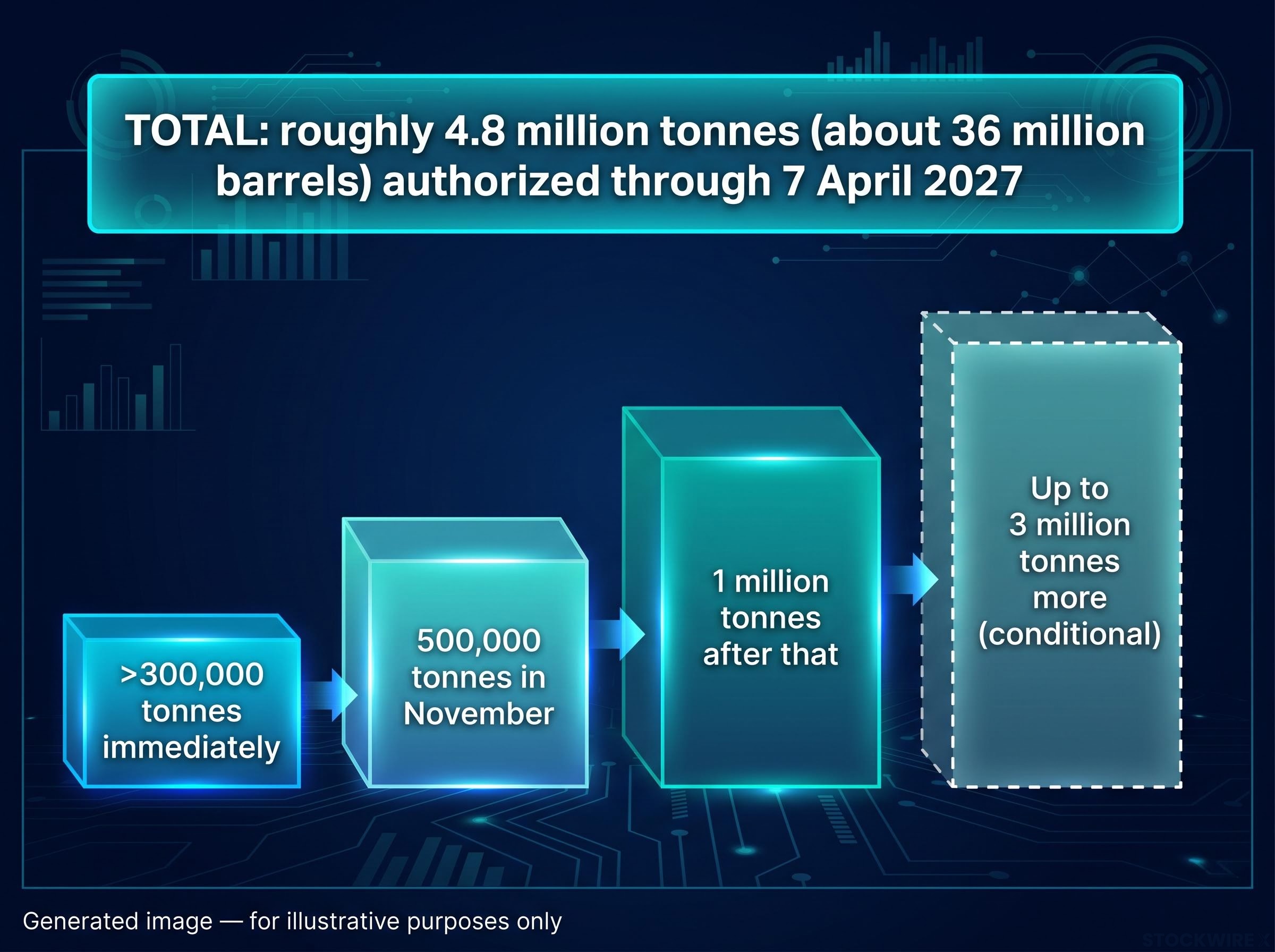
Diesel is a separate story, and probably a smaller one. Trump announced a diesel arrangement with Moscow on 9 October, with these tranches:
- More than 300,000 tonnes immediately
- 500,000 tonnes in November
- A further 1 million tonnes after that
- Up to 3 million tonnes more, conditional on Russian refinery conditions
If everything arrives, that is roughly 4.8 million tonnes, or about 36 million barrels. Treasury has authorised qualifying Russian diesel transactions through 7 April 2027.
The diesel reality check Rebecca Babin, senior energy trader at CIBC Private Wealth, estimated the initial deal could amount to about 400,000 barrels of diesel over three months, depending on refinery availability.
The muted move tells you the market reads the waiver as a removed tail risk, not fresh supply. Your energy exposure is still being priced off the Middle East, not Moscow.
When big ASX news breaks, our subscribers know first
What the Graham Act would have imposed, and what the order actually suspends
The penalties Trump switched off were among the heaviest Congress has written into a sanctions law.
| Measure | Potential penalty | Status under order |
|---|---|---|
| Five largest importers of Russian crude and gas making new purchases from 18 October | 100% ad valorem duty | Suspended |
| Five leading facilitators of Russian oil-sanctions evasion | 100% duty | Suspended |
| Goods from Russia | Up to 500% ad valorem duty | Suspended |
| Earlier Russia sanctions under prior executive orders | Existing measures | Remain in force |
An ad valorem duty is a tariff charged as a percentage of a good’s value, so a 100% duty doubles the cost of an import.
Section 4(a) of the order waives duties under Sections 112 and 113, along with specified provisions under Sections 102(a), 102(d), 102(e), 103-111 and 117. The law allowed this through a national-interest certification, and Trump sent Congress a written certification with a report explaining his reasoning.
The order does not name the five countries. It tasks the US Trade Representative (USTR) with monitoring Russian crude and gas purchases and advising the president on who falls inside each category.
The White House executive order waives duties under Sections 112 and 113 of the Graham Act and leaves earlier Russia-related sanctions in place, making the move a selective pause rather than a broad normalisation of trade.
What stays in force
The waiver has no calendar expiry. It runs until Trump, or the Secretary of State consulting Treasury and the USTR, decides further action is appropriate.
The Act itself survives, as do sanctions under earlier Russia-related executive orders. This is a selective pause, not a normalisation of US-Russia trade.
With no end date and a reversal available by simple determination, you should treat the tariff risk as dormant rather than gone.
Which buyers were exposed, and how are governments responding?
Exposed buyers
Reporting by Reuters identified China, India and Turkey as the buyers most exposed, though the law targets the top five by volume rather than a fixed list.
India offers the clearest read. Kpler data cited by Business Standard on 17 October points to October Russian crude imports holding around 1.8-1.9 million barrels per day. That suggests the country’s refiners see no reason to pull back.
Exposed Asian buyers face costs that headline Brent understates, since Dubai crude surged far above Brent in May, a gap that shapes how India and China weigh Russian barrels against Gulf supply.
Political reactions
Moscow welcomed the decision openly.
Kremlin view Kirill Dmitriev, Russia’s investment envoy, called the waiver historic, saying the law could have effectively ended US-Russia economic cooperation.
Washington and Kyiv took the opposite view, and so did some of Trump’s own party.
| Actor | Position | Basis |
|---|---|---|
| Trump administration | Supports | National interest; lower fuel prices |
| Rep. Don Beyer (D-Virginia) | Opposes | Called it a surrender to Putin that defies congressional intent |
| Some Republican senators | Critical | Diesel deal seen as a concession funding Russia’s war |
| Zelenskyy and European officials | Critical | Relief gives Moscow revenue and leverage |
| China and India | No waiver statement found | Earlier objections to the bill |
China previously said it opposes “long-arm jurisdiction”, while India warned new tariffs could affect bilateral ties. No official reaction from either to the waiver itself was found.
That split matters for you directly. A decision this contested invites congressional or legal pushback, which stays a live variable for anyone holding Russia-linked energy exposure.
What should energy and commodities investors watch next?
No attributable analyst price forecast on the waiver was found, so the watchlist below tracks signals rather than predictions. It is ranked by how quickly each would reveal a policy shift or supply problem.
- White House, Treasury or USTR notices: the fastest route to reimposed tariffs.
- Iran-war supply developments: still the biggest driver of daily crude volatility.
- Congressional resolutions, hearings or litigation: the clearest test of whether lawmakers push back.
- Office of Foreign Assets Control (OFAC) general-licence amendments: changes to Treasury permissions that redefine which transactions qualify.
- Russian diesel loadings, refinery outages, tanker rates, insurance and payment settlement: proof of whether promised volumes arrive.
- Indian and Chinese intake via Kpler and customs data, plus shadow fleet movements: early evidence of buyers adjusting routes or volumes.
- US inventories and refinery margins: where any diesel relief would show up first.
The midterm calendar shapes how durable the pause is likely to be.
The inflation backdrop Reuters and CNBC reporting framed the waiver partly as inflation control, with analysts warning the penalties could have pushed oil higher weeks before the midterms.
The list tells you the biggest swing factors are policy reversal and Iran escalation, not Russian volumes alone. Size positions with two independent risks in mind.
Past performance does not guarantee future results. Statements about future policy and prices are speculative and subject to change based on market developments.
What the waiver changes for energy markets, and what it leaves open
The waiver removed a tail risk, left the broader sanctions regime intact and can be reversed by a single determination. Brent at $105.51 and WTI at $97.43 are a snapshot of that balance, not a verdict on it.
Your next decision point arrives with either a US notice narrowing the waiver or a shift in Iran-driven volatility. Whichever comes first will set the tone for crude far more than Moscow’s diesel.
Readers interested in why prices resist falling can use our deep-dive into structural crude price floors, which explains how depleted reserves and insurance premiums keep Brent elevated.
This article is for informational purposes only and should not be considered financial advice. Investors should conduct their own research and consult with financial professionals before making investment decisions.