
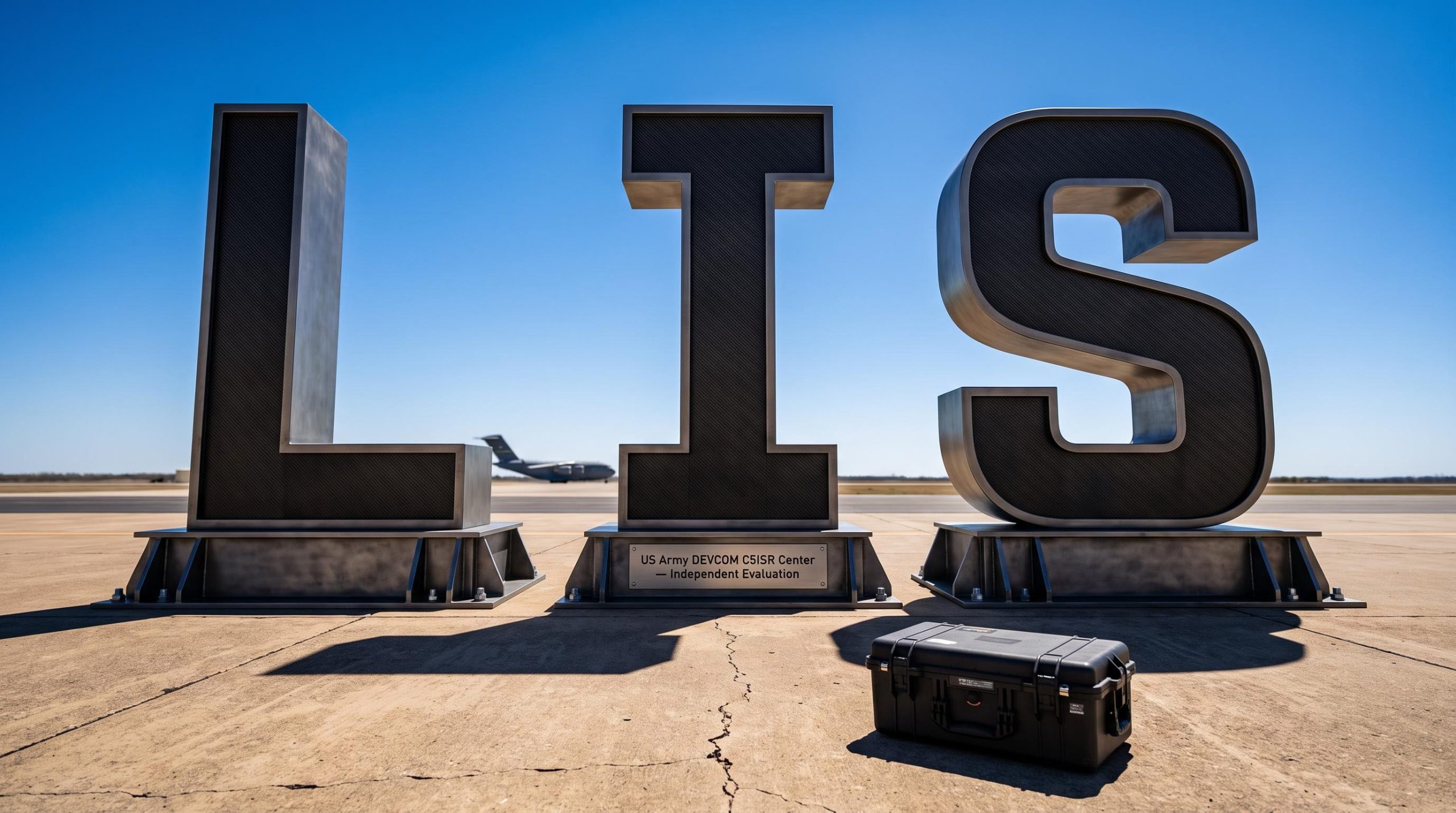
Li-S Energy ships first lithium-sulfur cells to US Army in landmark defence milestone
Li-S Energy (ASX: LIS) has delivered its first lithium-sulfur battery cells to the US Army DEVCOM C5ISR Center for independent evaluation and testing, opening a direct pathway into US Army procurement.
Announced on 24 August 2026, the shipment marks the first-ever delivery of LIS technology to a US Government agency. The cells were received at the US Army’s Aberdeen Proving Ground.
The engagement positions the Australian battery developer in front of one of the world’s largest and most sophisticated defence markets, as allied forces accelerate the adoption of unmanned systems.
When big ASX news breaks, our subscribers know first
Why the DEVCOM C5ISR engagement matters
The DEVCOM C5ISR Center is the US Army’s principal research, development and engineering centre for command, control, communications, computers, cyber, intelligence, surveillance and reconnaissance (C5ISR) technologies. It serves as a recognised gateway into formal US Army procurement, playing a central role in identifying and integrating advanced power and energy systems for US land force platforms.
An independent evaluation by the Center is a meaningful step in the US Army’s technology adoption process. According to the company, a successful outcome can inform procurement decisions across a broad range of programs, including:
-
Unmanned aerial systems
-
Ground robotics
-
Soldier-worn equipment
-
Autonomous platforms
The technical case rests on performance. LIS cells combine the high energy density of lithium-sulfur chemistry with materially higher power output, offering the potential to extend operational range, increase mission endurance and expand payload capacity across a wider range of unmanned platforms.
Managing Director Commentary
“Shipping our cells to US Army DEVCOM C5ISR Center for independent evaluation is a major step forward in the Company’s commercialisation pathway. It is the result of years of disciplined technology development, hard-won manufacturing capability, and a clear strategic conviction that our lithium-sulfur chemistry can provide a broad-spectrum capability enhancement for next-generation defence and drone platforms.
The US is the world’s largest and most sophisticated defence market, and the rapid global adoption of unmanned systems is creating substantial and growing demand for lithium-sulfur batteries that perform beyond what conventional lithium-ion currently offer.
The LIS cells we have delivered to DEVCOM are purpose-built for exactly these applications – delivering the enhanced peak power and operational responsiveness that modern defence platforms require, while retaining the inherent weight and energy density advantages of our lithium-sulfur chemistry. We look forward to demonstrating this performance to DEVCOM C5ISR Center and to advancing what we believe is a strategically important relationship for our Company,” said Dr. Lee Finniear, Managing Director of Li-S Energy.
Understanding lithium-sulfur, the technology behind the news
Lithium-sulfur is a battery chemistry that differs from conventional lithium-ion. The distinction matters for one reason above all: energy density.
Li-S Energy’s cells are reported to offer approaching twice the energy density of conventional lithium-ion. In practical terms, that means unmanned systems can fly farther, operate for longer and carry greater payloads, all critical performance factors where weight is a mission constraint.
The company supports this chemistry with proprietary intellectual property and nanomaterials, including boron nitride nanotubes (BNNTs) and Li-Nanomesh™, which are used to enhance performance, safety and longevity.
For investors, the significance is straightforward. In aviation, drones and defence applications, weight and energy density are decisive. This differentiator underpins the broader investment case for the company’s technology.
Clearing the regulatory and logistics hurdles to scale
The delivery required operational groundwork that also enables future scale. Because LIS cells are a novel, ultra-high energy density chemistry regulated as dual-use goods, they require bespoke dangerous goods approvals that go beyond standard lithium-ion classifications.
The air freight delivery followed receipt of three critical international air transport approvals:
-
Australian Civil Aviation Safety Authority (CASA)
-
US Pipeline and Hazardous Materials Safety Administration (PHMSA)
-
US Federal Aviation Administration (FAA)
Securing all three is described by the company as a prerequisite for scalable international defence supply, representing a meaningful operational and regulatory achievement rather than a routine administrative step.
These approvals complement Li-S Energy’s recently acquired AUKUS membership, which enables cell export to the US and UK without individual export permits, a critical enabler for timely supply to allied defence customers. The company is also progressing UN38.3 cell testing, which will enable shipment of larger volumes under standard dangerous goods classifications, removing a key logistical constraint on the pathway to scale.
A rapidly growing defence and aerospace pipeline
The DEVCOM shipment is the latest milestone in a growing series of high-profile defence and aerospace engagements across multiple domains and geographies. This expanding pipeline reinforces momentum and reduces reliance on any single customer.
| Partner | Application | Domain | Scale / Notes |
|---|---|---|---|
| Praetorian Aeronautics | Dagger counter-UAV interceptor drone | Aerial | Targeting up to 10,000 units/year in South Australia |
| MSubs | Large uncrewed underwater vehicles | Undersea | Pressure tested to 1,000m depth; supplies US SOCOM, US Navy, UK MoD |
| Kea Aerospace | Propulsion packs for ATMOS solar UAV | Stratospheric | Persistent high-altitude missions |
| Major International Defence Prime | Unmanned systems, soldier-worn equipment, surveillance | Multi-domain | Strategic supply agreement announced June 2025 |
To advance opportunities with the United States Department of Defence and major US defence contractors, LIS has appointed Paladin Defence Services as its US Representative.
What comes next for Li-S Energy investors
The immediate focus turns to the independent evaluation by DEVCOM C5ISR Center. A successful outcome can inform US Army procurement decisions across the program categories the company has identified, though no contract, order or purchase commitment is attached to this evaluation shipment.
Beyond the evaluation, the progression of UN38.3 testing is set to unlock larger-volume shipments and remove a key logistical constraint on the path to scale. Together with its AUKUS membership and growing partner pipeline, the developments reflect Li-S Energy’s deliberate positioning as a supplier of choice to the global defence sector, with a strong focus on the United States.
Don’t Miss the Next Defence Tech Breakout on the ASX
Big News Blast delivers FREE breaking ASX announcements straight to your inbox within minutes of release, complete with in-depth analysis so the work is already done. Join 20,000+ investors who stay ahead of the market on stories like this one. Click the “Free Alerts” button at Big News Blast to get started today.