
Imugene reports first complete response in azer-cel BTKi combination cohort
Imugene Limited (ASX: IMU) has reported that the first patient in the concurrent Bruton Tyrosine Kinase inhibitor (BTKi) cohort of its azer-cel Phase 1b trial achieved a complete response (CR) at the Day 28 assessment. The patient had Follicular Lymphoma (FL) and had previously received and failed BTKi therapy, representing a population with limited remaining treatment options.
The result offers early validation of azer-cel in heavily pre-treated patients within a setting that addresses a global market worth approximately US$12.0 billion in 2025.
Key data points from the announcement include:
-
First patient in the concurrent BTKi cohort achieved a complete response at the Day 28 assessment
-
The patient had FL and had previously failed BTKi therapy
-
BTKi therapy addresses an approximately US$12.0 billion global market in 2025
-
Patient enrolment is ongoing across ten US and five Australian sites
-
Four patients have been dosed in the concurrent BTKi combination cohort to date, including the first patient with mantle cell lymphoma (MCL)
When big ASX news breaks, our subscribers know first
Why this result matters for patients who have run out of options
All patients enrolled in the concurrent BTKi cohort have relapsed on or are refractory to BTKi therapy, a standard treatment across multiple B-cell malignancies. Despite the established efficacy of BTK inhibitors, a significant proportion of patients develop resistance over time and are left with limited remaining options.
This cohort evaluates whether concurrent dosing of azer-cel with a BTKi may “restore or enhance therapeutic activity” in this setting. FL is the most common indolent B-cell lymphoma, and while many patients respond to initial treatment, most will relapse over time, underscoring a high unmet need with standard therapies.
Azer-cel response rates across six subtypes had already reached 81% in CAR T-naive patients ahead of the BTKi cohort opening, with four indications including FL posting 100% response rates in heavily pre-treated populations.
Leslie Chong, Managing Director and CEO of Imugene
“This initial data provides further confidence in the potential of azer-cel in patients who have exhausted standard treatment options, including BTK inhibitors. Given how widely BTKi therapies are used, we believe this combination approach could represent a meaningful development pathway for azer-cel.”
Understanding azer-cel and allogeneic CAR T therapy
Azer-cel (azercabtagene zapreleucel) is an off-the-shelf, allogeneic CAR T cell therapy which targets CD19 to treat blood cancers.
The key differentiator is in how it is produced. Azer-cel is derived from healthy donor T-cells and ready for administration within days, without the three-to-six-week manufacturing lead time required for autologous CAR T products.
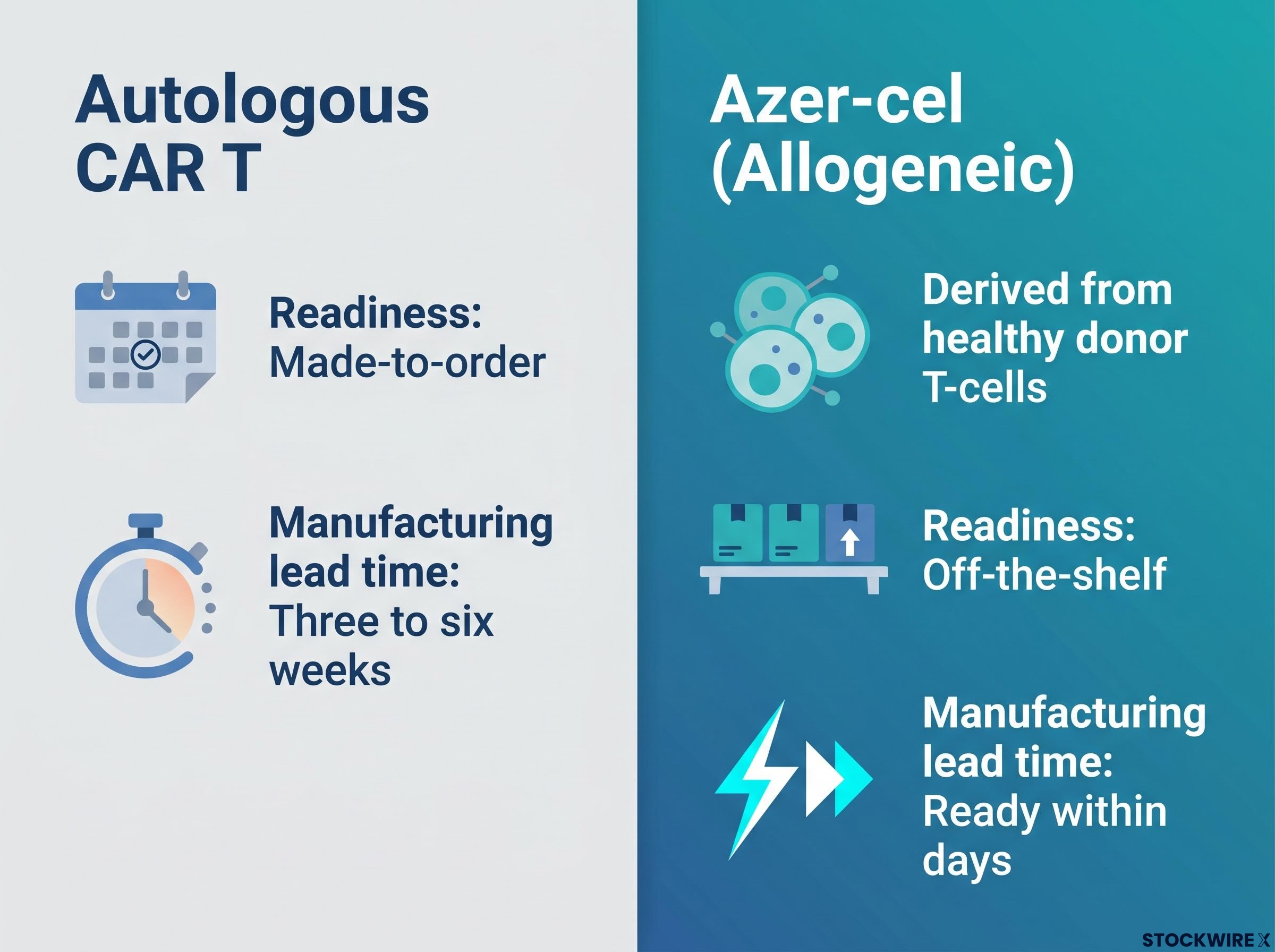
| Feature | Autologous CAR T | Azer-cel (Allogeneic) |
|---|---|---|
| Manufacturing lead time | Three to six weeks | Ready within days |
| Readiness | Made-to-order | Off-the-shelf |
Inside the Phase 1b trial and what comes next
The azer-cel allogeneic CAR T trial is an ongoing, open-label, multi-centre Phase 1b clinical trial in the U.S. and Australia, for CAR T relapsed patients and CAR T naïve patients diagnosed with a broad range of Non-Hodgkin’s lymphomas.
The indications covered include:
-
Follicular lymphoma (FL)
-
Chronic lymphocytic leukemia (CLL) / small lymphocytic lymphoma (SLL)
-
Marginal zone lymphoma (MZL)
-
Waldenstrom macroglobulinemia (WM)
-
Mantle cell lymphoma (MCL)
The trial has most recently expanded into a concurrent BTKi cohort, for patients with a range of B-cell malignancies who have previously failed BTKi therapy. According to the company, treatment with azer-cel, alongside lymphodepletion and IL-2, has produced meaningful clinical responses across multiple indications, including the complete response in the first evaluable patient from the BTKi combination cohort. The safety profile is described as manageable and generally well tolerated.
Imugene has stated that further updates will be provided as additional data becomes available and the dataset matures, with enrolment continuing across the ten US and five Australian sites.
Investors exploring the broader dataset behind this programme can find our full explainer on azer-cel’s ASCO 2026 oral presentation, which covers response rates across all 24 evaluable CAR T-naive patients and the peer-review significance of securing one of the conference’s rare oral slots from more than 8,500 submitted abstracts.
The complete response represents an early but meaningful signal supporting azer-cel’s potential across a large addressable market of BTKi-resistant patients. Investors should note this is single-patient, early-stage data, and broader conclusions on efficacy and safety will depend on results as the trial progresses and more patients are evaluated.
Ready to Track Azer-Cel’s Progress in the BTKi Combination Cohort?
Imugene’s first complete response in a patient who had previously failed BTKi therapy offers an early but significant signal for azer-cel’s potential across a heavily pre-treated population within a market valued at approximately US$12.0 billion. With enrolment continuing across ten US and five Australian sites, the dataset is set to grow materially in the months ahead.
Stay up to date as this programme develops by visiting the Imugene ASX announcements page for the latest disclosures direct from the company.