
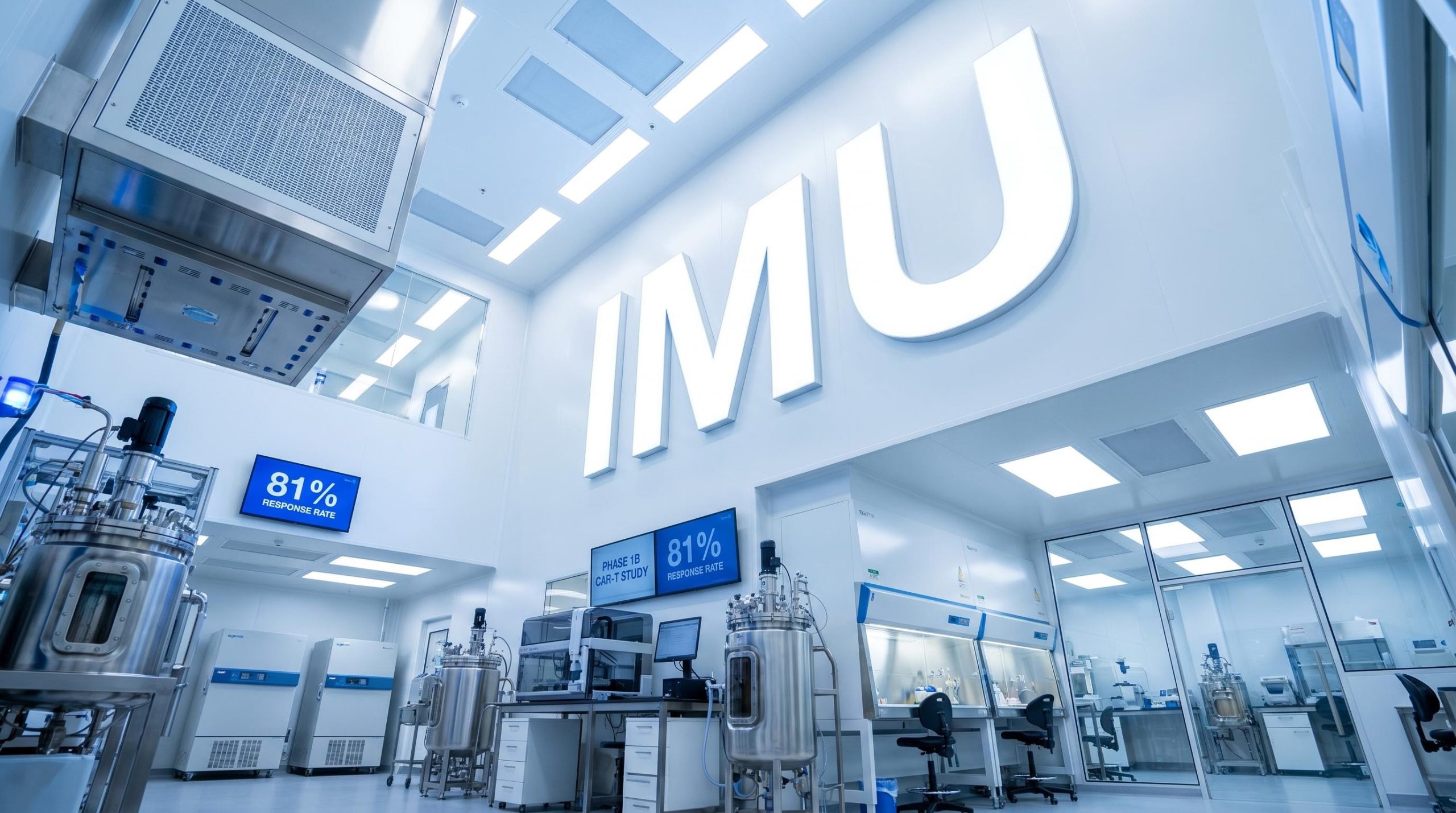
Imugene reports 81% response rate for azer-cel in CAR T-naïve blood cancer patients
Imugene Limited has reported an 81% overall response rate in CAR T-naïve patients treated with azer-cel, its off-the-shelf allogeneic CAR T therapy targeting CD19-positive blood cancers. The data, published following the American Society of Clinical Oncology (ASCO) conference embargo lift, covers 16 evaluable patients from the company’s ongoing Phase 1b basket study across multiple B-cell malignancies. An oral presentation featuring an updated dataset is scheduled for 29 May 2026 at 1:00 PM CDT at the ASCO Annual Meeting in Chicago (Abstract #7012).
The Phase 1b study enrolled 19 patients with relapsed or refractory blood cancers who received azer-cel in combination with low-dose interleukin-2 (IL-2). Patients had a median age of 59 years (range 56–73 years) and included those with diffuse large B-cell lymphoma (DLBCL), marginal zone lymphoma (MZL), chronic lymphocytic leukaemia (CLL), primary central nervous system lymphoma (PCNSL), follicular lymphoma (FL), and Waldenström macroglobulinaemia (WM). Several patients had received multiple prior therapies, including bispecific antibodies and autologous stem cell transplant.
Of the 16 patients evaluable for response at the Day 28 disease assessment, 13 achieved either complete response (CR) or partial response (PR), delivering the headline 81% ORR. This result positions azer-cel as a potential off-the-shelf alternative to autologous CAR T therapies, addressing key manufacturing and scalability limitations in the current standard of care.
When big ASX news breaks, our subscribers know first
What is allogeneic CAR T therapy and why does “off-the-shelf” matter?
CAR T (Chimeric Antigen Receptor T-cell) therapy involves genetically engineering immune cells to recognise and attack cancer cells. Traditional CAR T therapies are autologous, meaning they use the patient’s own T-cells. This approach requires extracting cells from the patient, engineering them in a laboratory, and re-infusing them weeks later. Each treatment is patient-specific, which creates manufacturing delays, logistical complexity, and high costs per patient.
Allogeneic CAR T therapies, by contrast, use donor-derived T-cells manufactured in advance and stored as frozen batches. This “off-the-shelf” approach allows for faster treatment access, scalable manufacturing, and potentially lower cost per patient. Azer-cel targets CD19, a protein found on the surface of B-cells, making it applicable across a broad range of B-cell blood cancers.
Demonstrating efficacy in an off-the-shelf CAR T positions Imugene in a competitive emerging market segment. Approved autologous CAR T therapies face commercial limitations related to manufacturing turnaround times and patient eligibility. Allogeneic therapies that achieve comparable response rates without patient-specific manufacturing delays could address these constraints, supporting broader adoption and commercial scalability.
Response rates across blood cancer subtypes
The 81% overall response rate was driven by activity across six blood cancer subtypes. Four indications achieved 100% response rates, including MZL (3 CRs, 1 PR), CLL (3 PRs), FL (1 CR), and WM (1 PR). DLBCL, the largest cohort with 5 evaluable patients, achieved a 60% response rate (1 CR, 2 PRs). PCNSL recorded a 50% response rate (1 PR).
| Cancer Type | Patients Evaluable | Response Rate | Responses |
|---|---|---|---|
| MZL | 4 | 100% | 3 CR, 1 PR |
| CLL | 3 | 100% | 3 PR |
| FL | 1 | 100% | 1 CR |
| WM | 1 | 100% | 1 PR |
| DLBCL | 5 | 60% | 1 CR, 2 PR |
| PCNSL | 2 | 50% | 1 PR |
Complete response (CR) indicates the disappearance of all signs of cancer. Partial response (PR) indicates a significant reduction in tumour size or disease burden but not complete elimination.
The broad activity across multiple subtypes supports the basket study approach, which evaluates a single therapy across several related indications simultaneously. Even if one indication underperforms in later-stage development, others may support regulatory pathways and commercial opportunity. The 100% response rates in heavily pre-treated MZL and CLL cohorts are particularly notable given these patients had exhausted multiple prior therapies, including bispecific antibodies and autologous stem cell transplant.
Management commentary
Dr John Byon, Chief Medical Officer
“Our ASCO 2026 abstract supports our clinical strategy and highlights the potential of our off-the-shelf allogeneic CAR-T platform. The response rates seen in this CAR-T naïve patient group, particularly in these heavily pre-treated patients across multiple blood cancer types, are very encouraging.”
Leslie Chong, Managing Director and CEO
“We are excited to showcase these highly encouraging results during our oral presentation at ASCO next week. This represents an important milestone for Imugene and further increases the Company’s visibility to an international audience, including leading cancer experts, potential pharmaceutical partners and global investors.”
BTKi combination cohort opens new development pathway
Imugene has opened Cohort 3 in the Phase 1b protocol to evaluate azer-cel in combination with a Bruton Tyrosine Kinase inhibitor (BTKi). The cohort will enrol patients who previously failed BTKi therapy and includes Mantle Cell Lymphoma (MCL) as a new indication. BTKis are an established standard of care therapy across multiple B-cell malignancies, including CLL, MCL, MZL, and WM. The global BTKi market reached approximately US$12.0 billion in 2025.
BTKis work by blocking the Bruton Tyrosine Kinase enzyme, which B-cells need to survive and multiply. They are widely used in treating B-cell cancers but can eventually stop working as cancer cells develop resistance. Targeting BTKi-failed patients addresses a growing unmet need, as this population has limited treatment options after BTKi failure. Combination strategies pairing azer-cel with BTKis may strengthen competitive positioning and expand the addressable market by demonstrating activity in patients who have exhausted first-line targeted therapies.
Upcoming catalysts and next steps
- Oral presentation at ASCO Annual Meeting on 29 May 2026 at 1:00 PM CDT in Chicago, with Dr Supriya Gupta from the University of Minnesota presenting updated dataset (Abstract #7012)
- Continued enrolment in Phase 1b basket study, including the new BTKi combination cohort
- Indication selection for pivotal development based on maturing clinical data from the basket study
The updated dataset to be presented at ASCO will inform future indication prioritisation. Maturing data across all cohorts will help the company identify which blood cancer subtypes offer the strongest clinical impact and regulatory pathway. The final presentation will be available at imugene.com/investors/conference-presentations following the session.
Near-term investor visibility at a major oncology conference supports partnering discussions. Abstract publication ahead of the oral presentation allows pharmaceutical partners and global investors to review the data in advance, potentially accelerating business development conversations.
What Could Azer-Cel’s 81% Response Rate Mean for Imugene’s Commercial Future?
Imugene’s off-the-shelf CAR T therapy has demonstrated strong early-stage efficacy across six blood cancer subtypes, with 100% response rates in four indications. The upcoming ASCO presentation and expanding BTKi combination cohort represent key near-term catalysts for the development programme.
To track Imugene’s progress as pivotal trial planning advances and partnering discussions evolve, visit the Imugene investor centre for the latest ASX announcements and clinical updates.