
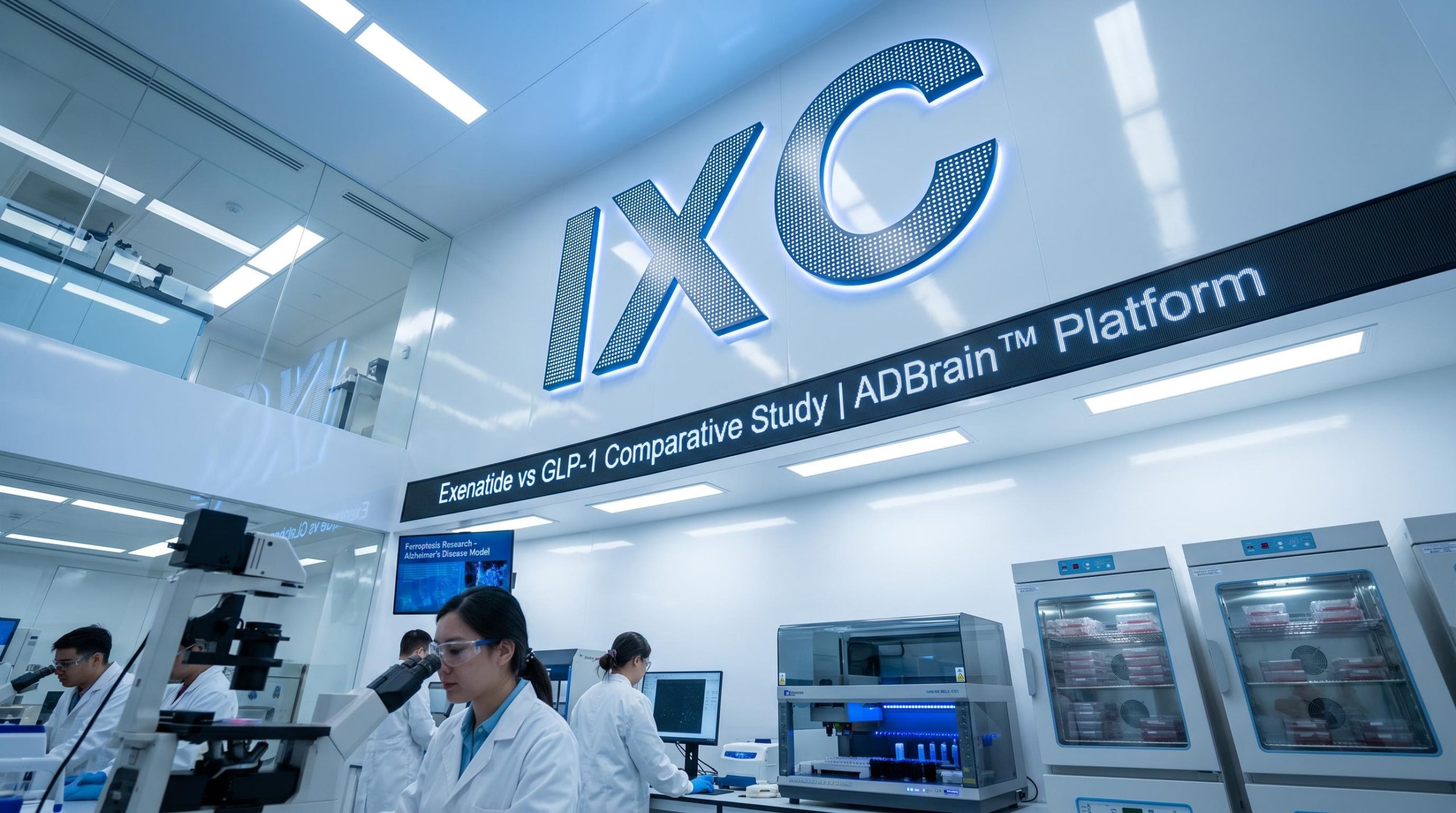
Invex Therapeutics (ASX: IXC) has commenced an expanded preclinical research programme with Tessara Therapeutics, evaluating Exenatide and other GLP-1 receptor agonists in Tessara’s ADBrain™ platform — a human induced pluripotent stem cell-derived three-dimensional Alzheimer’s disease model. The programme builds on prior work where Exenatide demonstrated statistically significant improvements across multiple pathologically relevant biomarkers of Alzheimer’s disease.
Invex expands Alzheimer’s research with head-to-head GLP-1 study
The Invex Therapeutics Alzheimer’s Disease Research programme will test Exenatide, branded as Presendin™ by the company, alongside current GLP-1 receptor agonists in direct head-to-head comparisons. The study includes novel combination regimens designed to explore additive or synergistic therapeutic effects over current standards of care.
Notably, Exenatide demonstrated a potential neuroprotective effect against ferroptosis in prior ADBrain™ work — an iron-dependent oxidative cell death pathway increasingly implicated in AD neurodegeneration. This represents a mechanistically differentiated finding relative to current standard-of-care therapies, which predominantly target amyloid plaques or tau tangles.
The expansion signals Invex is actively generating comparative data that could differentiate Exenatide from other GLP-1 drugs in the Alzheimer’s space, a class attracting significant investor attention following recent momentum in metabolic and neurological applications.
When big ASX news breaks, our subscribers know first
What is ferroptosis and why it matters in Alzheimer’s research
Ferroptosis is an iron-dependent oxidative cell death pathway distinct from other forms of programmed cell death. In Alzheimer’s disease, ferroptosis has emerged as a key contributor to neurodegeneration, with iron accumulation and oxidative stress driving neuronal death in affected brain regions.
Exenatide’s demonstrated potential neuroprotective effect against ferroptosis in the ADBrain™ model represents a novel mechanistic angle. Most approved Alzheimer’s treatments target amyloid plaques or tau tangles, whilst ferroptosis inhibition addresses an orthogonal pathway in disease progression.
A drug showing anti-ferroptosis effects could represent a differentiated therapeutic approach, potentially expanding Exenatide’s addressable market positioning within the neurodegenerative disease landscape. This mechanistic differentiation may prove valuable in a treatment paradigm where combination approaches are increasingly explored.
The ADBrain™ platform explained
ADBrain™ uses human induced pluripotent stem cells to create three-dimensional models that replicate Alzheimer’s disease biology. The platform provides a validated preclinical testing environment with an established assay suite that measures:
- Cytotoxicity
- Cell viability
- Ferroptosis
- Mechanistic characterisation assays aimed at profiling the therapeutic signature of each agent and combination
The platform’s human-derived cellular basis offers translational relevance that traditional animal models cannot fully replicate, particularly for complex neurodegenerative pathologies.
Three-pronged study design targets competitive benchmarking
The expanded programme comprises three distinct objectives designed to generate differentiation data and explore synergistic combinations:
- Benchmark Exenatide against a current GLP-1 agonist enabling direct head-to-head comparisons of two clinically active GLP-1 receptor agonists
- Evaluate combination regimens of Exenatide and a current GLP-1 agonist against approved AD symptomatic treatments exploring additive or synergistic therapeutic effects over current standards of care
- Evaluate novel combination regimens of Exenatide and a current GLP-1 agonist with naturally-occurring factors that demonstrate synergistic improvements in AD phenotype
Tolerability and efficacy assessments will utilise Tessara’s validated assay suite, supplemented by assays characterising the mechanistic signature of each agent and combination.
Head-to-head data against other GLP-1 drugs could provide Invex with valuable differentiation metrics if results favour Exenatide. The combination regimen testing explores potential for superior efficacy over current standards of care, a strategic positioning consideration as the Alzheimer’s treatment landscape evolves towards multi-target approaches.
Invex’s broader neurological repurposing strategy
Exenatide is an already approved drug being repurposed by Invex for neurological conditions involving raised intracranial pressure. The company has trademarked its repurposed formulation as Presendin™, positioning the asset across multiple neurological indications.
Drug repurposing strategies offer de-risked development pathways compared to novel molecular entities. Invex’s approach leverages Exenatide’s existing regulatory approval status and established safety profile whilst exploring new therapeutic indications, potentially accelerating development timelines and reducing capital requirements relative to traditional drug development programmes.
The preclinical research programme in Alzheimer’s disease represents an expansion of Invex’s neurological portfolio, targeting a disease with significant unmet medical need and substantial commercial opportunity. Current Alzheimer’s treatments address symptoms or slow disease progression modestly, leaving room for mechanistically differentiated therapies to capture market share.
What comes next
The company will provide updates on the progress and results of this programme in accordance with its continuous disclosure obligations under ASX Listing Rule 3.1. No specific timeline has been disclosed for interim results or programme completion.
The ongoing research programme represents a newsflow catalyst for investors to monitor, particularly if head-to-head data demonstrates differentiation versus comparator GLP-1 agonists or if combination regimens show synergistic effects. Results may inform future clinical development pathways and partnership opportunities within Invex’s broader neurological repurposing strategy.
Want the Next Biotech Breakthrough in Your Inbox?
Join 20,000+ investors receiving FREE breaking ASX healthcare news within minutes of release, complete with in-depth analysis. Click the “Free Alerts” button at Big News Blast to get market-moving biotech announcements and expert coverage delivered straight to your inbox the moment news breaks.