
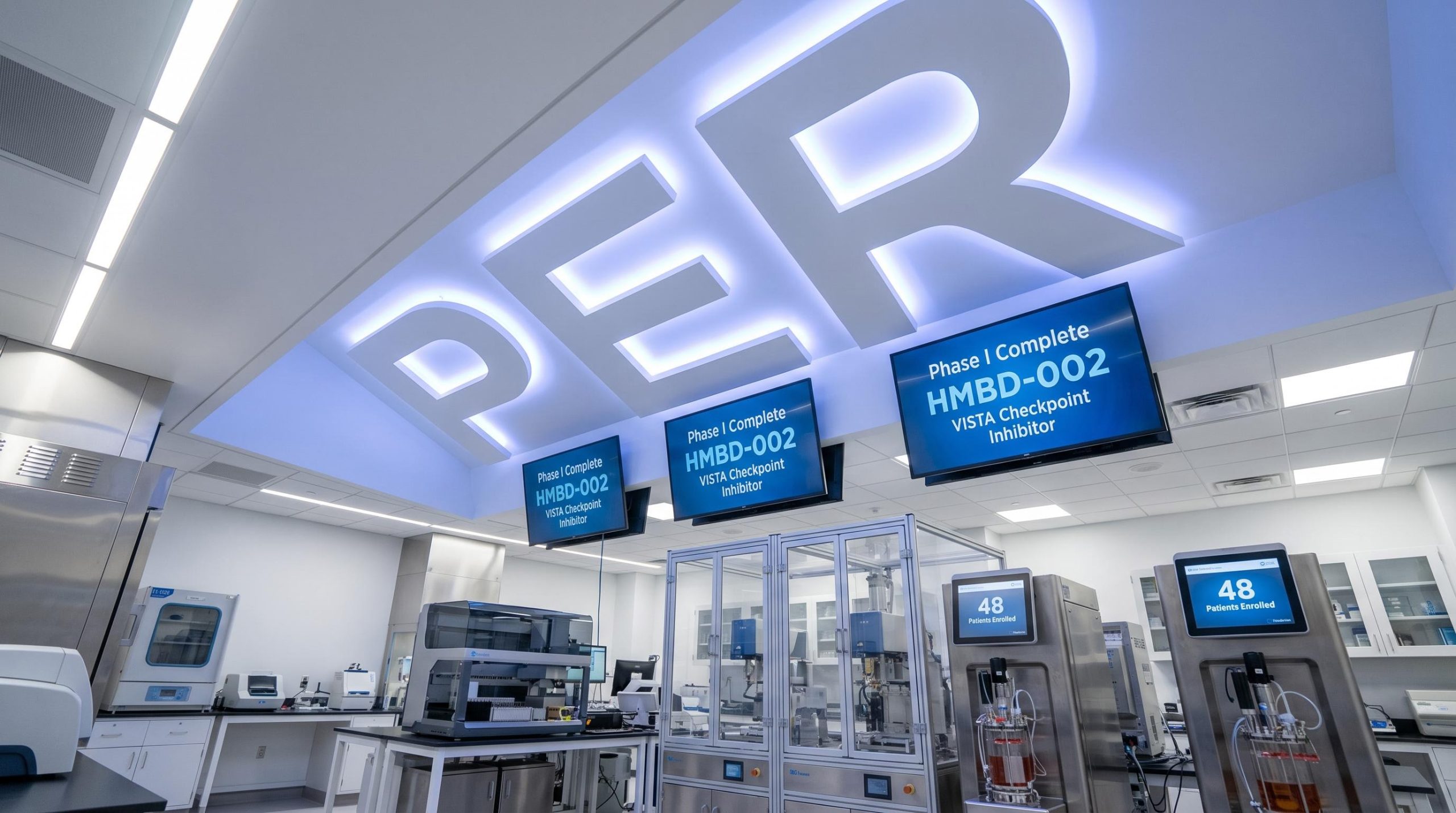
Percheron clears critical Phase I hurdle for HMBD-002 cancer therapy
Percheron Therapeutics has presented Phase I clinical trial results for its HMBD-002 cancer therapy at the American Association of Cancer Research (AACR) Annual Meeting in San Diego (17-22 April 2026), demonstrating safety and tolerability across 48 patients enrolled at six US clinical centres. The study represents successful completion of a critical development hurdle in a sector where, according to CEO Dr James Garner, “around half of all new cancer therapies fail in Phase I.”
HMBD-002 showed biomarker data supporting its intended mechanism of action, validating the pathway toward expanded clinical development in the second half of calendar year 2026. The trial enrolled patients with a wide range of advanced cancers, providing safety and preliminary efficacy data across multiple tumour types.
When big ASX news breaks, our subscribers know first
What is VISTA and why does it matter for cancer treatment?
Cancers exploit immune checkpoints—molecular switches on immune cells—to suppress normal immune function and avoid detection. When a cancer activates these checkpoints, the immune system’s ability to recognise and destroy tumour cells is reduced, allowing the disease to establish and spread.
VISTA (v-domain immunoglobulin suppressor of T-cell activation) is one such immune checkpoint. It has been implicated in resistance to existing checkpoint inhibitor therapies targeting CTLA-4 and the PD-1/PD-L1 axis, including pembrolizumab (Keytruda®).
HMBD-002 is a non-depleting IgG4 antibody designed to block VISTA with picomolar affinity and high specificity. By blocking this checkpoint, HMBD-002 aims to reactivate the immune response against tumours, allowing immune cells to recognise and attack cancer cells. Preclinical models have shown significant tumour growth inhibition, both as monotherapy and in combination with PD-1 inhibition.
For investors, this positions HMBD-002 to address a validated but under-served target in immuno-oncology, with potential to overcome resistance mechanisms limiting the efficacy of existing therapies.
Safety profile and tolerability results
HMBD-002 demonstrated a clean safety profile at doses up to 1,400mg weekly, with no maximum tolerated dose (MTD) declared. The most common treatment-related adverse events were fatigue, rash, and nausea, all manageable and consistent with the safety profiles of other immunotherapies.
A total of 20 patients received HMBD-002 in combination with pembrolizumab, with no evidence of additional toxicity from the combination. This finding is particularly significant for potential partnering discussions or future combination therapy development.
One dose-limiting toxicity—immune-related hepatitis—occurred at the 360mg monotherapy dose and resolved with corticosteroids after the drug was held. No cytokine release syndrome was observed across any cohort.
The company selected 720mg weekly as the recommended Phase II dose (RP2D) based on safety, tolerability, and receptor occupancy data.
| Metric | Result |
|---|---|
| Maximum dose tested | 1,400mg weekly |
| Patients on combination therapy | 20 |
| Most common adverse events | Fatigue, rash, nausea |
| Dose-limiting toxicities | 1 (resolved) |
| Recommended Phase II dose | 720mg weekly |
The tolerability profile supports progression to Phase II and de-risks the asset from a safety perspective, a critical consideration for oncology assets where dose-limiting toxicities frequently derail development.
Early signs of clinical activity in heavily pre-treated patients
The trial enrolled a profoundly treatment-refractory patient population. Participants had failed a median of 2.6 prior lines of systemic therapy (monotherapy cohort) and 4.1 prior lines (combination cohort), representing late-stage patients with limited remaining treatment options.
Despite this heavily pre-treated population, 27.5% of evaluable patients (11 of 40) achieved disease stabilisation. Among monotherapy patients, 18% (5 of 28) achieved stable disease, while 30% (6 of 20) in the combination cohort maintained stable disease.
Extended treatment durations were observed in some patients, with several remaining on therapy for over 300 days. Tumour shrinkage was documented in a subset of patients, particularly those receiving higher doses.
Dr James Garner, CEO
“We see meaningful evidence of pharmacological effect in patients who received higher doses, which is encouraging as we move forward with development.”
No complete or partial responses were observed, which is expected in a Phase I study enrolling patients with advanced, treatment-refractory disease. The primary aim of the trial was to establish safety, not efficacy, making disease stabilisation in this patient population a positive signal for continued development.
Biomarker data validates mechanism of action
The AACR poster marked the first public presentation of biomarker data for HMBD-002, providing biological evidence of the drug’s mechanism.
Analysis demonstrated an immunostimulatory response consistent with VISTA blockade: an increase in CD8+ T-lymphocytes (the immune cells responsible for directly killing tumour cells) and a decrease in monocytes and dendritic cells (which can suppress immune activity in the tumour microenvironment when dysregulated).
These changes align with HMBD-002’s intended mechanism—blocking VISTA to reactivate anti-tumour immunity by enhancing T-cell activity and reprogramming the tumour microenvironment to a pro-inflammatory state.
Dr James Garner, CEO
“The clinical observations that have previously been shared are supported by biomarker data, presented here for the first time, which further corroborates the intended mechanism of HMBD-002.”
For investors, biomarker validation provides scientific confidence that the drug is engaging its target and exerting the intended biological effect, strengthening the rationale for continued development investment.
Development pathway and upcoming catalysts
The company has outlined a clear pathway forward with multiple near-term catalysts that will provide regular news flow and visibility for investors.
Upcoming milestones include:
- ASCO Annual Meeting presentation — Chicago, 29 May – 2 June 2026 (new preclinical data)
- New Phase II clinical trial launch — second half of calendar year 2026
The transition to Phase II marks a shift from early-stage safety evaluation to registrational development, where the company will seek to demonstrate efficacy in specific tumour types or patient subsets. Further details on trial design and target indications are expected as plans progress.
The Phase II initiation will be a key de-risking event, signalling the company’s confidence in the asset and commitment to advancing HMBD-002 toward potential commercialisation.
About the AACR Annual Meeting
The AACR Annual Meeting is one of the most important scientific conferences in cancer research. The 2025 meeting attracted more than 22,000 attendees from 85 countries, including leading oncology researchers, pharmaceutical company delegates, and institutional investors.
The conference has become a valuable forum for biotechnology companies to share clinical and preclinical data, providing visibility to potential partners and the investment community. Presenting at AACR signals that a company’s data has met the conference’s scientific standards and is worthy of peer review and discussion within the oncology community.
For Percheron, the AACR platform provides an opportunity to raise the profile of HMBD-002 among pharmaceutical companies evaluating partnership or acquisition opportunities in the immuno-oncology space.
Get the Next Biotech Breakthrough Before the Market Moves
Join 20,000+ investors receiving FREE breaking ASX news within minutes of release, complete with in-depth analysis. Click the “Free Alerts” button at Big News Blast to stay ahead on healthcare and biotech announcements the moment they hit the market.