
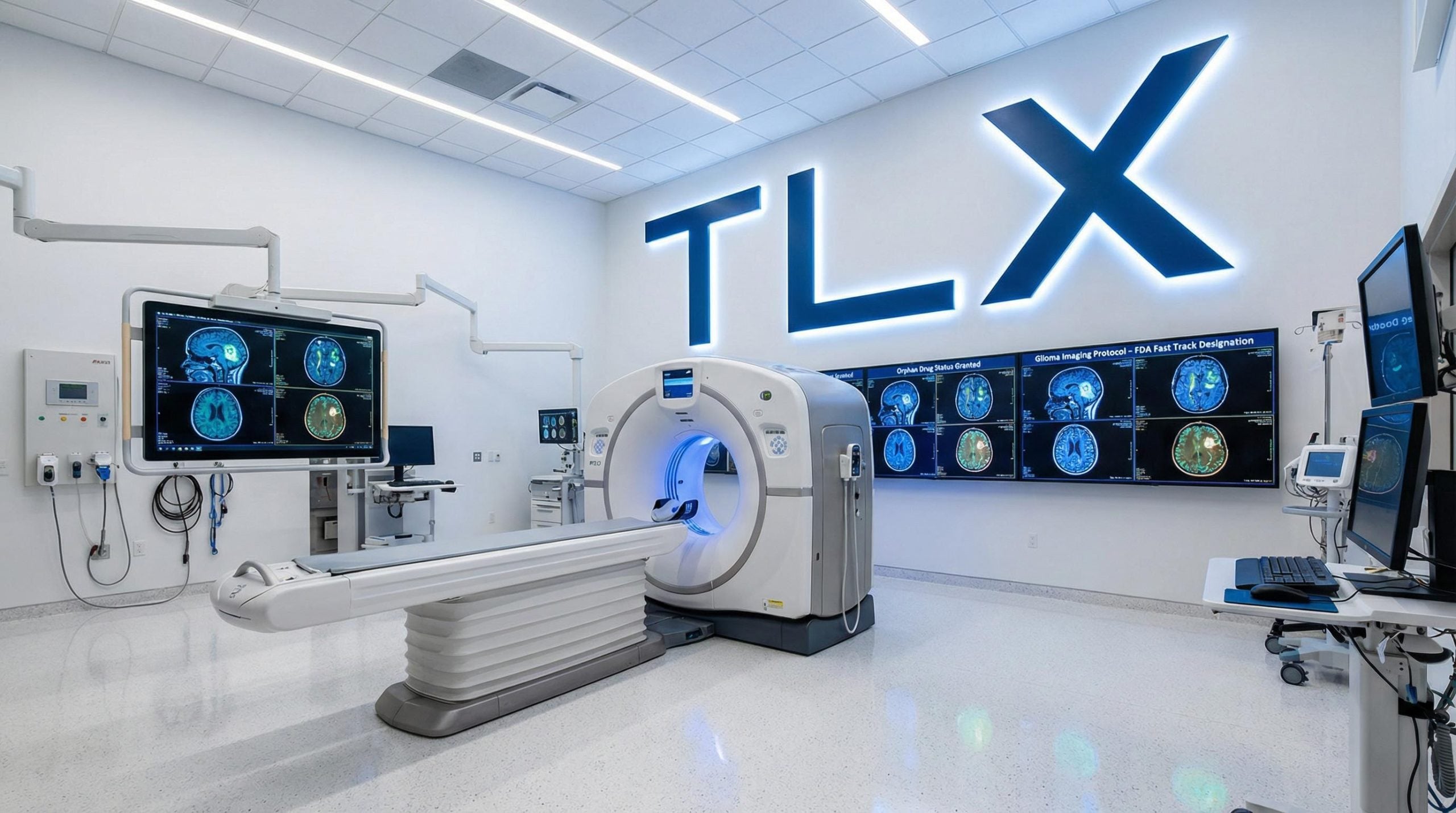
FDA accepts Telix’s Pixclara NDA with September decision date
Telix Pharmaceuticals (ASX: TLX) has announced that the US Food and Drug Administration (FDA) has accepted the company’s resubmitted New Drug Application (NDA) for TLX101-Px (Pixclara), an investigational imaging agent for glioma, with a Prescription Drug User Fee Act (PDUFA) goal date of 11 September 2026. The NDA was resubmitted on 13 March 2026, following constructive engagement with the regulatory agency. TLX101-Px has previously secured both Orphan Drug and Fast Track designations from the FDA, signalling an expedited review pathway for this brain cancer imaging technology.
The regulatory clarity provides investors with a defined catalyst date for potential approval. The Fast Track designation reflects the FDA’s recognition of TLX101-Px’s potential to address a serious medical condition with limited treatment options, potentially accelerating the development and review timeline compared to standard regulatory processes.
When big ASX news breaks, our subscribers know first
What is Pixclara and why does glioma imaging matter?
TLX101-Px (Pixclara) is a positron emission tomography (PET) imaging agent that uses Floretyrosine F 18 (18F-FET) to help distinguish tumour recurrence from treatment-related changes in brain cancer patients. PET imaging is a medical scanning technique that detects radiation from a small amount of radioactive material injected into the body, creating detailed pictures of how organs and tissues are functioning.
The clinical problem Pixclara aims to solve is significant. After brain cancer patients complete treatment with surgery, radiation, and chemotherapy, scans often show changes in brain tissue. However, standard imaging cannot reliably determine whether these changes represent returning cancer or simply the effects of treatment itself. This uncertainty complicates treatment decisions and patient management.
Importantly, 18F-FET imaging is already recommended in international clinical practice guidelines, including the National Comprehensive Cancer Network (NCCN) Guidelines. This means the imaging approach has established clinical validation outside the United States. Regulatory approval would bring an internationally recognised standard-of-care imaging technique to US patients and clinicians, addressing a validated clinical need rather than introducing an unproven concept.
The glioma treatment challenge
Market context and unmet need
Gliomas represent a substantial clinical and market opportunity, with the disease burden highlighting the urgent need for improved diagnostic tools:
- Approximately 24,000 new glioma cases are diagnosed annually in the US
- Gliomas account for approximately 30% of all brain and central nervous system tumours
- Gliomas represent 80% of all malignant brain tumours
- Glioblastoma patients face an expected survival of 12 to 15 months from diagnosis
- Recurrence occurs in almost all glioblastoma patients despite treatment
The difficulty in distinguishing tumour progression from treatment effects creates a critical gap in patient care. Standard treatment for glioblastoma comprises surgical resection followed by combined radiotherapy and chemotherapy, yet the near-universal recurrence rate underscores the aggressive nature of the disease and the importance of accurate monitoring.
For investors, the large addressable patient population combined with high recurrence rates suggests repeated imaging opportunities throughout the patient journey. Each recurrence assessment represents a potential use case for Pixclara if approved.
Clinical expert perspectives
Leading neuro-oncology specialists have emphasised the clinical significance of the FDA’s acceptance decision and the broader need for improved glioma imaging.
Dr Thomas Hope, Vice Chair, Department of Radiology and Biomedical Imaging, University of California San Francisco
“There remains a critical unmet need in improving our ability to image residual glioma after treatment. We have worked with Telix for the last three years to help leverage our clinical data to help make FET-PET available to patients in the United States.”
Dr Patrick Wen, E. Antonio Chiocca, MD, PhD, Family Endowed Chair in Neuro-Oncology, Mass General Brigham Cancer Institute
“Distinguishing tumor progression from treatment-related change remains one of the most challenging aspects of glioma care. PET imaging with 18F-FET is an important tool in clinical practice worldwide, and the FDA’s acceptance of this application is a meaningful step toward broader access for patients and clinicians in the United States.”
The endorsements from UCSF and Mass General Brigham validate the clinical utility of the technology and demonstrate established relationships with leading US neuro-oncology centres. These institutional connections could support commercial launch activities if regulatory approval is secured, providing ready access to key opinion leaders and early adoption sites.
Theranostic pipeline potential
Pixclara as patient selection tool
TLX101-Px represents one component of Telix’s broader theranostic strategy in glioma. The imaging agent targets membrane transport proteins known as L-type amino acid transporters 1 and 2 (LAT1 and LAT2), the same biological targets addressed by Telix’s therapy candidate TLX101-Tx (iodofalan 131I).
TLX101-Tx is currently under investigation in the pivotal IPAX-BrIGHT trial (NCT07100730) for patients with recurrent glioblastoma. The theranostic concept pairs a diagnostic imaging agent with a matched therapeutic agent targeting the same biological pathway. In this framework, Pixclara could potentially serve as both a patient selection tool and a response assessment mechanism for the therapeutic candidate.
If both products achieve regulatory approval, the imaging agent could identify patients whose tumours express high levels of LAT1/LAT2 transporters, potentially predicting which patients are most likely to respond to the targeted therapy. This integrated diagnostic-therapeutic strategy represents a core element of precision medicine approaches in oncology.
For investors, successful approval of Pixclara could establish foundational commercial infrastructure and clinical adoption that supports future TLX101-Tx commercialisation, should that therapy candidate succeed in clinical trials. Neither TLX101-Px nor TLX101-Tx has received marketing authorisation in any jurisdiction to date.
Financial guidance and next steps
Telix has confirmed that its FY 2026 financial guidance does not include any revenue contribution from TLX101-Px. This conservative approach means regulatory approval and subsequent commercial launch would represent potential upside to current forecasts rather than a baked-in assumption.
Kevin Richardson, CEO, Telix Precision Medicine
“The FDA’s acceptance of our NDA resubmission is an important milestone for Telix. We appreciate the FDA’s constructive engagement and look forward to working closely with the Agency to urgently obtain approval and then bring this product to market for the benefit of patients.”
| Milestone | Date |
|---|---|
| NDA resubmission | 13 March 2026 |
| FDA acceptance | 10 April 2026 |
| PDUFA goal date | 11 September 2026 |
The 11 September 2026 PDUFA date represents a defined binary catalyst for investors. Regulatory approval decisions in the biotechnology sector frequently drive significant share price movements, as they remove development risk and open pathways to revenue generation. The exclusion of Pixclara from current financial guidance suggests management is taking a prudent approach to forecasting, which could amplify positive sentiment if approval is secured and commercialisation proceeds ahead of revised expectations.
Ready to Learn More About Telix’s Glioma Imaging Pipeline?
TLX101-Px represents a potential first-in-class diagnostic solution for a critical unmet need in US neuro-oncology, with the FDA’s September 2026 decision date now firmly on the calendar. The resubmitted NDA, supported by international clinical validation and Fast Track designation, positions Telix at the forefront of precision brain cancer diagnostics.
For a detailed analysis of Telix’s theranostic strategy, upcoming regulatory catalysts, and commercial opportunities in glioma imaging, visit the Telix investor centre.