
ECT Expands Rice Licence to Destroy PFAS in Water Filters for Just $10k
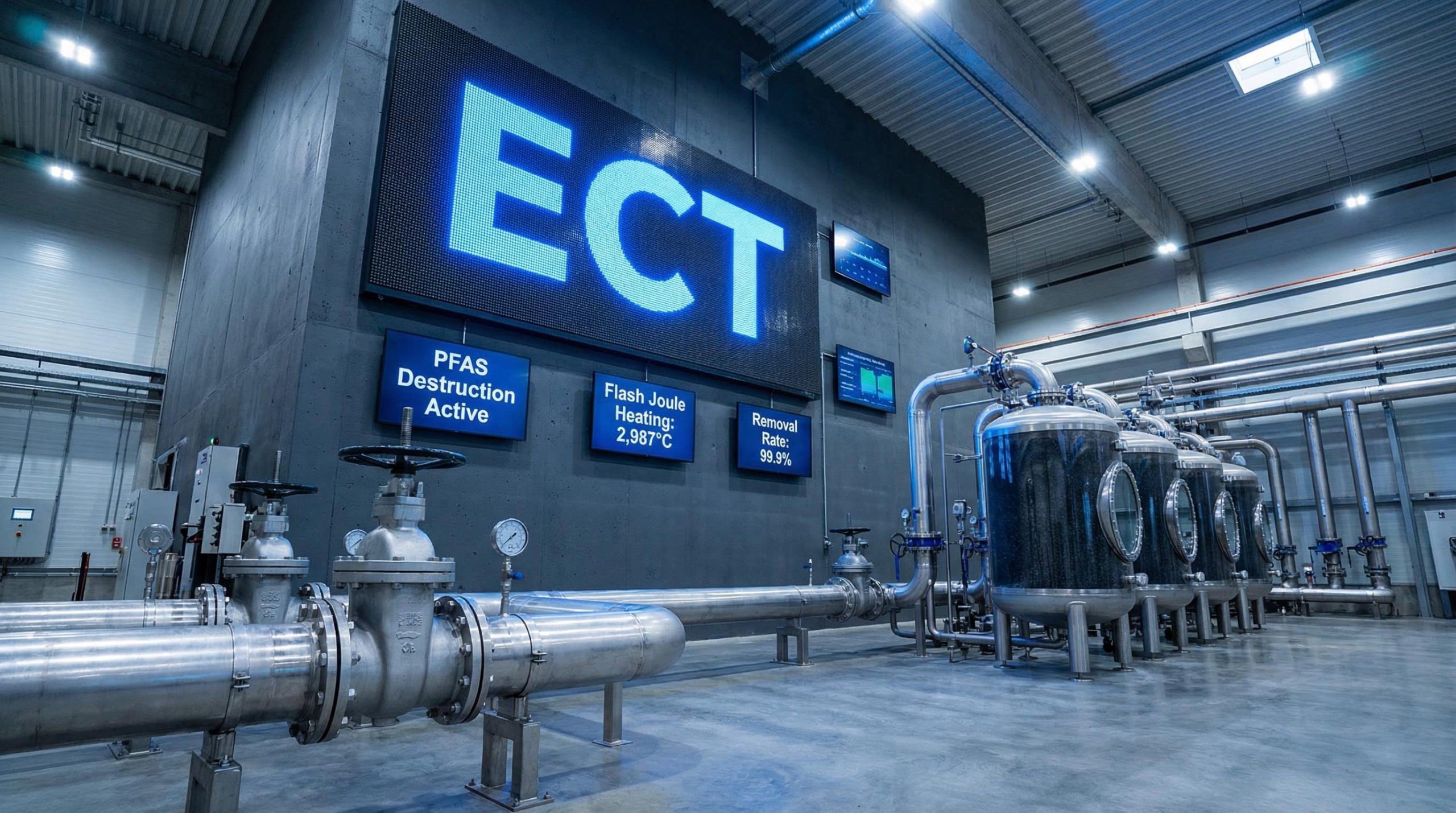
ECT secures expanded licence to destroy PFAS captured in water treatment filters
Environmental Clean Technologies Limited (ASX: ECT) has expanded its licence agreement with Rice University to include ECT PFAS adsorbent destruction technology, targeting contaminated water treatment media such as granular activated carbon. The amendment adds a new market vertical to the company’s Flash Joule Heating platform for a one-off fee of $10,000, positioning ECT to address PFAS captured in filtration systems using the same core technology developed for soil remediation.
The licence expansion extends ECT’s existing rights to apply Flash Joule Heating to PFAS-contaminated adsorbents, including granular activated carbon used widely in water treatment infrastructure. The amendment builds on the company’s established Rapid Electrothermal Mineralisation technology for soil remediation, announced in December 2025, and represents a complementary application of intellectual property developed at Rice University under Professor James Tour.
The expanded scope enables ECT to target on-site destruction of PFAS captured within water treatment media, addressing a market segment currently serviced predominantly by off-site incineration. The company identified the opportunity through ongoing collaboration with Rice University, with technical assessment conducted by Chief Technology Officer Justin Sharp in consultation with the Advisory Board.
Licence amendment costs remain modest relative to the expanded addressable market. ECT will pay Rice a one-off amendment fee of $10,000 plus reimbursement of specified patent expenses. The annual maintenance fee increases by US$2,500 (from US$10,000 to US$12,500), while the milestone fee payable at US$50 million in gross sales rises by US$50,000 (from US$150,000 to US$200,000).
The incremental licensing costs unlock access to an entirely new revenue stream in water treatment media whilst leveraging existing research and development expenditure. The water treatment application uses the same power systems and hardware architecture under development for ex-situ soil remediation, reducing capital requirements for platform expansion.
When big ASX news breaks, our subscribers know first
What is granular activated carbon and why does PFAS destruction matter?
Granular activated carbon is a highly porous filtration medium used across various industries to remove contaminants from liquids and gases. In water treatment systems, GAC captures PFAS compounds from contaminated sources, preventing their passage into drinking water supplies. However, once saturated with PFAS, the carbon becomes concentrated hazardous waste.
Current industry practice involves transporting spent GAC off-site for high-temperature incineration. This disposal pathway creates several operational and environmental challenges. Transport of contaminated material introduces exposure risks during handling and transit.
Incineration requires specialist destruction capacity and consumes significant energy. Combustion processes may release hazardous atmospheric emissions, raising concerns about secondary PFAS exposure.
ECT’s on-site mineralisation approach addresses these limitations by enabling PFAS destruction at the point of capture. This reduces reliance on transport logistics and centralised incineration infrastructure whilst minimising secondary waste streams.
The company’s technical evaluation of PFAS treatment pathways identified three structural limitations with existing approaches to destroying PFAS captured in GAC:
- Secondary waste generation from incineration, including hazardous gases released into the atmosphere
- High energy consumption associated with thermal desorption and destruction processes
- Logistical and environmental risks during transport of contaminated materials for off-site disposal
Regulatory pressure on PFAS contamination continues to intensify across multiple jurisdictions. Tightening international standards are accelerating demand for verifiable destruction technologies that eliminate rather than relocate contaminated materials. Companies offering on-site destruction capabilities may capture premium market share as compliance requirements evolve.
Flash Joule Heating achieves greater than 99.9% PFAS removal in peer-reviewed research
Flash Joule Heating applies high-power electrical current through carbon-based materials to achieve rapid temperature increases within seconds. Under controlled laboratory conditions, the technology has demonstrated the ability to break carbon-fluorine bonds characteristic of PFAS compounds.
Peer-reviewed research indicates FJH applied to PFAS-contaminated carbon media can achieve greater than 99.9% PFAS removal under controlled conditions. The process converts 90-96% of fluorine to stable inorganic fluoride salts, operating at temperatures approaching 3,000°C and completing within seconds. These performance metrics position the technology competitively against incumbent thermal treatment methods.
The rapid electrical heating rate destroys the carbon-fluorine bonds in PFAS molecular structures whilst converting spent GAC into higher-value carbon products. Outputs include graphene, graphite, and amorphous carbon. Where silicon metal is introduced prior to treatment, silicon carbide nanomaterials may also be produced.
| Performance Metric | FJH Result |
|---|---|
| PFAS Removal | Greater than 99.9% |
| Fluorine Conversion | 90-96% to stable salts |
| Operating Temperature | Approaching 3,000°C |
| Processing Time | Seconds |
Life cycle assessment and techno-economic analysis reported in peer-reviewed studies indicate competitive or favourable energy and emissions performance compared with incineration. The technology produces minimal volatile fluorinated by-products whilst enabling potential value recovery from carbon-based co-products.
The peer-reviewed validation of destruction efficacy provides technical credibility for commercial discussions with potential customers and regulatory bodies. The co-product value recovery potential offers an additional revenue stream beyond remediation services, differentiating the offering from disposal-focused alternatives.
Same hardware, multiple applications
The expanded water treatment application leverages the same core power systems and hardware architecture currently under development for ECT’s ex-situ REM soil remediation platform. This hardware commonality supports scalability across multiple PFAS destruction applications without proportional increases in development expenditure.
The ex-situ REM system targets PFAS-contaminated soil already moved to waste management sites. The same core technology applies to remediating PFAS-laden GAC, providing translatable capability between soil remediation and water filtration media treatment.
Commenting on the strategic progression, Chief Technology Officer Justin Sharp emphasised the complementary nature of the expansion:
Justin Sharp, Chief Technology Officer
“This expansion is a strategic progression of our existing REM platform and reinforces our position in PFAS destruction technologies. Importantly, the move into PFAS destruction from adsorbents, including those used in water treatment systems, utilises the same licensed Flash Joule-Heating technology I helped to develop in my time on staff at Rice University. It is highly complementary to our soil remediation capabilities, as it utilises the same system we are developing for the ex-situ REM treatment of PFAS-contaminated soil.”
Sharp also noted emerging industry demand for alternatives to incineration:
Justin Sharp, Chief Technology Officer
“The industry is increasingly looking for alternatives to incineration when it comes to treating spent treatment media such as GAC, as there are growing concerns about releasing PFAS into the atmosphere during combustion. Therefore, we believe an on-site mineralisation solution that efficiently eliminates PFAS from spent treatment media and reduces secondary waste has the potential to address a critical gap in current GAC treatment pathways and in particular for those used in water treatment applications.”
Platform convergence reduces time to revenue for the water treatment vertical by eliminating duplicate engineering and validation requirements. The company can deploy learnings from soil remediation development directly to water treatment applications.
The next major ASX story will hit our subscribers first
Next steps and development pathway
ECT has stated its objective to advance toward pilot-scale deployment of its on-site system for mineralising PFAS from spent GAC using Flash Joule Heating. Progression remains subject to technical and regulatory validation.
The company will focus on system development and validation specific to GAC mineralisation, building on the established performance data from peer-reviewed research. Pilot-scale deployment represents a critical value-creation milestone, bridging laboratory validation and commercial-scale operations.
The expanded licence positions ECT to deliver PFAS destruction capability across both soil and water treatment mediums. This dual-application strategy broadens the company’s addressable market whilst leveraging a common technology platform.
Investors should monitor for updates on the following near-term catalysts:
- System development and validation for GAC mineralisation
- Pilot-scale deployment milestones and timing
- Regulatory approval progress for on-site PFAS destruction
- Potential commercial partnerships in the water treatment sector
The progression from licence expansion to pilot deployment represents a clear development pathway. Commercial partner announcements or pilot programme timing updates would provide visibility on execution progress and revenue potential.
Get PFAS Remediation News Before the Market Moves
Join 20,000+ investors receiving FREE breaking ASX industrials news within minutes of release, complete with expert analysis. Click the “Free Alerts” button at Big News Blast to get alerts on emerging environmental technology stocks the moment announcements drop.