
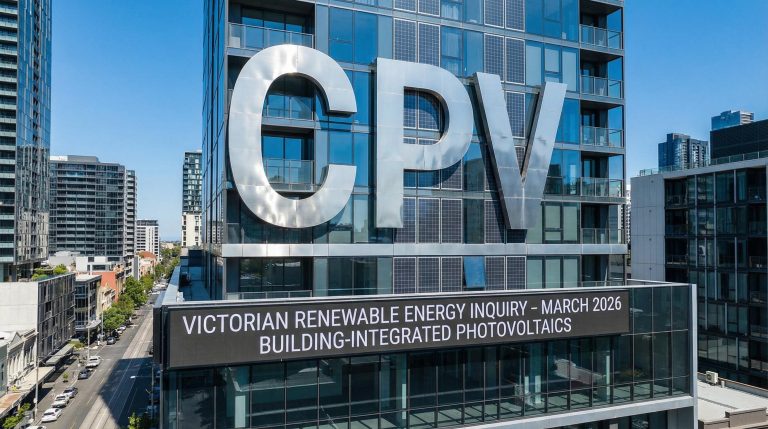
ClearVue lodges submission to Victorian renewable energy inquiry
ClearVue Technologies (ASX: CPV) has lodged a submission to the Victorian Government’s Inquiry into Renewable and Affordable Energy for Apartments. The inquiry examines pathways to expand renewable and affordable electricity access for apartment residents and multi-unit dwellings, specifically focusing on technologies capable of generating electricity from building façades and vertical surfaces where rooftop solar capacity is limited.
ClearVue’s submission outlines the potential role of building-integrated photovoltaic (BIPV) technologies, including solar façade and glazing systems, in supporting renewable energy generation within medium and high-density residential developments. The submission positions the company’s transparent solar technology as directly relevant to the inquiry’s scope, addressing the energy generation challenges faced by apartment buildings with limited rooftop access.
Government inquiries of this nature signal potential policy shifts that could create market tailwinds for BIPV adoption across Australia’s high-density residential sector.
Property Council of Australia endorses BIPV technology in parallel submission
The Property Council of Australia, the peak body representing Australia’s property industry, referenced building-integrated photovoltaic technology in its separate submission to the inquiry. The Property Council’s first recommendation calls for research and development of solar generation and storage technologies, including investigation of building-integrated photovoltaic products and behind-the-meter systems.
This third-party endorsement from a major industry body strengthens the case for future regulatory support and broader market adoption of BIPV technologies. When peak industry organisations advocate for specific technology categories in government submissions, it typically influences policy development and funding allocation decisions.
When big ASX news breaks, our subscribers know first
What is building-integrated photovoltaics?
Building-integrated photovoltaics refers to solar cells integrated directly into building materials such as windows, façades, and cladding, rather than mounted on rooftops. This approach matters significantly for apartments and high-density buildings where limited rooftop space means vertical surfaces represent untapped renewable energy potential.
ClearVue’s specific approach involves transparent solar glazing that maintains building aesthetics while generating electricity. The company’s patented glass technology preserves glass transparency, allowing architects and developers to meet both design requirements and renewable energy targets without compromising building appearance.
BIPV addresses a specific market gap that traditional rooftop solar cannot serve, particularly in urban high-density environments where land and roof area are constrained. As cities continue densifying, vertical surface energy generation becomes increasingly relevant to meeting renewable energy targets.
CEO commentary on addressing industry barriers
Douglas Hunt, CEO & Managing Director of ClearVue, highlighted the alignment between the company’s development focus and the challenges identified in the Property Council’s submission.
Douglas Hunt, CEO & Managing Director
“Our submission highlights the potential contribution that building-integrated photovoltaic technologies can make to renewable energy generation in high-density buildings. The Property Council of Australia’s submission highlights the transformative nature of building-integrated photovoltaics. Many of the challenges identified in the Property Council submission are the same barriers ClearVue has been focused on addressing through its engineering and product development, with a building-material-first approach designed to support practical deployment of BIPV systems.”
The alignment between industry-identified barriers and ClearVue’s research and development focus suggests product-market fit, particularly as the company has structured its engineering approach around practical deployment considerations rather than purely theoretical applications.
ClearVue’s product range for building applications
ClearVue has extended solar energy generation capabilities across multiple building applications:
- Vision glass
- Cladding
- Spandrel
- Balustrade
- Skylight solutions
These solutions are positioned to offset operational energy requirements, contributing to net zero building objectives while preserving the aesthetic and functional requirements of modern architectural design.
The next major ASX story will hit our subscribers first
What’s next for ClearVue
Submissions to the Victorian Government’s Inquiry into Renewable and Affordable Energy for Apartments are under review, with findings potentially informing future policy or incentive structures. Favourable policy outcomes could accelerate BIPV adoption in Victoria and establish precedent for other Australian states considering similar renewable energy frameworks for high-density residential buildings.
The submission represents strategic engagement with government policy development at a stage where industry input can influence regulatory frameworks. Regulatory tailwinds remain a key catalyst to watch for BIPV market expansion in Australia, particularly as state and federal governments pursue net zero targets that require new approaches to urban renewable energy generation.
Want the Next Clean Energy Breakthrough in Your Inbox?
Join 20,000+ investors getting FREE breaking ASX news delivered within minutes of release, complete with in-depth analysis. Click the “Free Alerts” button at Big News Blast to receive real-time alerts the moment market-moving announcements hit the ASX across Tech, Healthcare, Finance, and emerging sectors.