
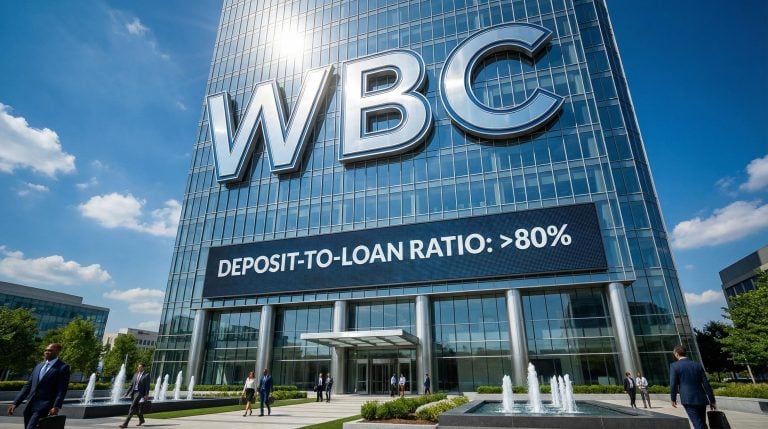
Westpac Banking Corporation (ASX: WBC) has announced plans to voluntarily exit SEC registration by filing Form 15F as early as May 2026, marking the end of its US Securities and Exchange Commission reporting obligations for USD long-term wholesale funding. The Westpac SEC Deregistration USD Funding decision reflects strengthened domestic funding dynamics, with the bank’s deposit-to-loan ratio now exceeding 80%.
Westpac to voluntarily exit SEC registration from May 2026
Westpac intends to file Form 15F with the SEC to voluntarily deregister from its reporting obligations under Section 15(d) of the US Securities Exchange Act of 1934. Upon filing, the bank’s reporting obligations will be suspended immediately, with full termination expected to occur 90 days after the submission date.
The deregistration relates specifically to Westpac’s USD long-term wholesale funding arrangements. The bank has determined that maintaining SEC-registered status is no longer necessary given changes to its funding composition and the maturity of alternative issuance formats available in US capital markets.
This represents an administrative restructuring rather than a withdrawal from US dollar funding markets. The bank will continue to access US capital, albeit through different regulatory pathways that reduce ongoing compliance obligations.
Join thousands of readers who start here
Our best articles, sent straight to your inbox. You can unsubscribe anytime.
What is SEC deregistration and why does it matter for banks?
SEC registration requires foreign companies to file periodic reports and comply with US disclosure standards, including annual Form 20-F filings and interim updates via Form 6-K. These obligations carry significant compliance costs, covering legal review, financial reporting alignment with US GAAP, and ongoing regulatory monitoring.
Deregistration does not prevent Westpac from issuing securities in the United States. It simply changes the format under which those securities are offered. Rather than issuing SEC-registered bonds, the bank will utilise exemptions that allow institutional investors to purchase securities without full SEC registration requirements.
Several major Australian banks already operate under these alternative formats, suggesting the shift represents alignment with peer practice rather than a strategic departure. For investors, the primary impact is administrative rather than operational, as the bank commits to maintaining transparency through its existing disclosure channels.
Strengthened funding position drives the shift
The decision to pursue Westpac SEC Deregistration USD Funding stems from three key developments in the bank’s funding profile:
- Deposit-to-loan ratio above 80%: Strong household deposit growth has reduced reliance on wholesale funding markets
- Deepening Australian domestic debt markets: Increased depth and liquidity in local capital markets provide alternative funding sources
- Strengthened risk management frameworks: Enhanced internal controls and capital management reduce the need for external US regulatory oversight
The elevated deposit-to-loan ratio indicates Westpac is funding a greater proportion of its lending book through customer deposits, traditionally considered the most stable and cost-effective funding source for retail banks. This shift reduces the bank’s need to tap international wholesale markets as frequently, diminishing the strategic value of maintaining SEC registration.
Australia’s domestic debt markets have matured significantly over recent years, providing banks with greater flexibility to raise long-term funding locally. Combined with improved risk management practices, these factors have enabled Westpac to reassess the format of its US dollar issuance without compromising funding capacity or market access.
Future US market access preserved
Westpac will continue issuing long-term securities in the US market using Rule 144A and Section 3(a)(2) exemptions under the US Securities Act of 1933. These provisions allow qualified institutional buyers to purchase securities without the issuer maintaining full SEC registration, a format already used by other major Australian banks.
Rule 144A permits resale of securities to qualified institutional buyers without SEC registration, provided certain information requirements are met. Section 3(a)(2) exempts securities issued by banks from registration requirements under specific conditions. Both mechanisms maintain Westpac’s access to US institutional capital while reducing the administrative burden associated with ongoing SEC reporting.
The alignment with peer practice ensures Westpac faces no competitive disadvantage in accessing US dollar funding. Institutional investors familiar with these formats will continue to have access to Westpac’s securities, maintaining liquidity and pricing efficiency.
Information access for investors
Westpac has confirmed it will continue providing all required information for existing and future investors via its website at westpac.com.au. This commitment ensures transparency is maintained despite the exit from the SEC reporting regime, with disclosures continuing to meet Australian regulatory standards and investor expectations.
Enjoyed this article?
We publish high-impact stories like this a few times a week. No spam.
What this means for Westpac shareholders
The Westpac SEC Deregistration USD Funding announcement reflects a sensible administrative simplification enabled by improvements to the bank’s funding profile. The decision carries several implications for investors:
- SEC deregistration filing targeted for May 2026, with reporting obligations suspended immediately upon filing
- US market issuance continues under Rule 144A and Section 3(a)(2) formats, preserving access to US dollar funding
- Deposit-to-loan ratio above 80% supports reduced wholesale funding reliance and improved funding stability
- Approach aligns with major Australian bank peers, reducing any perceived competitive disadvantage
No immediate operational or dividend implications have been disclosed. The move represents a reduction in compliance costs rather than a strategic pivot in capital management or market positioning. The strengthened deposit base underpinning this decision suggests improved funding efficiency, which may support longer-term profitability through reduced wholesale funding costs.
For shareholders, the deregistration should be viewed as a housekeeping decision that reflects balance sheet strength rather than a retreat from international capital markets. The bank’s commitment to maintaining transparency and continued US market access indicates business continuity in wholesale funding operations.
Want Banking Sector News Before the Market Moves?
Join 20,000+ investors receiving FREE breaking ASX financial news within minutes of release, complete with expert analysis. Big News Blast delivers market-moving announcements straight to your inbox the moment they drop. Click the “Free Alerts” button to stay ahead on banking and finance updates.