
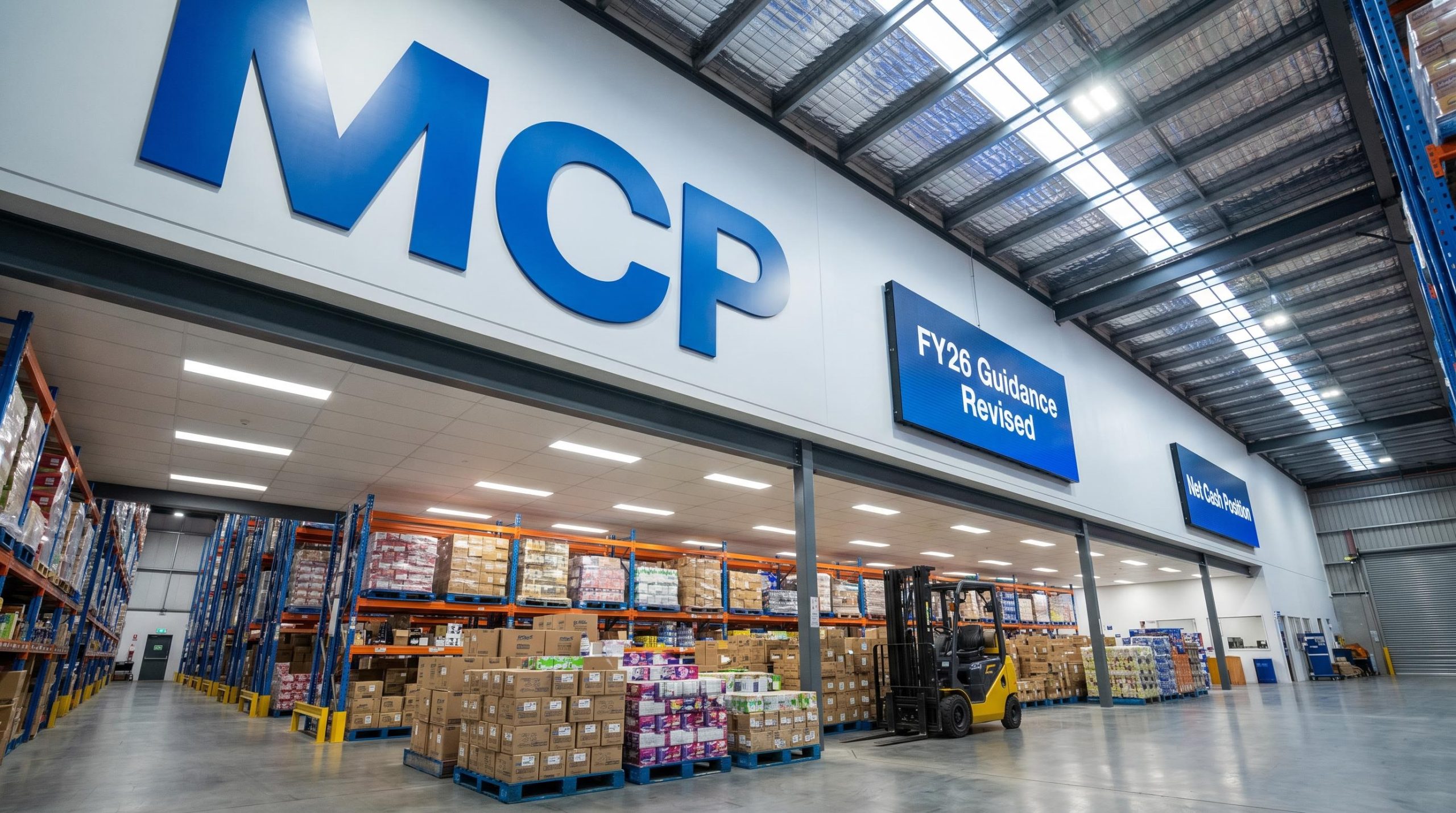
McPherson’s revises FY26 earnings outlook amid operating model transition
McPherson’s Limited has revised its FY26 earnings guidance downwards, announcing it no longer expects year-on-year growth in underlying EBITDA. The consumer goods company attributed the revision to sales tracking below expectations as it continues embedding its new operating model, following its 1H26 results announcement on 25 February 2026 where management had anticipated moderate year-on-year growth. Despite the downgrade, McPherson’s remains in a net cash position with a strong balance sheet and intends to continue its share buyback programme.
The revision marks a significant recalibration for investors who had been anticipating modest earnings expansion during the financial year ending June 2026. However, management’s decision to maintain the share buyback signals confidence in the company’s longer-term trajectory despite near-term headwinds.
When big ASX news breaks, our subscribers know first
Two factors driving the revision
McPherson’s identified both internal operational challenges and external cost pressures as drivers of the guidance downgrade. Sales have not met expectations as the company continues stabilising its new operating model, with management specifically focusing on optimising the supply chain and improving in-store availability. Concurrently, macroeconomic conditions have prompted several of the company’s suppliers to add various surcharges to offset their increased operating costs.
| Factor Type | Description |
|---|---|
| Internal | Operating model stabilisation; supply chain optimisation; in-store availability improvements |
| External | Supplier surcharges added to mitigate increased operating costs amid macro-economic conditions |
Distinguishing between controllable operational factors and external cost pressures helps investors assess whether the headwinds facing McPherson’s are temporary or persistent. The company’s focus on supply chain and availability suggests management believes these challenges can be addressed through execution.
What is an operating model transition?
An operating model transition refers to a company restructuring how it manages core business operations, from supply chain logistics to sales processes. For a consumer goods company like McPherson’s, this typically involves changes to distribution networks, inventory management, and retailer relationships. These transitions commonly cause short-term disruption to sales and product availability as new systems and processes are embedded across the business. The stabilisation period can take several quarters as teams adapt and systems optimise.
Balance sheet strength supports continued buyback
McPherson’s confirmed it remains in a net cash position and intends to continue the share buyback announced in February 2026, demonstrating management conviction despite the earnings revision. The company’s strong balance sheet provides financial flexibility to navigate the operating model transition without compromising capital management priorities.
Company Statement
“The Company intends to continue with the share buy-back announced in February, reflecting confidence in its long-term strategy and prospects.”
Continuing capital returns during a guidance downgrade is a notable signal. It indicates management views the near-term challenges as transitional rather than structural, with the balance sheet providing a buffer to maintain shareholder distributions whilst operational improvements are implemented. Net cash also positions the company to absorb supplier cost increases without balance sheet stress.
Second-half weighting maintained
Despite revising full-year guidance, McPherson’s confirmed that FY26 EBITDA is still expected to be majority-weighted to 2H26. This suggests management anticipates improved performance in coming months as the operating model stabilises and the company’s focus areas deliver results.
The maintained second-half weighting indicates the revised guidance reflects a lower earnings base rather than a deteriorating trajectory. Key execution priorities remain:
- Optimising the supply chain
- Improving in-store availability
These operational improvements are expected to drive sequential performance gains through the second half, though from a lower starting point than previously anticipated. Investors will be monitoring whether management delivers on this 2H weighting, which would validate the transitional nature of current challenges.
Want Consumer Sector Alerts Before the Market Moves?
Join 20,000+ investors receiving FREE breaking ASX consumer news and in-depth analysis delivered within minutes of release. Click the “Free Alerts” button at StockWire X to get market-moving announcements the moment they drop, with expert coverage already done for you.