
PYC Therapeutics Shows Drug Improves Vision in Trial for Untreatable Eye Disease
Key Takeaways
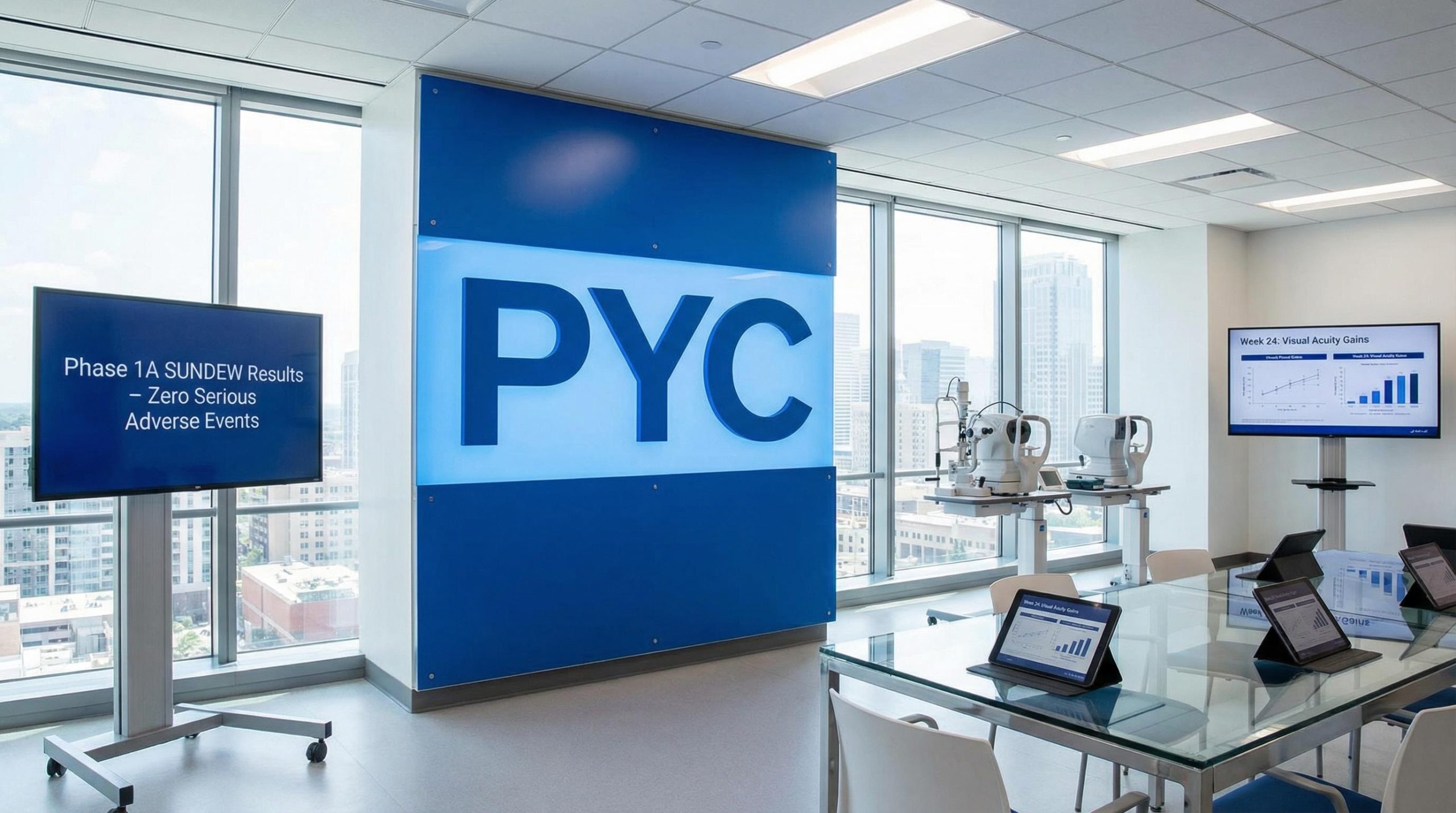
PYC Therapeutics ADOA program results from the Phase 1A SUNDEW trial show zero serious adverse events and early visual acuity improvements, positioning PYC-001 as the most clinically advanced disease-modifying candidate for a blinding eye disease with no approved treatments.
- PYC Therapeutics presented positive Phase 1A SUNDEW trial data for PYC-001 at the NANOS 2026 conference, reporting zero serious adverse events across all 9 patients and three dose cohorts
- Treated eyes showed improvements in best-corrected and low contrast visual acuity compared to untreated fellow eyes at both Week 4 and Week 24, signalling early biological activity of PYC-001
- The Phase 1b MYRTLE multiple-ascending dose study is now underway, with clinical safety and efficacy data expected in H2 CY26, representing a material near-term catalyst for investors
- ADOA affects approximately 1 in 35,000 people and has no approved treatment options, giving PYC-001 a clear path to address a significant unmet medical need as the most clinically advanced disease-modifying candidate in the space
PYC Therapeutics presents positive PYC-001 clinical data at major US conference
PYC Therapeutics (ASX: PYC) presented safety and efficacy data from its Phase 1A single ascending dose study of PYC-001 at the North American Neuro-Ophthalmology Society (NANOS) 2026 conference in Boston, Massachusetts, between 20-24 March 2026. The presentation, delivered by Dr Clare Fraser, highlighted results from the SUNDEW trial evaluating PYC-001 as a disease-modifying drug candidate targeting Autosomal Dominant Optic Atrophy (ADOA).
ADOA is a progressive blinding eye disease affecting 1 in 35,000 people, with no approved treatment options currently available for patients. PYC Therapeutics’ ADOA program results position the company as advancing what management describes as the most clinically advanced disease-modifying drug candidate in development for ADOA based on publicly available information. The company currently operates three clinical-stage programs in its pipeline.
When big ASX news breaks, our subscribers know first
What is Autosomal Dominant Optic Atrophy?
ADOA is a progressive and irreversible blinding eye disease with onset in childhood. The condition is caused by mutations in the OPA1 gene, which leads to reduced functional OPA1 protein levels (approximately 50-70% of normal expression). This protein deficiency triggers mitochondrial dysfunction in retinal ganglion cells, ultimately resulting in vision loss. Between 65-90% of ADOA cases are linked to OPA1 mutations, making it the primary genetic driver of the disease.
The lack of approved therapies for ADOA patients creates a significant unmet medical need in the ophthalmology market. PYC-001 works by binding to the OPA1 mRNA and disrupting a stem-loop structure that hinders protein translation, thereby increasing functional OPA1 protein levels in a mutation-agnostic manner.
Phase 1A SUNDEW study demonstrates safety and visual improvement signals
The SUNDEW trial enrolled 9 patients across three dose cohorts (3 mcg, 10 mcg, and 30 mcg), with each patient receiving a single intravitreal injection of PYC-001 into their worst affected eye. The study followed patients for 24 weeks to assess both safety and exploratory efficacy outcomes.
PYC-001 was safe and well-tolerated across all dose levels. The trial reported zero treatment-emergent serious adverse events and zero treatment discontinuations due to adverse events. Treatment-emergent adverse events were primarily mild and procedure-related, consistent with the administration method.
| Cohort | Dose Level | Patients (n) | Treatment-Emergent Serious Adverse Events | Treatment Discontinuations |
|---|---|---|---|---|
| 1 | 3 mcg | 3 | 0 | 0 |
| 2 | 10 mcg | 3 | 0 | 0 |
| 3 | 30 mcg | 3 | 0 | 0 |
Visual acuity improvements observed at Week 4 and Week 24
At Week 4, treated eyes demonstrated improvement in both best-corrected visual acuity (BCVA) and low contrast visual acuity (LCVA) compared to untreated fellow eyes. The mean change in LCVA for treated eyes exceeded that of untreated control eyes, suggesting early biological activity of the drug candidate.
By Week 24, durability data showed that among the 9 treated eyes, some demonstrated clinically meaningful gains (defined as more than 10 letters) in LCVA, while untreated fellow eyes showed different patterns. In ophthalmology trials, a change greater than 10 letters on the ETDRS chart is considered clinically meaningful, with changes exceeding 15 letters becoming a standard outcome measure in retinal disease clinical trials.
Phase 1b MYRTLE study now underway with data expected H2 CY26
PYC Therapeutics has commenced the MYRTLE study, a multiple-ascending dose (MAD) trial designed to evaluate repeat dosing of PYC-001 in ADOA patients. The study is testing three dose levels: 10 mcg, 30 mcg, and 60 mcg, administered at varying intervals of every 8 weeks (Q8W) and every 12 weeks (Q12W).
Clinical safety and efficacy data from the MYRTLE study is expected to be presented in H2 CY26, subject to the risks and uncertainties outlined in the company’s ASX disclosures dated 2 February 2026. Management has indicated it may engage with regulatory authorities to discuss the potential for an open-label extension of the Phase 1b MAD study to provide longer-term dosing data ahead of initiating registrational trials.
Clinical Development Pathway Context
The PYC Therapeutics ADOA program results from SUNDEW (Phase 1A single ascending dose) provide foundational safety and early efficacy signals. The MYRTLE study (Phase 1B multiple-ascending dose) aims to establish clinical proof of concept with repeat dosing. These trials position PYC-001 for potential Phase 2/3 registrational studies, with regulatory engagement planned to optimise the pathway to commercialisation.
The next major ASX story will hit our subscribers first
What this means for PYC investors
The PYC Therapeutics ADOA program results establish the company’s lead candidate as the most clinically advanced disease-modifying therapy in development for a blinding eye disease with no approved treatment options. The positive safety profile across all three dose cohorts removes a key clinical risk, while the early efficacy signals in visual acuity measures provide preliminary evidence of biological activity.
Key investment considerations include:
- Safety profile established: Zero serious adverse events across 9 patients and three dose cohorts de-risks the clinical pathway.
- Early efficacy signals: Visual acuity improvements in treated eyes compared to untreated fellow eyes at Week 4 and Week 24.
- Phase 1b MAD study underway: Near-term catalyst with data expected in H2 CY26 that could provide proof of concept for repeat dosing.
- No competing approved treatments: PYC-001 addresses a significant unmet medical need in an orphan disease affecting 1 in 35,000 people.
The company operates three clinical-stage programs in its pipeline, providing diversification beyond the ADOA program. PYC’s proprietary drug delivery platform for RNA therapeutics positions it to leverage its peptide-conjugated oligonucleotide technology across multiple genetic disease targets. The H2 CY26 data readout from MYRTLE represents a material near-term catalyst that could validate the therapeutic approach and support progression to later-stage registrational trials.
Get the Next Biotech Breakthrough Before the Market Moves
Join 20,000+ investors receiving FREE breaking ASX healthcare news within minutes of release, complete with expert analysis. Big News Blast delivers announcements and insights straight to your inbox the moment they drop. Click the “Free Alerts” button to stay ahead on biotech developments.