
Peak Processing secures expanded manufacturing deal with Electric Brands
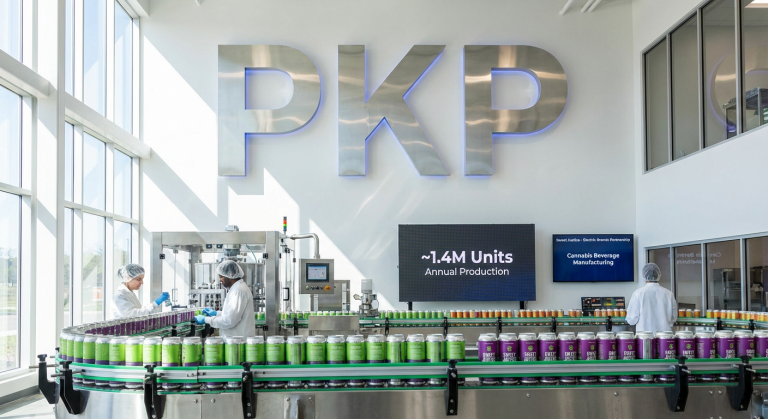
Peak Processing (ASX: PKP) has renewed and expanded its manufacturing contract with Electric Brands for the Sweet Justice beverage portfolio, securing expected annual production of approximately 1.4 million units. The Peak Processing Electric Brands Agreement builds on a partnership dating back to 2020, when the company first began manufacturing products for one of Canada’s leading cannabis beverage brands.
The expanded arrangement follows closely after Peak’s manufacturing expansion with St. Peter’s Beverages, demonstrating a pattern of deepening customer relationships. Sweet Justice represents one of Peak’s largest recurring production programmes, reflecting the scale and repeat demand characteristics of the company’s manufacturing platform.
For investors, repeat high-volume contracts provide revenue visibility and validate the stickiness of Peak’s manufacturing platform. The ability to retain and expand existing customer relationships reduces acquisition costs and supports plant utilisation as volumes scale.
Join thousands of readers who start here
Our best articles, sent straight to your inbox. You can unsubscribe anytime.
What does contract manufacturing mean for cannabis beverages?
Contract manufacturing refers to outsourcing production to a specialised facility rather than building in-house manufacturing capabilities. In the regulated cannabis and hemp-derived beverage space, this model has become increasingly common as brand owners seek to avoid the substantial capital investment required to establish compliant production facilities.
Setting up a beverage manufacturing operation capable of handling THC-infused products requires significant upfront costs. Facilities must meet food safety standards, comply with cannabis regulations, implement quality control systems, and maintain sufficient production capacity to meet demand fluctuations. For emerging brands, these requirements create substantial barriers to entry.
Contract manufacturers like Peak Processing offer an alternative path. Brand owners can focus resources on marketing, distribution and brand development whilst outsourcing the complex production process to an established facility with regulatory expertise and proven manufacturing systems.
For investors, contract manufacturing in regulated industries tends to generate high switching costs. Once a brand has integrated its formulations and quality processes with a manufacturer’s facility, changing suppliers becomes operationally disruptive and commercially risky, particularly when dealing with regulated substances requiring consistent compliance documentation.
Financial and operational terms strengthen Peak’s position
The expanded agreement includes improved commercial arrangements designed to enhance working capital management and reduce operational risk. Whilst specific pricing and margin details remain commercially sensitive, the company has disclosed several material terms.
| Term | Detail |
|---|---|
| Downpayments | New arrangements in place for upfront payments |
| Minimum order quantities | Larger minimum volumes required from customer |
| Exclusivity | Peak manufactures all Sweet Justice SKUs |
| Renewal options | 4 consecutive 2-year terms after initial year |
| Working capital | Improved cash flow cycle through enhanced terms |
The introduction of downpayment arrangements and larger minimum order quantities directly addresses working capital requirements by reducing the gap between production costs and customer payments. Exclusivity provisions lock in the manufacturing relationship across the entire Sweet Justice product range, preventing split production arrangements that could dilute Peak’s role.
Renewal options extending up to eight years (four consecutive two-year terms following the initial year) provide long-term revenue visibility, subject to standard commercial termination provisions. For investors, these structural improvements reduce cash flow volatility and support more predictable operating margins as production volumes scale.
Sweet Justice US expansion aligns with Peak’s cross-border strategy
Sweet Justice has recently expanded into US markets, with hemp-derived THC beverage products now available in Michigan, Florida, and North Carolina. This early-stage international footprint growth aligns directly with Peak’s stated North American manufacturing strategy.
Whilst the US expansion remains in its initial phases, it creates potential volume upside for Peak without requiring the company to secure new customer accounts. As Sweet Justice scales its US distribution, Peak’s manufacturing platform could support increased production volumes across both Canadian and American markets, subject to demand growth and regulatory compliance requirements.
Enjoyed this article?
We publish high-impact stories like this a few times a week. No spam.
CEO commentary on customer retention and platform scalability
Managing Director Barry Katzman emphasised the strategic value of customer retention and the company’s ability to support scaled production programmes for leading beverage brands.
Barry Katzman, Managing Director & CEO
“This is a long-standing partnership that has scaled consistently over time, and Sweet Justice now represents approximately 1.4m units of annual production for our facilities. Importantly, this Expanded Agreement follows closely on the expansion of our St. Peter’s Beverages partnership and demonstrates our ability not only to attract new customers, but to retain and grow with existing brand partners.”
Katzman highlighted ongoing investments in automation, quality systems and proprietary technologies as key drivers enabling Peak to deepen customer relationships and support both Canadian growth and cross-border expansion into the US. Customer renewals and volume expansions across multiple brands reinforce what the company describes as the stickiness of its manufacturing platform.
The ability to retain customers as they scale represents a critical validation point for contract manufacturers. High customer churn would suggest operational issues or competitive disadvantages, whereas expanded agreements with existing partners demonstrate manufacturing reliability and competitive positioning.
What comes next for Peak Processing
Peak has outlined several forward-looking elements that may influence its manufacturing platform development:
- Advanced negotiations with several parties to further scale North American manufacturing capacity and customer base.
- Additional opportunities being pursued across regulated cannabis and hemp-derived beverage markets in both Canada and the US.
- Continued investment in automation and proprietary technology to support operational efficiency and manufacturing capabilities.
- Potential to support Sweet Justice’s US expansion as distribution volumes grow and market penetration increases.
The company stated it continues to transition toward a higher-utilisation, repeat-volume manufacturing model, with multiple scaled production programmes now embedded within the business. This operational shift supports improved plant utilisation and operating leverage as volumes scale across the platform.
For investors, multiple active negotiations suggest further contract announcements may follow, providing additional revenue visibility. However, the timing and commercial terms of any future agreements remain subject to negotiation and have not been disclosed.
Get Manufacturing & Industrial News Before the Market Moves
Join 20,000+ investors receiving FREE breaking ASX news delivered within minutes of release, complete with in-depth analysis. Click the “Free Alerts” button at StockWire X to start receiving alerts the moment market-moving announcements break across manufacturing, industrials and beyond.