
Paradigm Partners UK University to Investigate Drug Effects on Bone Marrow Lesions
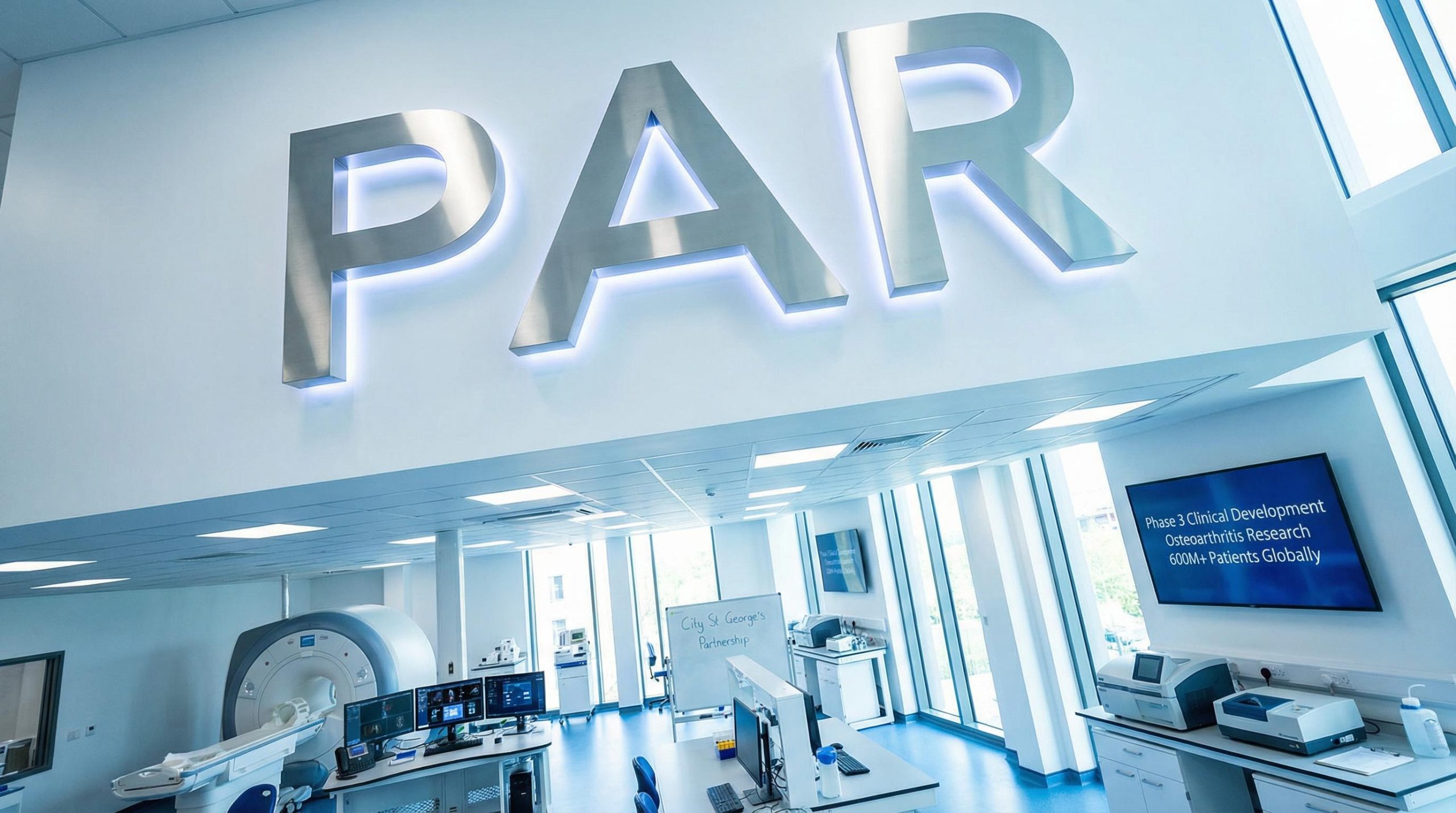
Paradigm partners with leading UK university to investigate PPS effects on bone marrow lesions
Paradigm Biopharmaceuticals (ASX: PAR) has entered a Paradigm Biopharmaceuticals osteoarthritis research collaboration with City St George’s, University of London, to investigate the effects of pentosan polysulfate sodium (PPS) on bone marrow lesions in osteoarthritis patients. The collaboration represents the company’s first formal research engagement with this institution and will run for approximately 12 months.
PPS is currently being evaluated in Phase 3 clinical development for knee osteoarthritis, a condition affecting approximately 10 million people in the United Kingdom and more than 600 million people globally. Increasing evidence suggests that bone marrow lesions contribute significantly to osteoarthritis pain and disease progression, positioning them as an important therapeutic target.
This collaboration generates additional mechanistic data that could strengthen Paradigm’s regulatory submissions, pricing negotiations, and partnering discussions for its lead Phase 3 asset. Understanding how PPS affects bone marrow lesions may support positioning as a disease-modifying therapy acting across multiple joint tissues.
When big ASX news breaks, our subscribers know first
What are bone marrow lesions and why do they matter in osteoarthritis?
Bone marrow lesions (BMLs) are microstructural changes within bone that contribute to inflammation and disease progression in osteoarthritis. These lesions are increasingly recognised as a key driver of pain in affected joints.
The emerging understanding of osteoarthritis has shifted beyond cartilage degradation alone. Research now recognises that bone pathology, particularly BMLs, plays a central role in chronic knee or hip pain experienced by many patients.
Therapies that address BMLs could differentiate from standard treatments that primarily target symptoms without modifying underlying disease processes. If PPS demonstrates activity against BMLs, it supports positioning as a disease-modifying therapy rather than symptom management, a critical differentiator in a market dominated by pain relievers with no structural benefit.
Study design combines advanced imaging with molecular profiling
The collaboration will leverage City St George’s proprietary platform combining advanced MRI imaging with gene and protein profiling. Tissue samples will be obtained during total knee replacement surgery, allowing researchers to assess BML characteristics and responses at both imaging and molecular levels.
This integrated approach is designed to provide deeper insights into the biological behaviour of BMLs and their response to PPS. The methodology examines how the investigational therapy acts through inhibition of key inflammatory pathways, including NF-κB, with downstream effects across joint tissues including bone, cartilage and synovium.
The study comprises three key components:
- Advanced MRI imaging of bone marrow lesions
- Gene profiling of human tissue samples
- Protein profiling to assess inflammatory pathways
Translational data from this study could complement Phase 3 clinical outcomes and strengthen the scientific narrative around PPS’s multi-tissue activity. These insights may further support differentiation versus standard of care treatments and could inform future pricing, reimbursement and partnering discussions, subject to outcomes.
Leadership perspectives on the collaboration
Paul Rennie, Paradigm Founder and Executive Chair
“This collaboration with City St George’s represents an important step in further understanding the mechanism of action of PPS, particularly in relation to bone marrow lesions, which are increasingly recognised as a key driver of pain in osteoarthritis. By combining advanced imaging with molecular profiling, this study has the potential to generate valuable translational data supporting PPS’ activity across multiple joint tissues. These insights complement our ongoing Phase 3 programme and reinforce the broader disease-modifying potential of PPS in osteoarthritis.”
Professor Nidhi Sofat, Professor of Rheumatology at City St George’s, University of London, noted that bone marrow lesions represent one of the most significant and painful aspects of osteoarthritis. She stated the collaboration has the potential to deepen understanding of how pentosan polysulfate works in osteoarthritis, adding that if the drug improves bone marrow lesions and reduces pain, it could represent a meaningful new treatment option for millions of people living with osteoarthritis globally.
The next major ASX story will hit our subscribers first
Strategic implications for Paradigm’s Phase 3 programme
The research collaboration supports Paradigm’s broader development strategy by generating mechanistic evidence around PPS’s disease-modifying potential. This data may differentiate the candidate from current standard of care options and support commercial discussions with potential partners.
Improved understanding of PPS effects on bone marrow lesions could strengthen arguments for pricing and reimbursement by demonstrating activity across multiple joint tissues rather than symptom management alone. These insights complement the company’s ongoing Phase 3 clinical programme.
| Element | Detail |
|---|---|
| Partner Institution | City St George’s, University of London |
| Focus | Bone marrow lesions in osteoarthritis |
| Methodology | MRI imaging + gene/protein profiling |
| Duration | Approximately 12 months |
| Drug Candidate | Pentosan polysulfate sodium (PPS) |
Mechanistic data from academic collaborations can support regulatory filings, enhance credibility with potential partners, and strengthen reimbursement arguments, all relevant to de-risking Paradigm’s path to commercialisation. Outcomes remain subject to study results.
About City St George’s, University of London
City St George’s, University of London was formed in August 2024 through the merger of City, University of London and St George’s, University of London. The institution represents one of the largest providers of healthcare education and workforce training in London, with campuses co-located alongside a major London teaching hospital.
The University demonstrates strong research credentials. In the UK’s most recent Research Excellence Framework, 86% of City’s research was rated as world-leading or internationally excellent, while 100% of impact case studies at St George’s achieved these top ratings. This combined capability supports interdisciplinary research with real-world clinical and commercial application.
Partnership with a highly rated research institution adds credibility to the data generated and signals Paradigm’s ability to attract quality academic collaborators. The University maintains a global alumni network of more than 175,000 graduates across over 170 countries.
The collaboration is expected to run for approximately 12 months as Paradigm continues its Phase 3 clinical development programme for PPS in knee osteoarthritis. The study’s integrated approach combining advanced imaging with molecular profiling aims to provide insights into PPS activity across multiple joint tissues affected by osteoarthritis.
Want the Next Biotech Breakthrough in Your Inbox?
Join 20,000+ investors receiving FREE breaking ASX healthcare news within minutes of release, complete with expert analysis. Click the “Free Alerts” button at Big News Blast to get real-time alerts on biotech developments the moment they hit the market.