
Paradigm Biopharmaceuticals Publishes Canine Study Validating iPPS Phase 3 Program
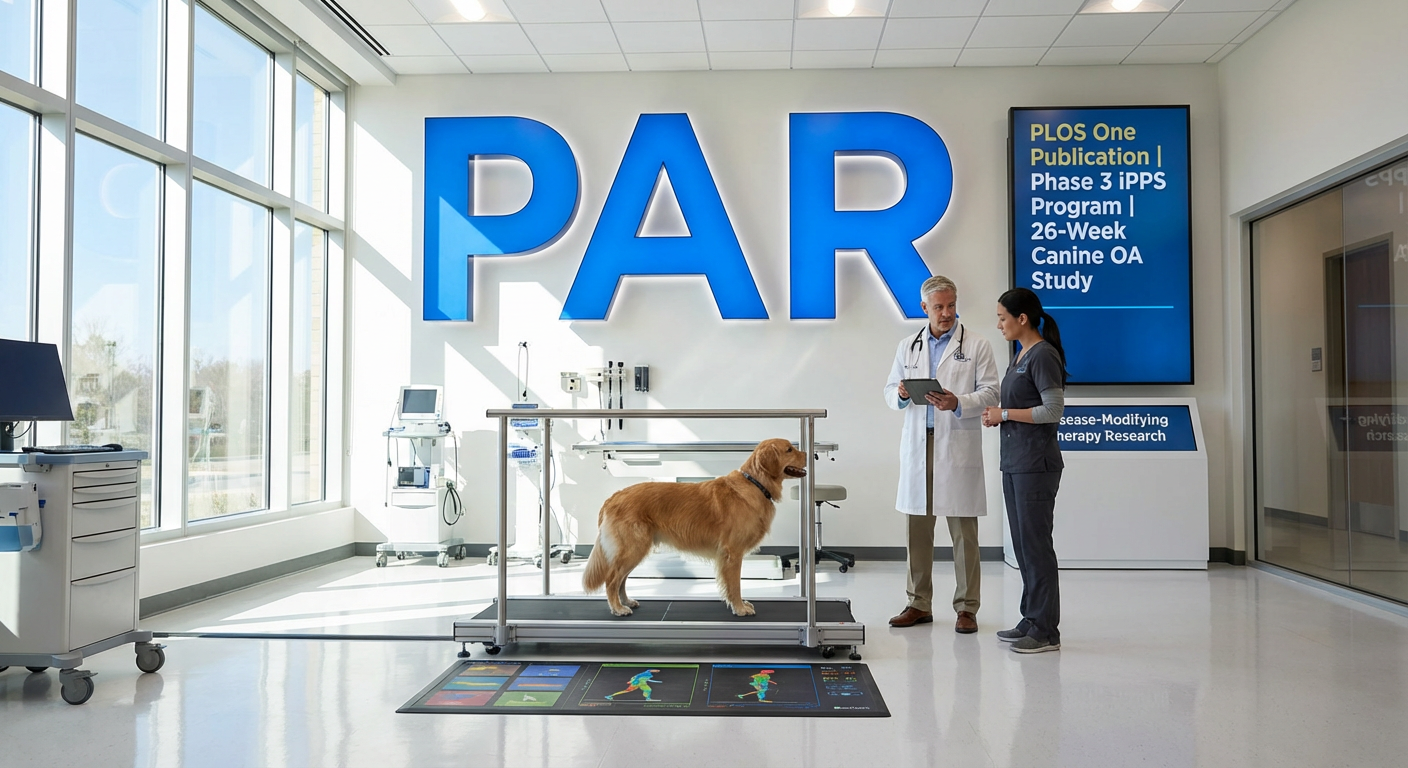
Paradigm Biopharmaceuticals has published peer-reviewed canine osteoarthritis data in PLOS One, providing translational validation for the Paradigm Biopharmaceuticals iPPS Phase 3 programme. The study demonstrated sustained pain reduction, functional improvements, and structural disease modification following a six-week course of subcutaneous pentosan polysulfate sodium (PPS) in companion dogs with naturally occurring joint disease. These findings align closely with the company’s Phase 2 human trial data and strengthen the regulatory foundation ahead of late-stage readouts.
Paradigm Biopharmaceuticals publishes peer-reviewed canine study supporting iPPS Phase 3 program
The manuscript, titled “Effects of pentosan polysulfate sodium on joint structure and function out to six months in naturally-occurring canine osteoarthritis,” evaluates 26 weeks of follow-up data from dogs treated with PPS (3 mg/kg, administered subcutaneously once weekly for six weeks). The study was conducted in collaboration with the University of Melbourne, Clinical Sciences, and published in PLOS One, a globally recognised peer-reviewed open-access journal. Unlike laboratory-based models where osteoarthritis is surgically induced, this trial enrolled companion dogs with radiographically confirmed, spontaneously developing joint disease, providing a clinically relevant translational bridge to human osteoarthritis. The 26-week timeframe in canine disease progression is considered broadly analogous to multiple years in human patients, offering a compressed view of potential long-term therapeutic effects.
When big ASX news breaks, our subscribers know first
Study design and why naturally occurring canine osteoarthritis matters
Pharmaceutical companies regard the canine osteoarthritis model highly because it mirrors the naturally occurring, age-related, and progressive nature of human joint disease. Surgically induced models, while useful for mechanistic research, fail to replicate the chronic inflammatory and biomechanical drivers present in real-world disease. This study enrolled dogs with established osteoarthritis, verified by radiographic evidence and clinical signs including pain and functional impairment. Baseline gait analysis, pain scores, and MRI findings confirmed advanced joint disease at study entry, distinguishing this work from early-stage or artificially induced pathology.
The study followed a randomised, placebo-controlled design with the following parameters:
- Treatment regimen: PPS administered once weekly for six weeks (3 mg/kg, subcutaneous)
- Follow-up duration: Assessments conducted out to 26 weeks (six months post-treatment initiation)
- Primary endpoints: Helsinki Chronic Pain Index (HCPI), objective gait analysis, MRI-based cartilage volume quantification
- Biomarker panel: Serum markers of bone resorption (CTX-I), synovial inflammation (hyaluronic acid), and cartilage protection (TIMP-1)
This compressed timeline allows researchers to observe biological and structural changes that would typically require several years to manifest in human trials, providing insight into the durability of PPS effects beyond the immediate treatment window.
Key findings across pain, function and structural markers
Sustained pain reduction and gait normalisation
PPS-treated dogs entered the study with significantly higher baseline pain scores than the placebo group. After adjustment for baseline differences, the PPS cohort demonstrated sustained reductions in Helsinki Chronic Pain Index scores through week 26, while placebo-treated animals showed worsening pain over the same period. Objective gait analysis revealed progressive normalisation of gait symmetry at weeks 8 and 26, with improvements in weight-bearing and symmetry indices indicating reduced lameness and enhanced joint function. Effect sizes ranged from medium to large, supporting clinically meaningful outcomes rather than marginal statistical differences.
MRI and biomarker evidence supporting disease modification
Quantitative MRI analysis demonstrated stabilisation and modest increases in total cartilage volume in PPS-treated dogs at weeks 8 and 26 relative to baseline. In contrast, placebo-treated dogs exhibited continued cartilage volume loss, consistent with progressive osteoarthritis. These structural findings align with biomarker data showing significant reductions in serum CTX-I, a marker of bone resorption, at week 26 (p=0.007). Hyaluronic acid, a biomarker associated with synovial inflammation and disease progression, showed favourable reductions at week 26 in the PPS group. Elevated hyaluronic acid concentrations in osteoarthritis are generally considered markers of synovitis and inflammatory joint turnover, with longitudinal studies linking higher serum levels to increased risk of radiographic progression and joint space narrowing. The reduction observed following PPS treatment is consistent with decreased synovial inflammation and reduced disease activity, rather than impaired joint lubrication. TIMP-1, an endogenous inhibitor of cartilage-degrading enzymes, increased following PPS treatment, supporting chondroprotective activity.
| Biomarker | What It Measures | PPS Effect | Clinical Interpretation |
|---|---|---|---|
| CTX-I | Bone resorption marker | Significant reduction at week 26 (p=0.007) | Slowed bone turnover, reduced joint degradation |
| Hyaluronic Acid (HA) | Synovial inflammation marker | Favourable reduction at week 26 vs placebo | Decreased inflammatory activity, lower disease progression risk |
| TIMP-1 | Cartilage protection enzyme inhibitor | Increased following PPS treatment | Chondroprotective activity, reduced cartilage breakdown |
Disease-modifying effects differentiate iPPS from symptomatic-only treatments. Regulatory agencies increasingly favour therapies demonstrating structural and biomarker evidence of altered disease biology, as these endpoints predict longer-term clinical outcomes and functional preservation.
Alignment with Phase 2 human data and implications for Phase 3
The canine findings align closely with outcomes observed in Paradigm’s Phase 2 human studies, including PARA005 and PARAOA_008, which demonstrated favourable biomarker, imaging, and clinical responses following iPPS treatment. The durability of effects observed in the canine model over 26 weeks provides a translational look-through to longer-term outcomes that are difficult to assess within the duration of early-phase human trials. Independent longitudinal human studies have demonstrated that biomarker and MRI changes predict multi-year disease progression, meaning the sustained effects observed in this canine study offer important insight into potential long-term iPPS outcomes in human osteoarthritis.
Dr Catherine Stapledon, Lead Author and Translation Research Manager
“This study is particularly important because it evaluates PPS in dogs with naturally occurring osteoarthritis, rather than in induced laboratory models. This provides a clinically relevant translational bridge to human disease. The six-month follow-up in this setting offers insight into longer-term biological and structural effects that would typically require several years to assess in people. The consistency between these findings and Paradigm’s human Phase 2 data strengthens confidence in the durability and disease-modifying potential of iPPS.”
The integrated data package, combining canine and human datasets, provides complementary evidence across species that PPS influences key biological pathways associated with cartilage degradation, inflammation, pain signalling, and joint remodelling. This cross-species consistency strengthens the scientific and regulatory foundation supporting Paradigm Biopharmaceuticals iPPS Phase 3 program.
The next major ASX story will hit our subscribers first
What this means for investors watching the iPPS Phase 3 program
This peer-reviewed publication adds independent scientific validation at a time when Paradigm is advancing towards Phase 3 readouts. The strategic value of this work for (ASX: PAR) investors includes:
- Peer-reviewed validation: Publication in PLOS One, a high-quality open-access journal, adds scientific credibility beyond company-sponsored trial data
- Translational weight: Naturally occurring disease models carry greater regulatory significance than surgically induced laboratory models
- Phase 2 consistency: Alignment with human Phase 2 biomarker and imaging findings strengthens confidence in Phase 3 trial design and endpoint selection
- Disease-modifying differentiation: Structural and biomarker evidence positions iPPS as a potential disease-modifying therapy, not merely a symptomatic treatment
- Strategic timing: Publication reinforces Paradigm’s data generation cadence ahead of Phase 3 milestones, demonstrating proactive scientific engagement
Paradigm Biopharmaceuticals is a late-stage drug development company focused on osteoarthritis (Phase 3), with iPPS targeting diseases where inflammation plays a major pathogenic role. The company’s current development focus centres on delivering pharmaceutical therapies that address anti-inflammatory and tissue regenerative needs in conditions such as osteoarthritis.
Want the Next Biotech Breakthrough in Your Inbox?
Join 20,000+ investors getting FREE breaking ASX healthcare and biotech news delivered within minutes of release, complete with in-depth analysis. Click the “Free Alerts” button at Big News Blast to receive real-time alerts the moment market-moving announcements break.