
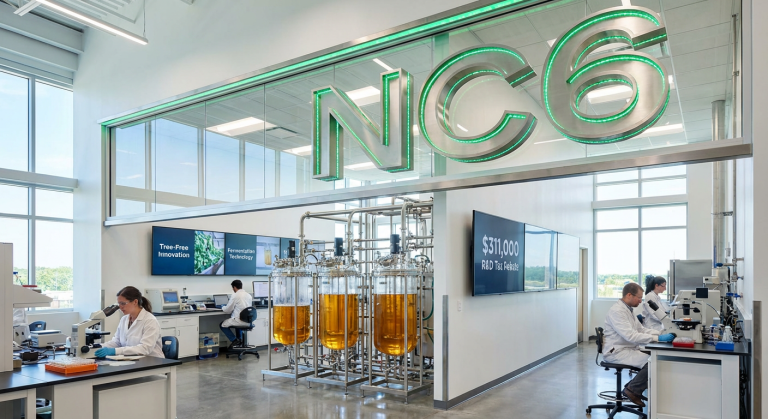
Nanollose secures $311,000 R&D tax rebate to support commercialisation push
Nanollose Limited (ASX: NC6) has received a $311,000 R&D Tax Incentive Rebate from the Australian government, providing non-dilutive funding to strengthen the biomaterials company’s cash position. The rebate relates to eligible research and development expenditure and will support ongoing research, development and commercialisation activities across Nanollose’s tree-free technology platform.
The funding arrives as the company advances multiple product lines based on its eco-friendly fermentation process, which converts agricultural waste into cellulose without traditional wood pulping. For small-cap biotechnology firms pursuing commercialisation, such rebates offer a modest but meaningful reduction in cash burn whilst preserving shareholder equity.
What is the R&D Tax Incentive?
Australia’s R&D Tax Incentive programme allows eligible companies to claim rebates on qualifying research expenditure incurred during the financial year. The scheme is designed to encourage Australian businesses to invest in innovation by providing cash refunds for smaller companies or tax offsets for larger entities.
To qualify, companies must conduct activities that meet the programme’s definition of core R&D work, typically involving systematic experimentation to resolve scientific or technological uncertainty. The rebate validates that Nanollose’s development activities meet these criteria, demonstrating the company is actively investing in qualifying innovation rather than routine operational work.
For investors, R&D rebates represent non-dilutive capital, meaning the company receives funding without issuing new shares or taking on debt. This preserves existing shareholders’ equity whilst providing cash to continue development activities.
Join thousands of readers who start here
Our best articles, sent straight to your inbox. You can unsubscribe anytime.
How Nanollose plans to deploy the funds
The $311,000 will support ongoing research, development, and commercialisation activities across Nanollose’s product portfolio. The announcement does not specify exact allocation by product line, but the company is currently advancing three core biomaterial applications:
- Nullarbor™ fibres – tree-free textile fibres for fashion and apparel applications
- MicroGel™ horticultural medium – a sustainable growing medium for agriculture
- Animal-free and plastic-free leather-like materials – emerging alternative materials for fashion and accessories
The diversified product approach spreads commercialisation risk across multiple market segments, each with distinct regulatory pathways and customer bases. The rebate provides working capital to advance these projects without requiring immediate capital raising or debt facilities.
Enjoyed this article?
We publish high-impact stories like this a few times a week. No spam.
Nanollose’s tree-free technology at a glance
Nanollose’s core technology uses an eco-friendly fermentation process to produce cellulose from agricultural waste and by-products. This approach offers an alternative to traditional wood pulping, which requires harvesting trees and processing wood into pulp before converting it into various materials.
The fermentation method produces microbial cellulose that can be processed into fibres, fabrics and other novel materials depending on the intended application. This positions the company within the growing sustainable materials sector, where manufacturers and brands are increasingly seeking alternatives to resource-intensive conventional production methods.
The technology addresses environmental concerns across textiles, agriculture, and materials manufacturing, sectors that collectively represent substantial addressable markets. However, commercialisation timelines for novel biomaterials can be extended due to customer testing requirements, supply chain integration, and achieving cost competitiveness with established alternatives.
Want the Next Biotech Breakthrough in Your Inbox?
Join 20,000+ investors receiving FREE breaking ASX news within minutes of release, complete with expert analysis. Big News Blast delivers real-time alerts on biotech breakthroughs, funding announcements and commercialisation milestones the moment they hit the market. Click the “Free Alerts” button to stay ahead.