
Mesoblast Reports High Ryoncil Survival Rates Across Patient Groups in EIND Study
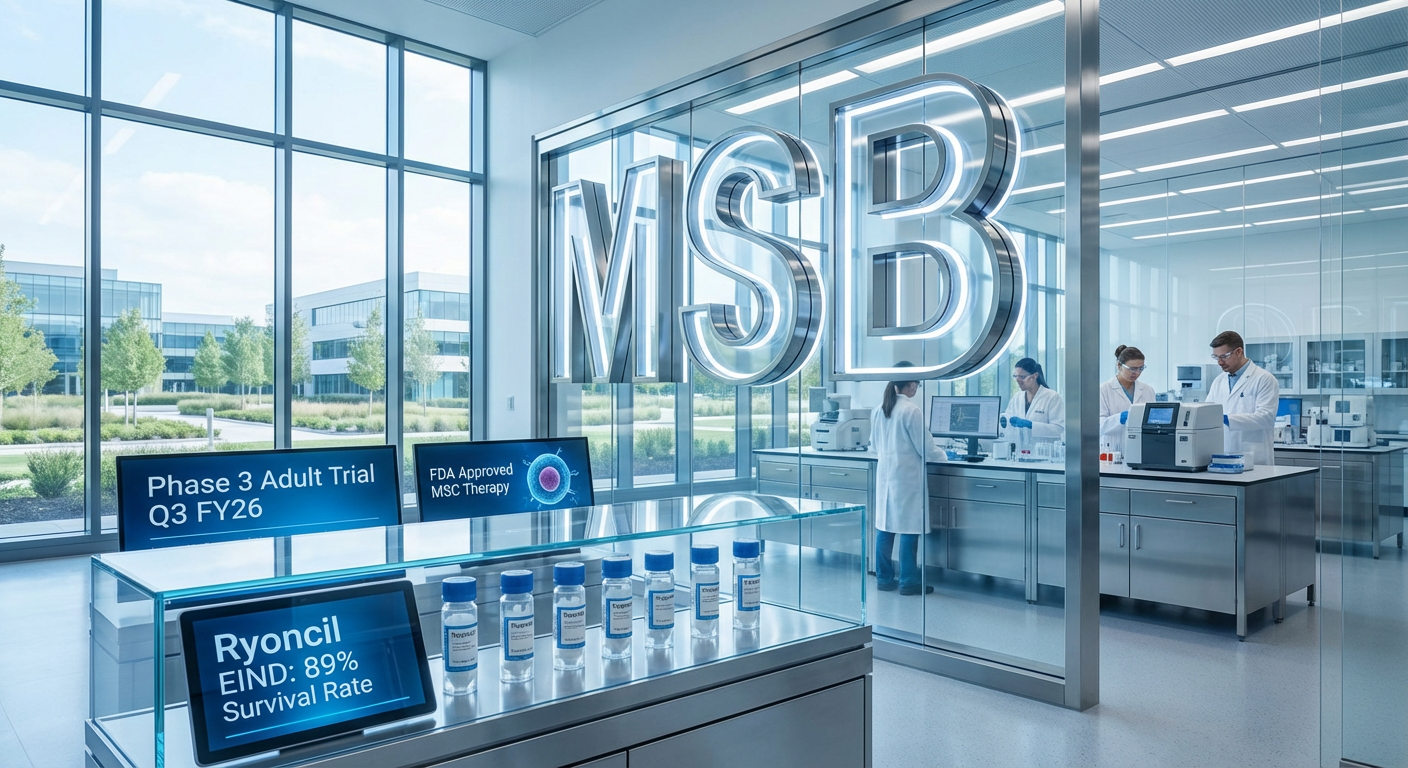
Mesoblast reports high survival rates across patient groups in Ryoncil EIND program
Mesoblast Limited (ASX: MSB) has presented data showing Mesoblast Ryoncil SR-aGvHD survival outcomes remained consistently high regardless of patient age, treatment line, or prior ruxolitinib exposure. The findings were presented at the February 2026 American Society for Transplantation and Cellular Therapy (ASTCT) and Center for Blood and Marrow Transplant Research (CIBMTR) Tandem Meetings in Salt Lake City, Utah. Ryoncil is the first mesenchymal stromal cell (MSC) product approved by the FDA for any indication, and the only product approved for children under age 12 with steroid-refractory acute graft-versus-host disease (SR-aGvHD).
The study analysed 53 patients treated with Ryoncil under the Emergency Investigational New Drug (EIND) programme, with 89% presenting with grade III/IV disease. These severe cases represent patients who have exhausted standard treatment options and face limited alternatives.
The clinical data validates Ryoncil’s efficacy across multiple patient subgroups, strengthening the commercial case for label expansion into adult populations. With FDA approval already secured for paediatric patients, Mesoblast Ryoncil SR-aGvHD survival data positions the therapy for broader market access pending successful completion of planned adult trials.
When big ASX news breaks, our subscribers know first
What is steroid-refractory acute graft-versus-host disease?
Steroid-refractory acute graft-versus-host disease (SR-aGvHD) is a life-threatening complication that can occur following bone marrow transplants. The condition develops when donor immune cells attack the recipient’s organs and tissues. “Steroid-refractory” indicates these patients have failed to respond to corticosteroids, the standard first-line treatment. Once steroids fail, treatment options become limited and survival rates decline significantly. Clinical endpoints such as day 100 survival serve as critical measures of treatment efficacy in this patient population, where timely intervention directly impacts mortality outcomes.
Earlier treatment timing emerges as critical factor for patient outcomes
The data revealed a substantial difference in mortality rates between patients receiving Ryoncil as second-line treatment versus those receiving it at third-line or later. This comparison provides clinical evidence supporting earlier therapeutic intervention following steroid failure.
| Treatment Line | Programme | Deaths Before Completing Full Course |
|---|---|---|
| Second-line | Phase 3 trial (MSB-GVHD001) | 2% |
| ≥Third-line | EIND programme | 15% |
The mortality differential demonstrates that delayed treatment initiation reduces the likelihood of completing a full Ryoncil treatment course. Of the 53 patients who received Ryoncil as third-line or later treatment under the EIND programme, 15% died before completing therapy, compared with only 2% of patients who received it as second-line in the Phase 3 trial. This finding supports positioning Ryoncil as the earliest possible intervention following steroid resistance, which carries implications for both clinical protocols and commercial adoption strategies.
Adult patient data supports planned pivotal trial
Adult patients in the EIND programme demonstrated day 100 survival outcomes at least as favourable as paediatric patients in the same programme. This equivalence provides clinical rationale for extending Ryoncil’s approved use into adult populations. The planned Phase 3 trial in adults with severe SR-aGvHD is expected to commence enrolment this quarter following central Institutional Review Board (IRB) protocol approval. If successful, the trial would support label extension into a market approximately three times larger than the paediatric SR-aGvHD population.
The trial pathway for adult label expansion follows this sequence:
- Central IRB protocol approval (pending)
- Trial enrolment commencement (expected this quarter)
- If successful, supports adult label extension
The adult SR-aGvHD population represents a significant market expansion opportunity. Securing approval in this segment would enable Mesoblast to address a substantially broader patient base whilst leveraging existing manufacturing infrastructure and regulatory precedent established through paediatric approval.
CEO outlines strategic positioning for Ryoncil
Management emphasised the clinical importance of treatment timing in maximising patient outcomes. Dr Silviu Itescu, Mesoblast Chief Executive, connected the EIND programme findings to the company’s broader regulatory strategy for adult market entry.
Dr Silviu Itescu, Mesoblast Chief Executive
“Treatment initiation as early as possible is essential in order to give Ryoncil the best chance to save as many precious lives as possible. The Phase 3 trial in adults with SR-aGvHD will position Ryoncil as the earliest treatment regimen for severe disease after steroid resistance.”
The commentary reflects strategic intent to establish Ryoncil as the standard second-line intervention following steroid failure. This positioning, if validated through clinical trial success, supports pricing power and formulary placement by addressing unmet need at a critical decision point in the treatment algorithm. Early adoption in treatment protocols can drive long-term market penetration, particularly in conditions with limited therapeutic alternatives.
The next major ASX story will hit our subscribers first
What this means for Mesoblast’s growth trajectory
The clinical validation of Ryoncil across diverse patient subgroups strengthens Mesoblast’s commercial foundation as it pursues geographic expansion and additional indications. The company has established partnerships in Japan, Europe, and China for Ryoncil commercialisation, with the therapy also being developed for biologic-resistant inflammatory bowel disease. Beyond remestemcel-L, Mesoblast’s pipeline includes rexlemestrocel-L for heart failure and chronic low back pain.
The company’s intellectual property position provides extended commercial protection:
- Over 1,000 granted patents or patent applications globally
- IP protection extending through at least 2044 in major markets
- Coverage spans mesenchymal stromal cell compositions, manufacturing methods, and indications
Manufacturing capabilities support scalable commercialisation:
- Industrial-scale, cryopreserved production
- Off-the-shelf availability
- Defined pharmaceutical release criteria
This infrastructure reduces execution risk as Mesoblast pursues label expansion and pipeline advancement. The combination of established manufacturing, broad IP coverage, and existing commercial partnerships positions the company to capitalise on successful adult trial outcomes. If the planned Phase 3 trial supports label extension, Mesoblast would gain access to an adult SR-aGvHD market estimated at three times the size of the current paediatric indication. This expansion, combined with progress in additional therapeutic areas, represents the next phase of commercial growth for Ryoncil and the broader mesenchymal stromal cell platform.
Want the Next Biotech Breakthrough in Your Inbox?
Join 20,000+ investors getting FREE breaking ASX biotech news delivered within minutes of release, complete with in-depth analysis. Click the “Free Alerts” button at StockWire X to start receiving alerts the moment market-moving announcements hit the ASX.