
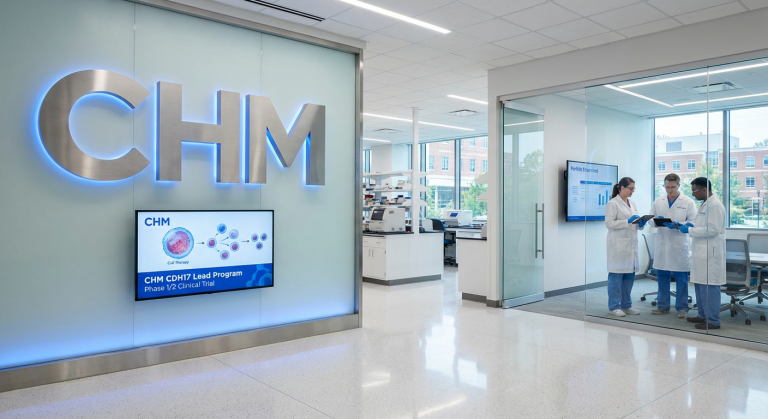
Chimeric Therapeutics (ASX: CHM) has returned its Chlorotoxin (CHM CLTX) CAR T-cell therapy asset to City of Hope, the institution from which it originally licensed the programme. The decision follows a comprehensive strategic review and reflects Chimeric Therapeutics CHM CDH17 focus as the company’s lead development priority, with other clinical assets now overtaking CHM CLTX in resource allocation and near-term value potential.
Chimeric Therapeutics streamlines portfolio with CHM CLTX return to City of Hope
City of Hope will assume full ownership and control of the CHM CLTX intellectual property and associated programme. Since in-licensing CHM CLTX, Chimeric has advanced and expanded its broader pipeline, with the company’s other clinical stage assets now positioned ahead of CHM CLTX in terms of development priority and near-term value inflection points.
The Board and management described the decision as disciplined capital management. Rather than spreading resources across multiple lower-priority assets, Chimeric is concentrating capital on programmes where it believes it has the greatest opportunity to generate clinical differentiation and shareholder value.
This type of portfolio rationalisation is standard practice in biotechnology, where capital constraints force companies to make strategic prioritisation decisions. By returning CHM CLTX, Chimeric preserves runway for its strongest candidates whilst maintaining a collaborative relationship with City of Hope.
Join thousands of readers who start here
Our best articles, sent straight to your inbox. You can unsubscribe anytime.
What is portfolio rationalisation and why do biotech companies do it?
Biotechnology companies typically hold multiple drug candidates at various stages of development. Each programme requires significant capital investment to advance through preclinical research, clinical trials, regulatory approvals, and eventual commercialisation.
When resources are limited, companies must prioritise which assets receive funding. Portfolio rationalisation involves returning, out-licensing, or discontinuing lower-priority programmes to concentrate resources on candidates with the strongest commercial and clinical potential.
For Chimeric, this decision enables focused capital deployment on lead programmes rather than maintaining a broader but less concentrated portfolio. Investors should view this as a capital efficiency move that extends the company’s operational runway whilst sharpening its strategic focus.
CHM CDH17 emerges as Chimeric’s lead development priority
CHM CDH17 is a first-in-class, 3rd generation CDH17 CAR T therapy invented at the University of Pennsylvania in the laboratory of Dr Xianxin Hua, professor in the Department of Cancer Biology in the Abramson Family Cancer Research Institute.
Preclinical evidence published in Nature Cancer in March 2022 demonstrated complete eradication of tumours across 7 types of cancer in mice. CHM CDH17 is currently being studied in a Phase 1/2 clinical trial in gastrointestinal and neuroendocrine tumours, initiated in 2024.
Key attributes of CHM CDH17:
- First-in-class designation targeting CDH17-expressing cancers
- 3rd generation CAR T technology developed at University of Pennsylvania
- Phase 1/2 trial ongoing in gastrointestinal and neuroendocrine tumours
- Published preclinical data in Nature Cancer showing tumour eradication across multiple cancer types
This programme represents Chimeric’s highest-conviction bet and will likely be the primary driver of near-term share price catalysts as clinical data emerges.
Chimeric’s broader clinical pipeline
Beyond CHM CDH17, Chimeric retains its CHM CORE-NK platform, a clinically validated NK cell therapy. Data from the complete Phase 1A clinical trial was published in March 2022, demonstrating safety and efficacy in blood cancers and solid tumours.
Based on promising activity signals from Phase 1A, two Phase 1B clinical trials investigating CORE-NK in combination regimens have been initiated. From this platform, Chimeric has begun developing next-generation NK and CAR NK assets.
The company maintains 3 clinical stage programmes in total, providing pipeline diversification despite returning CHM CLTX. Multiple shots on goal remain across different therapeutic modalities.
Enjoyed this article?
We publish high-impact stories like this a few times a week. No spam.
Management commentary on strategic rationale
Dr Rebecca McQualter, Chief Executive Officer, emphasised the capital efficiency rationale behind the decision.
Dr Rebecca McQualter, CEO
“This decision allows CHM to prioritise programs with the strongest potential for clinical impact and commercial scalability. By streamlining the portfolio, we can deploy capital more efficiently and advance our lead CHM CDH17 program through key development milestones.”
Dr Bradley Glover, Non-Executive Chairman, reinforced the Board’s focus on disciplined capital allocation and long-term shareholder value creation. He noted the comprehensive portfolio review process and thanked City of Hope for reaching a constructive outcome for both parties.
Management’s explicit linkage between this decision and shareholder value creation signals Board discipline on capital allocation, a quality increasingly valued by biotech investors facing a constrained funding environment.
What this means for Chimeric’s investment case
The portfolio streamlining positions Chimeric with a sharpened focus on core programmes where management believes it can generate the strongest clinical differentiation. The collaborative outcome with City of Hope preserves relationships whilst freeing resources for higher-priority assets.
Investors should now track CHM CDH17 clinical milestones as the primary value driver, with CORE-NK Phase 1B data providing supporting catalysts. A leaner portfolio with clear prioritisation gives investors a simpler thesis to follow.
| Programme | Stage | Target Indications |
|---|---|---|
| CHM CDH17 | Phase 1/2 | Gastrointestinal and neuroendocrine tumours |
| CHM CORE-NK | Phase 1B | Blood cancers, solid tumours |
The strategic repositioning reflects a management team willing to make disciplined capital allocation decisions rather than maintaining assets for portfolio breadth alone. For investors evaluating Chimeric Therapeutics CHM CDH17 focus (ASX: CHM), clinical progress in this lead programme will now be the central catalyst to watch.
Want the Next Biotech Breakthrough in Your Inbox?
Join 20,000+ investors receiving FREE ASX healthcare and biotech news within minutes of release, complete with in-depth analysis. Click the “Free Alerts” button at Big News Blast to get breaking announcements and expert coverage delivered straight to your inbox the moment market-moving news breaks.