
Bcal Diagnostics Submits MSAC Application for Pancreatic Cancer Blood Test
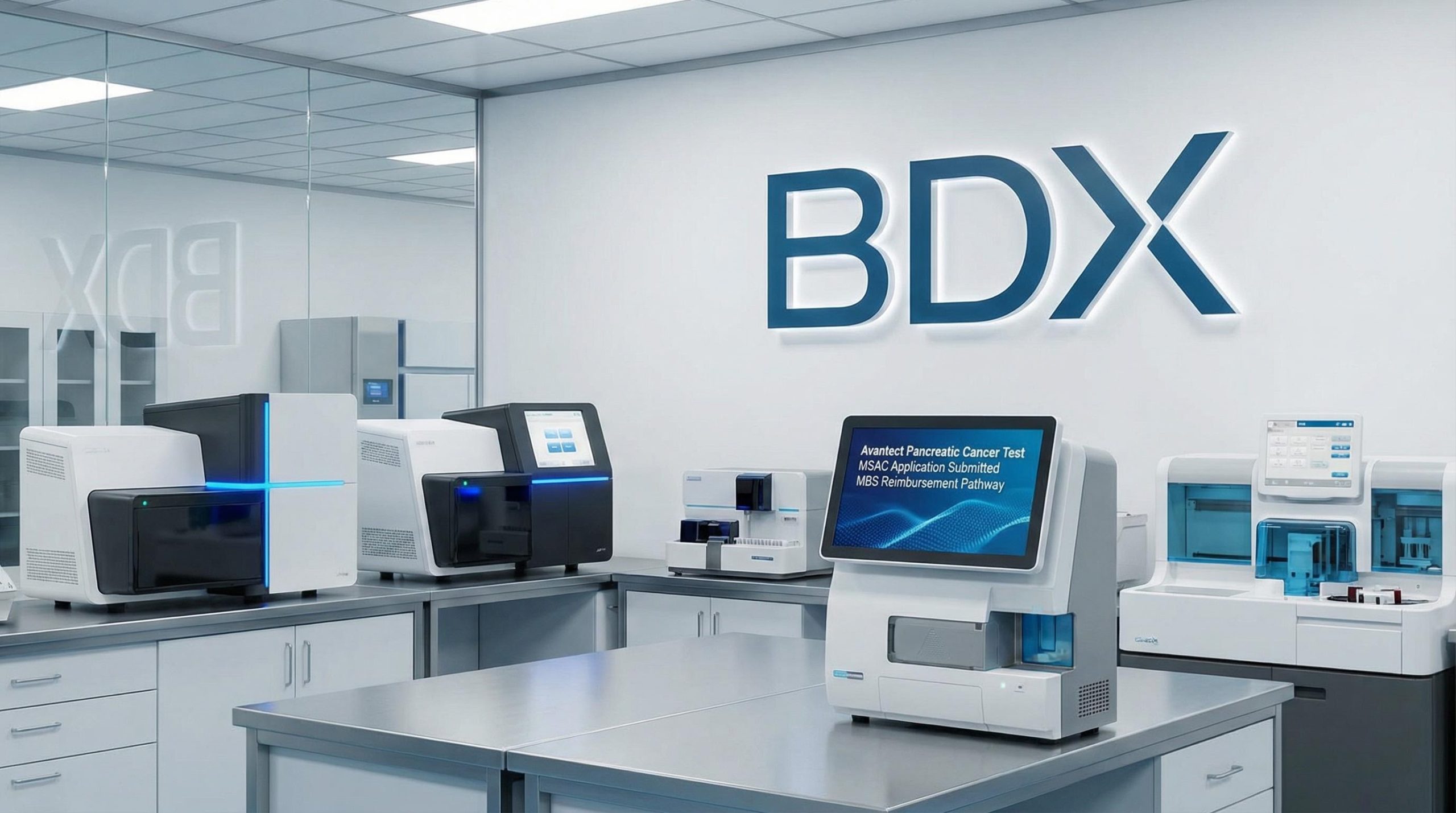
BCAL Diagnostics submits MSAC application for Avantect pancreatic cancer blood test
BCAL Diagnostics (ASX: BDX) has applied to the Medical Services Advisory Committee (MSAC) seeking Medicare Benefits Schedule (MBS) reimbursement for its Avantect Pancreatic Cancer Test. The Bcal Diagnostics MSAC application represents a critical regulatory and commercial milestone for the Australian healthcare company, which launched the blood test in January 2026. The test is now available through Sonic Healthcare pathology centres in NSW, Queensland, and Victoria, as well as nationally through the Healius Pathology Network, with early market feedback indicating strong clinician interest, particularly from endocrinology and primary care settings managing patients with new-onset diabetes.
MBS reimbursement would remove out-of-pocket cost barriers for patients, potentially accelerating adoption and transforming the commercial trajectory of the Avantect test. If successful, the listing would enable subsidised nationwide access and integration into standard clinical practice guidelines, representing a significant inflection point for BCAL’s early cancer detection strategy.
When big ASX news breaks, our subscribers know first
What is the MSAC process and why does it matter?
The Medical Services Advisory Committee is an independent expert body that evaluates new medical technologies and diagnostics to determine whether they should receive public funding under Australia’s Medicare Benefits Schedule. The MSAC assessment process is rigorous and evidence-based, requiring comprehensive demonstration of clinical and economic value before a technology can be considered for government subsidy.
The committee evaluates submissions against four key criteria:
- Clinical effectiveness and safety
- Cost-effectiveness and budget impact
- Comparative benefit versus existing standard of care
- Patient outcomes and healthcare system value
A positive MSAC recommendation is required before the Australian Government can consider listing a test on the MBS. This makes MSAC the critical gateway to subsidised nationwide access. For BCAL, a successful outcome would fundamentally alter the commercial dynamics of the Avantect Pancreatic Cancer Test by enabling broader patient access through government reimbursement rather than out-of-pocket payment.
The unmet need for early pancreatic cancer detection
Pancreatic cancer remains one of the most lethal malignancies, with poor survival rates driven primarily by late-stage diagnosis. There is currently no established standard-of-care screening pathway for early detection in at-risk individuals, creating a significant clinical gap that the Avantect test is designed to address.
The test targets two specific high-risk populations: individuals aged 50 years and older with new-onset diabetes, and those with known genetic or familial risk factors for pancreatic cancer. These groups face elevated risk but have historically lacked accessible, non-invasive screening options that could enable earlier intervention.
The Avantect test uses cell-free DNA (cfDNA) epigenomic profiling to detect early-stage pancreatic cancer through a simple blood draw. The technology analyses circulating tumour-derived DNA fragments to identify characteristic epigenetic patterns associated with malignancy. The test is designed to complement existing clinical pathways by identifying patients who may benefit from earlier imaging and specialist referral, rather than replacing established diagnostic protocols.
The absence of existing screening pathways for at-risk populations represents a substantial market opportunity. Early detection significantly improves treatment options and survival outcomes, yet current practice relies on symptomatic presentation, by which point the disease has typically progressed to advanced stages with limited therapeutic options.
Clinical evidence and advocacy support
The MSAC submission is underpinned by a growing body of clinical evidence demonstrating the test’s performance in detecting pancreatic cancer in at-risk populations. This includes validation studies supporting the assay’s sensitivity and specificity in real-world clinical settings, which form the core of the committee’s clinical effectiveness assessment.
The application is further strengthened by engagement with leading patient advocacy organisations, including the PanCare Foundation and Pankind. These groups have played an important role in highlighting the urgent unmet need for earlier detection tools and improved patient outcomes, providing additional context to the public health case for reimbursement.
Commercial implications of MBS reimbursement
If BCAL achieves MBS listing, the commercial impact would extend well beyond immediate revenue. Reimbursement would fundamentally reshape the addressable market by transforming the Avantect test from an out-of-pocket diagnostic to a subsidised standard-of-care tool integrated into routine clinical workflows.
Four key commercial benefits would flow from successful MBS listing:
- Broader patient access through subsidised testing, removing cost as a barrier to uptake and expanding the potential patient pool significantly
- Increased clinician adoption driven by reduced cost barriers, making the test a practical option in primary care and endocrinology settings where cost-sensitivity influences clinical decision-making
- Scaled national use and revenue growth, with reimbursement enabling volume-based commercial expansion rather than reliance on out-of-pocket payment models
- Integration into standard clinical practice guidelines over time, establishing the test as an accepted component of pancreatic cancer risk assessment protocols
Shane Ryan, Chief Executive Officer
“The submission to MSAC represents a critical milestone in our strategy to establish Avantect as a reimbursed, standard-of-care diagnostic for pancreatic cancer risk assessment. Securing MBS reimbursement has the potential to significantly accelerate adoption, improve access for patients, and position BCAL at the forefront of early cancer detection in Australia.”
MBS listing would represent a commercial inflection point, converting a niche out-of-pocket diagnostic into a subsidised, scalable product with significantly expanded market penetration potential. The reimbursement pathway is central to BCAL’s broader strategy to establish the Avantect platform as a standard component of early cancer detection protocols in Australia.
Current commercial rollout and early traction
The company has established distribution partnerships with two major pathology networks, providing geographic coverage across key Australian markets. Early market feedback indicates strong interest from clinicians managing high-risk populations, supporting the commercial case for broader reimbursement.
| Distribution Partner | Geographic Coverage | Status |
|---|---|---|
| Sonic Healthcare | NSW, Queensland, Victoria | Active |
| Healius Pathology Network | National | Active |
Early uptake signals market receptivity and supports the reimbursement case being put to MSAC. Clinician engagement, particularly in endocrinology and primary care settings, demonstrates demand for non-invasive screening tools in high-risk populations where existing clinical pathways lack standardised early detection protocols.
The next major ASX story will hit our subscribers first
What comes next for BCAL
BCAL will provide updates as the MSAC assessment process progresses. The evaluation is rigorous and evidence-based, with no defined timeline for completion. The company’s submission will be assessed against established criteria for clinical effectiveness, cost-effectiveness, and comparative benefit versus existing standard of care.
Beyond the pancreatic cancer test, BCAL holds exclusive Australian and New Zealand distribution rights for Avantect Ovarian and Avantect multi-cancer blood tests, licensed from US-based precision diagnostics company ClearNote Health Inc. The MSAC submission for the pancreatic cancer test represents the first step in a potentially broader reimbursement strategy across the Avantect product suite.
The company’s position in the early cancer detection space is underpinned by a portfolio approach, with the BREASTESTplus blood test already commercially available as a rule-out diagnostic for women with dense breasts undergoing clinical evaluation for breast disease. The Avantect platform represents an expansion of BCAL’s diagnostic capabilities into solid tumour detection using cfDNA epigenomic profiling technology.
Get Healthcare Breakthroughs Before the Market Reacts
Join 20,000+ investors receiving FREE breaking ASX healthcare news within minutes of release, complete with expert analysis. Click the “Free Alerts” button at Big News Blast to get market-moving announcements delivered straight to your inbox the moment they drop.