
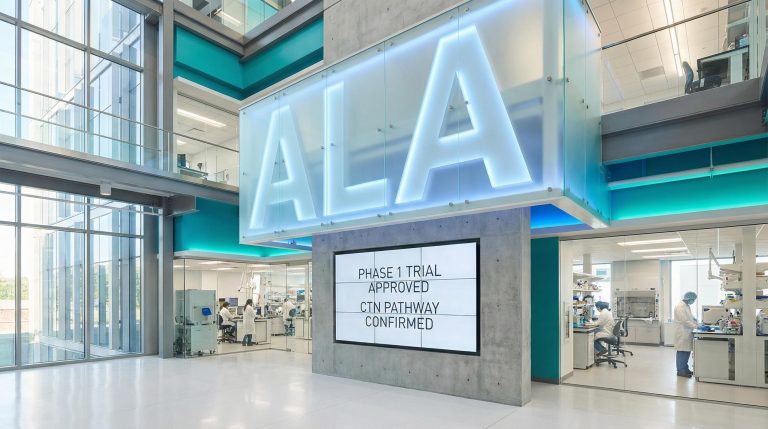
TGA clears path for Arovella ALA-101 clinical trial Australia under streamlined CTN scheme
Arovella Therapeutics (ASX: ALA) has received confirmation from the Therapeutic Goods Administration (TGA) that its planned Arovella ALA-101 clinical trial Australia can proceed under the Clinical Trial Notification (CTN) pathway. The Phase 1 study will evaluate ALA-101, an allogeneic CD19-targeting CAR-iNKT cell therapy, marking a regulatory milestone that positions the company to run parallel trials in Australia and the United States following recent FDA clearance.
The CTN confirmation represents a procedural advantage for early-phase biotech trials in Australia. Unlike the Clinical Trial Approval (CTA) pathway typically required for advanced cell therapies, the CTN scheme allows trial conduct to be primarily overseen by Human Research Ethics Committees (HREC) and clinical investigators, with the TGA notified rather than directly approving the study. This streamlined approach reduces regulatory timelines and provides greater predictability for trial initiation.
With the pathway confirmed, Arovella will now finalise HREC approvals, complete site initiation activities, and begin patient recruitment once institutional approvals are in place. The company has not specified a timeline for these activities.
When big ASX news breaks, our subscribers know first
Why the CTN pathway matters for cell therapy development
Australia offers two distinct regulatory routes for clinical trials, and the pathway selected can materially affect development timelines and costs. Understanding the difference between CTN and CTA is relevant for investors tracking early-stage biotech programmes.
The CTN scheme positions HREC and clinical investigators as primary overseers of trial conduct, with the TGA receiving notification prior to commencement. This contrasts with the CTA pathway, where the TGA directly reviews the investigational product dossier before authorising clinical studies. CTA submissions typically involve formal TGA review processes and associated regulatory timelines, which can extend study start-up periods and may involve requests for additional information or clarifications before approval is granted.
Advanced therapies such as cell and gene therapies frequently proceed via the CTA pathway in Australia, as regulators require additional oversight for novel biological products. The confirmation that the Arovella ALA-101 clinical trial Australia can proceed under CTN therefore represents a competitive advantage in terms of regulatory efficiency.
| Feature | CTN Scheme | CTA Pathway |
|---|---|---|
| Primary oversight | HREC and investigators | TGA direct review |
| TGA role | Notification only | Pre-approval required |
| Timeline predictability | Higher | Variable |
| Typical use | Early-phase trials | Novel biologics requiring additional oversight |
| Review process | Institutional ethics review | Formal TGA dossier evaluation |
For biotechnology companies managing cash burn and clinical timelines, the ability to rapidly initiate sites following HREC approval offers operational advantages. Conducting the study under the CTN scheme also provides Australian patients access to a first-in-human allogeneic CAR-iNKT therapy study.
ALA-101’s dual-market clinical strategy takes shape
The CTN confirmation follows recent clearance of Arovella’s Investigational New Drug (IND) application by the U.S. Food and Drug Administration (FDA). The IND clearance was supported by a preclinical and manufacturing data package, enabling a first-in-human clinical trial for ALA-101 in both Australia and the United States.
This dual-geography approach provides recruitment flexibility and cost optimisation opportunities. Australian clinical environments offer efficiency advantages for early-phase oncology trials, whilst maintaining access to U.S. sites allows the company to navigate patient availability and institutional capacity constraints across both markets.
ALA-101 is an allogeneic CD19-targeting CAR-iNKT cell therapy. CD19 is an antigen found on the surface of numerous cancer types, making it a validated target in cell therapy development. The allogeneic nature of the therapy (donor cells that can be given to any patient) differentiates it from autologous approaches requiring patient-specific manufacturing.
Dr Michael Baker, CEO and Managing Director
“This marks an important milestone for the ALA-101 program. By pairing the IND with Australia’s favourable clinical environment, it enables the team to conduct clinical trials more efficiently and cost-effectively.”
The confirmation positions Arovella to commence site initiation activities whilst finalising HREC approvals. The company has stated it will provide further updates as the clinical programme progresses.
What is ALA-101 and how does it work?
ALA-101 consists of CAR19-iNKT cells that have been modified to produce a Chimeric Antigen Receptor (CAR) targeting CD19. The therapy platform incorporates three key components:
- iNKT cell platform – Invariant Natural Killer T cells are a specific immune cell type with natural anti-cancer properties.
- CD19-targeting CAR – An engineered receptor allows cells to recognise and attack CD19-expressing cancers.
- Allogeneic delivery – Donor cells can be given to any patient without individual manufacturing, offering scalability and cost advantages over patient-specific approaches.
iNKT cells also contain an invariant T cell receptor (iTCR) that targets glycolipid bound CD1d, another antigen found on the surface of several cancer types. This dual-targeting mechanism (CD19 via the CAR, CD1d via the iTCR) may provide a differentiated efficacy profile compared to single-target approaches.
The allogeneic nature of ALA-101 addresses a key challenge in cell therapy development. Autologous therapies require extracting immune cells from each individual patient, manufacturing a personalised product, and then reinfusing those cells. This process is time-intensive, expensive, and creates manufacturing complexity. Allogeneic therapies use donor cells that can be manufactured at scale and stored as an off-the-shelf product, potentially reducing costs and improving accessibility.
The next major ASX story will hit our subscribers first
Next steps and clinical timeline
Arovella has outlined three confirmed activities following the CTN pathway confirmation:
- Finalise HREC approvals for Australian sites
- Complete site initiation activities
- Begin patient recruitment once institutional approvals are in place
The company has not provided specific timeframes for these activities. Investors should monitor for announcements regarding HREC approval completion and first patient dosing as upcoming catalysts.
The Arovella ALA-101 clinical trial Australia represents the first-in-human study for this allogeneic CAR-iNKT platform. The ability to run parallel trials across Australia and the United States provides geographical diversification in patient recruitment whilst leveraging cost efficiencies in the Australian clinical environment.
The CTN pathway confirmation removes a regulatory uncertainty that can affect early-stage biotech development timelines. Whilst trial commencement remains contingent on HREC approvals and site initiation, the streamlined oversight model provides greater predictability compared to the CTA route typically required for advanced cell therapies.
Don’t Miss the Next Biotech Breakthrough
Join 20,000+ investors getting FREE breaking ASX news delivered to your inbox within minutes of release, complete with expert analysis. Click the “Free Alerts” button at StockWire X to receive real-time alerts the moment market-moving healthcare and biotech announcements hit the ASX.