
Actinogen Completes Alzheimer’s Trial Enrolment, Topline Results Due November 2026
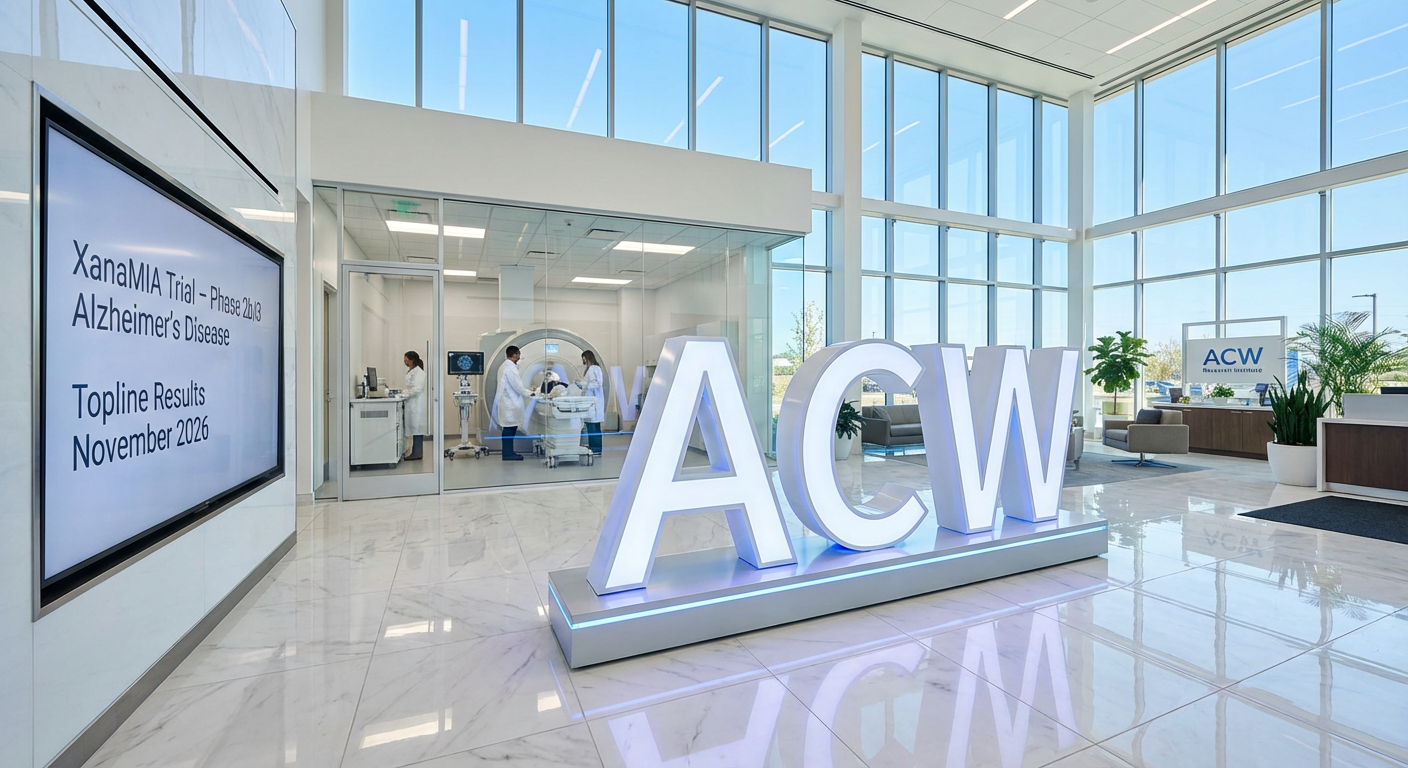
Actinogen Medical Limited (ASX: ACW) has reported its H1 FY26 financial results, highlighting the completion of accelerated enrolment in its pivotal XanaMIA Alzheimer’s trial and a positive interim safety and efficacy futility review. The company randomised its final participant (247th) in December 2025 and received a recommendation from the independent Data Monitoring Committee (DMC) on 30 January 2026 to continue the trial without amendment. With a proforma cash position of $29.7 million, Actinogen is funded beyond the anticipated November 2026 topline results, positioning the company at a critical juncture in its clinical development programme.
Actinogen advances XanaMIA Alzheimer’s trial toward pivotal November 2026 results
The XanaMIA trial pathway has been significantly de-risked following two positive interim DMC assessments. The first safety review occurred in November 2025, followed by the safety and efficacy futility analysis in January 2026. Both reviews recommended continuing the trial without modification, supporting confidence in the underlying trial design and Xanamem’s 10 mg once-daily dosing regimen.
The 247-participant cohort completed enrolment ahead of schedule, with patients receiving either Xanamem 10 mg or placebo in a double-blind, 36-week treatment protocol. The trial targets patients with mild to moderate Alzheimer’s disease who exhibit progressive disease confirmed by elevated pTau181 biomarker levels in blood. The primary endpoint measures changes using the Clinical Dementia Rating scale – Sum of Boxes (CDR-SB), an internationally recognised assessment tool.
The last patient’s final evaluation visit is scheduled for September 2026, with topline results expected in November 2026. An open-label extension (OLE) phase is set to commence in Q1 2026, offering all participants access to active Xanamem 10 mg once daily for up to 25 months, providing long-term safety and efficacy data.
Dr Steven Gourlay, CEO & Managing Director
“Xanamem has the potential to be a transformative therapy for people living with Alzheimer’s disease, offering a promising safe and effective oral therapy to slow or halt disease progression.”
When big ASX news breaks, our subscribers know first
Understanding cortisol control in Alzheimer’s disease treatment
Xanamem operates through a first-in-class mechanism targeting the enzyme 11β-HSD1, which synthesises cortisol within brain cells. Chronically elevated cortisol is associated with Alzheimer’s disease progression and is known to be toxic to neurons, contributing to cognitive decline. Xanamem inhibits cortisol production in key brain regions such as the hippocampus and frontal cortex without affecting the adrenal glands’ essential cortisol production for normal bodily functions.
This targeted approach offers a novel disease-course modifying strategy distinct from current Alzheimer’s treatments, which predominantly focus on amyloid or tau pathways through injectable antibody therapies. Xanamem’s oral, once-daily 10 mg formulation provides a potential advantage in patient compliance and safety profile.
The company has treated more than 500 individuals with active Xanamem for up to 36 weeks across eight clinical trials, with no reported serious adverse events related to the drug. A human PET imaging study confirmed high brain target engagement at doses as low as 5 mg daily, validating the mechanism’s biological activity.
A recently completed pharmacokinetic trial confirmed that the intended commercial formulation achieves consistent and therapeutic blood concentrations under both fed and fasted conditions, supporting flexible dosing without meal-time restrictions. Commercial-grade Xanamem tablets have been manufactured at Catalent’s US facility for use in the OLE phase, demonstrating readiness for potential scale-up.
XanaMIA trial design and regulatory pathway to commercialisation
Phase 2b/3 trial structure and endpoints
The XanaMIA trial employs a rigorous double-blind, placebo-controlled design conducted across sites in Australia and the United States. Patient selection criteria require mild to moderate Alzheimer’s disease with confirmed progressive disease through elevated pTau181 protein biomarker levels. This biomarker-driven approach enriches the trial population with patients most likely to benefit from cortisol modulation.
The 36-week treatment period assesses multiple efficacy endpoints, with the CDR-SB serving as the primary measure. Secondary endpoints evaluate cognitive function, activities of daily living, and behavioural symptoms, providing comprehensive assessment of disease modification potential.
The OLE phase, which is set to commence in Q1 2026, extends treatment duration to up to 25 months for all participants, offering critical long-term safety data and sustained efficacy signals. This extended follow-up period positions Actinogen to demonstrate durable treatment effects, a key consideration for regulatory authorities evaluating disease-modifying therapies.
FDA agreement on accelerated approval pathway
Actinogen has achieved a common understanding with the FDA on the marketing approval pathway for Xanamem in Alzheimer’s disease. The agreed approach requires one additional pivotal trial of Xanamem 10 mg versus placebo, planned to commence in 2027. This streamlined pathway represents a significant reduction in development timeline and capital requirements compared to traditional two-pivotal-trial programmes.
The FDA’s recently announced policy permitting single pivotal trial approvals with adequate supporting evidence further strengthens Actinogen’s regulatory strategy. Should the XanaMIA trial deliver positive results in November 2026, the company intends to discuss accelerated approval pathways with the FDA and is awaiting feedback from the European Medicines Agency (EMA) on its Alzheimer’s programme.
The regulatory alignment is supported by multiple independent trials validating Xanamem’s cortisol control mechanism:
- Positive phase 2 results on depressive symptoms in treatment-resistant depression patients
- Pilot data suggesting stabilisation in Alzheimer’s disease patients with elevated pTau181 (Taylor et al 2024)
- High brain target binding confirmed via human PET study (Villemagne et al 2024)
- Promising safety profile across 500+ participants treated for up to 36 weeks
Financial position and capital runway secured through pivotal results
The H1 FY26 statutory results reflect Actinogen’s investment phase as the company advances toward its pivotal clinical readout. Net loss after tax for the six months ended 31 December 2025 was $11.35 million (H1 FY25: $8.17 million), with research and development expenditure of $8.9 million (H1 FY25: $4.58 million) primarily relating to the XanaMIA trial.
Cash and cash equivalents at 31 December 2025 stood at $6.5 million, however, subsequent funding events have significantly strengthened the balance sheet:
| Funding Component | Amount |
|---|---|
| Cash at 31 December 2025 | $6.5 million |
| Non-dilutive loan funding | $4.3 million |
| Additional R&D rebate | $1.9 million |
| Institutional placement | $12.0 million |
| Share Purchase Plan (up to) | $5.0 million |
| Proforma cash position | $29.7 million |
The non-dilutive loan funding of $4.3 million is secured against the R&D rebate accrued to 31 December 2025. The company received a total R&D tax incentive cash rebate of $7.4 million relating to FY2025 expenditures. The institutional placement includes a $0.5 million commitment from CEO Dr Steven Gourlay (subject to shareholder approval at the General Meeting scheduled for 18 March 2026).
The proforma cash position of $29.7 million provides sufficient runway beyond the November 2026 topline results, eliminating near-term financing risk and allowing investors to focus on clinical execution rather than capital concerns. This balance sheet strength enables the company to advance commercial readiness activities in parallel with trial completion.
The next major ASX story will hit our subscribers first
Commercial readiness activities and upcoming catalysts
Actinogen has progressed manufacturing capabilities with the completion of commercial-grade Xanamem 10 mg tablets at Catalent’s US facility. These tablets are being deployed in the OLE phase, validating the production process for potential commercial supply. The pharmacokinetic trial confirming dosing flexibility under fed and fasted conditions removes a potential commercial barrier, allowing patients to take Xanamem at any time of day.
The company has established a new Alzheimer’s disease clinical advisory board and is refining communication materials for scientific, medical, and business audiences. Intellectual property strengthening continues through active national phase patent filings, extending protection for the Xanamem programme.
Key upcoming catalysts include:
- Q1 2026: Open-label extension phase commences
- 2026: New peer-reviewed publication expected
- 2026: EMA feedback on Alzheimer’s disease programme
- September 2026: Last patient final evaluation visit
- November 2026: Topline final results for XanaMIA trial
- 2027: Second pivotal Alzheimer’s disease trial to commence
The November 2026 topline results represent a binary catalyst event for Actinogen Medical Limited (ASX: ACW). Positive data would validate Xanamem’s cortisol control mechanism in a large, well-controlled trial, potentially positioning the therapy as a first-in-class disease-modifying treatment for Alzheimer’s disease. The combination of completed enrolment, positive interim DMC reviews, secured funding, and FDA regulatory alignment de-risks the development pathway significantly compared to earlier-stage programmes.
Want the Next Biotech Breakthrough in Your Inbox?
Join 20,000+ investors receiving FREE breaking ASX news and in-depth analysis delivered within minutes of release. Get Big News Blast alerts on biotech developments, trial results, and market-moving announcements before the market reacts. Click the “Free Alerts” button to stay ahead on healthcare and biotech news.