
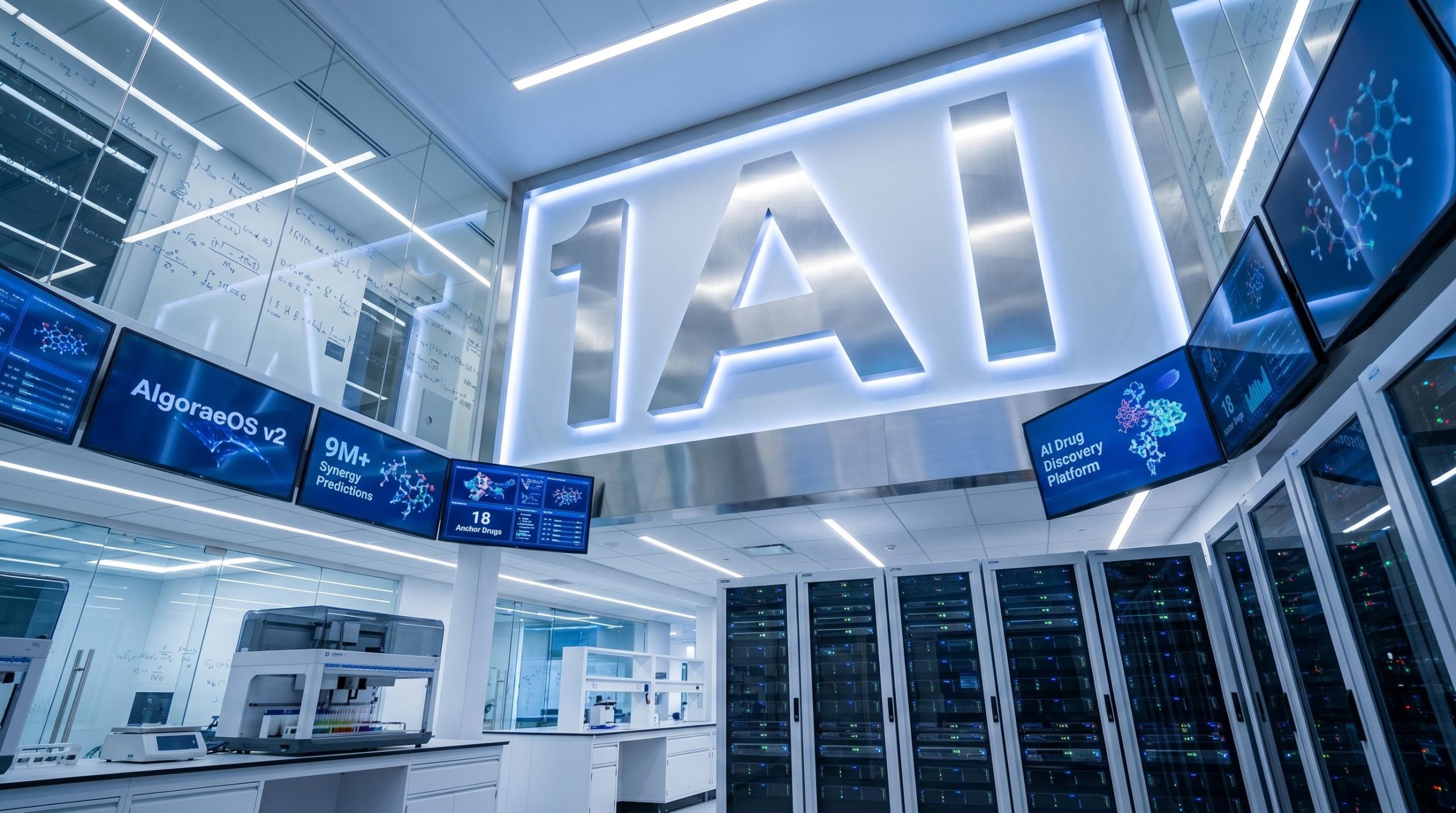
Algorae scales AI platform to 18 anchor drugs, generating over 9 million synergy predictions
Algorae Pharmaceuticals has completed the prediction-generation phase of its multi-anchor drug combination programme using AlgoraeOS v2 (AOS2), expanding from a single anchor drug to 18 anchor drugs and generating over 9 million in silico drug–drug–cell line synergy predictions. The multi-anchor programme was designed to provide the Company with a more diversified pipeline of AI-predicted combination opportunities spanning diverse therapeutic areas and mechanisms of action.
The 18 anchor drugs were selected to provide broad optionality across multiple disease contexts. Each of the 9 million predictions includes four well-recognised synergy metrics alongside confidence-weighted measures, enabling risk-aware prioritisation across the full prediction set.
The expansion follows the Company’s first single-anchor programme using AOS2, which focused on cannabidiol (CBD) and was announced in December 2025. By scaling the platform to multiple anchors, Algorae has reduced single-programme dependency whilst demonstrating the industrial-scale capability of its AI discovery platform.
When big ASX news breaks, our subscribers know first
What is in silico drug synergy prediction?
In silico drug synergy prediction uses computer-based modelling to evaluate how drug combinations may work together before laboratory testing begins. Traditional drug combination screening requires physical testing of thousands of compound pairs in laboratory settings—a resource-intensive and time-consuming process.
AI-enabled prediction allows rapid, large-scale evaluation at significantly lower cost. Algorae’s platform generates predictions using four synergy metrics (ZIP, Bliss, HSA and Loewe), which are well-recognised industry measures. Each prediction includes uncertainty measures, enabling the Company to prioritise candidates based on both predicted synergy strength and model confidence.
This quantitative framework supports systematic candidate selection whilst reducing reliance on costly traditional screening methods.
Initial filtering identifies over 478,000 synergy predictions for further evaluation
From the 9 million prediction set, initial filtering has identified:
- More than 478,000 individual synergy predictions passing preliminary synergy and uncertainty thresholds
- Over 6,000 drug combinations demonstrating predicted synergy across multiple cell lines, indicating biological robustness
The 6,000 cross-cell-line combinations represent candidates with greater biological generalisability—an important indicator of potential therapeutic relevance. Structured curation is now underway incorporating anchor-specific considerations and additional filters reflecting predicted synergy strength, biological consistency, novelty relative to existing empirical data, and commercial and intellectual property relevance.
| Stage | Number of Predictions/Combinations | Purpose |
|---|---|---|
| Total predictions | 9 million+ | Full drug–drug–cell line combination set across 18 anchors |
| Preliminary filtered | 478,000+ | Individual predictions passing synergy and uncertainty thresholds |
| Biologically robust combinations | 6,000+ | Combinations with predicted synergy across multiple cell lines |
The filtering methodology balances predicted synergy magnitude with uncertainty reduction, whilst commercial and IP considerations are integrated into the candidate selection process. The Company will update shareholders once the high-priority shortlist is finalised.
Next steps and PMCC validation pathway
Shortlisted candidates are expected to inform ongoing discussions with Peter MacCallum Cancer Centre (PMCC) regarding independent validation. A second programme with PMCC is now underway, building on the independent preclinical validation of AlgoraeOS v1 (AOS1) at PMCC announced in December 2025.
The PMCC collaboration provides an independent third-party validation pathway for AI-predicted drug combinations. The second programme indicates continued institutional partnership following the successful validation of the earlier platform version.
Management perspective
Dr James McKenna, Chief Scientific Officer
“This program provides a compelling demonstration of the in silico predictive capability of AOS through the rapid generation of large-scale predictions across approved and investigational drugs with diverse mechanisms of action. In doing so, the program has dramatically expanded the Company’s pool of candidate drug combinations for further evaluation, while reducing reliance on traditional, resource-intensive screening methods.”
Commercial business continues in parallel
Algorae maintains a dual focus on AI drug discovery and pharmaceutical commercialisation through AlgoraeRx. Additional products and agreements are progressing through the commercial pipeline, providing the Company with a dual revenue model combining AI discovery platform capabilities with an operating commercial business.
Want to explore how AI is transforming drug discovery at industrial scale?
Algorae has generated over 9 million drug synergy predictions across 18 anchor drugs, filtering down to more than 6,000 biologically robust combinations for further evaluation. This marks a significant expansion of the Company’s AI-driven discovery pipeline whilst demonstrating the scalable capability of its AlgoraeOS platform.
To learn more about Algorae’s dual-revenue model combining AI drug discovery with pharmaceutical commercialisation, visit the Algorae investor centre. Access detailed updates on platform validation, pipeline development and commercial progress.