
AdAlta Reports 50% Response Rate in Advanced Mesothelioma CAR-T Trial
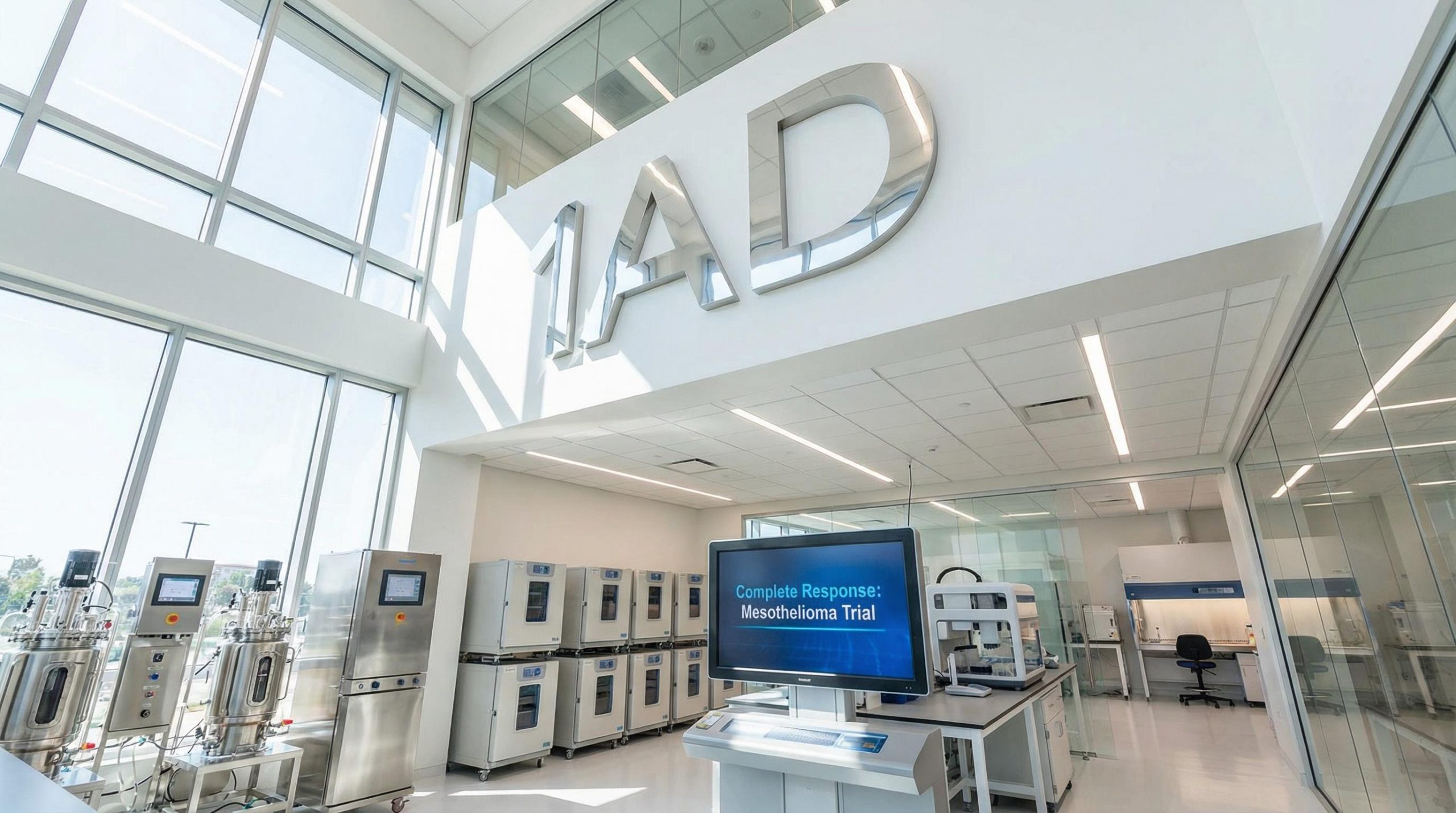
AdAlta reports tumour clearance in advanced mesothelioma patients treated with BZDS1901
AdAlta has reported AdAlta BZDS1901 Mesothelioma Results showing tumours becoming undetectable in two patients treated with its Generation 2 (Gen 2) BZDS1901 CAR-T therapy. The company’s latest clinical update reveals a 50% Overall Response Rate (ORR) at the highest doses tested, with five out of ten patients experiencing tumour shrinkage exceeding 30%.
These outcomes emerge from a patient population that had already failed prior chemotherapy or immunotherapy treatments. In one patient, two 5cm tumours became undetectable three months post-treatment and remain undetectable 18 months later. The 20% Complete Response rate (two out of ten patients at highest doses) represents a highly unusual outcome in relapsed/refractory mesothelioma, where current second-line treatments typically produce response rates of only 11-29% and median overall survival of less than 9 months.
14 advanced mesothelioma patients have now received Gen 2 BZDS1901 through investigator-initiated trials conducted by Shanghai Cell Therapy Group in China. All patients had either not responded to or relapsed after standard treatments. Over a quarter of patients (26.3%) demonstrated continued tumour shrinkage over 2-4 months, providing evidence of persistent CAR-T cell activity. Of the total cohort, 57.1% (eight patients) remain alive, with 28.6% (four patients) surviving beyond 12 months.
When big ASX news breaks, our subscribers know first
How BZDS1901 compares to current mesothelioma treatments
The clinical data positions BZDS1901’s performance substantially ahead of existing treatment benchmarks for patients who have exhausted first-line options. Current therapies for advanced mesothelioma patients post-chemotherapy or immunotherapy failure deliver modest outcomes, with Complete Responses remaining highly unusual in this setting.
| Metric | Current Treatments | BZDS1901 Gen 2 (High Dose) | Difference |
|---|---|---|---|
| Overall Response Rate | 11-29% | 50% | ~2x improvement |
| Complete Response Rate | Highly unusual | 20% | Notable achievement |
| Median Overall Survival | <9 months | Not yet reached (>6 months) | Encouraging trend |
BZDS1901 represents a CAR-T cell therapy, a treatment approach where a patient’s immune cells (T cells) are engineered in a laboratory to recognise and attack cancer cells. The therapy targets mesothelin, a protein commonly found on the surface of mesothelioma cells, as well as certain lung and gynaecological cancers.
Complete Response refers to tumours becoming undetectable on CT imaging, whilst Partial Response describes tumour shrinkage of more than 30%. The fact that two patients achieved Complete Response status after having already failed standard therapies distinguishes BZDS1901 from existing options, where such outcomes are rarely observed.
Response rates approaching double those of current treatments could support regulatory discussions and future partnering opportunities as the therapy progresses toward Western clinical development.
Safety profile supports potential for higher dosing in future studies
The extension cohort operated under updated safety management protocols aligned with recent Australian and United States standards. No dose-limiting toxicities emerged in patients receiving higher BZDS1901 doses under these protocols.
The safety data included:
- No dose-limiting toxicities at higher doses in extension cohort
- No severe cytokine release syndrome observed
- One serious neurological side effect resolved quickly post-treatment, with patient subsequently achieving Complete Response
The improved safety profile under state-of-the-art management protocols supports exploring even higher doses in future studies, which could potentially improve response rates further. Manageable toxicity at current dosing levels provides clinical latitude to investigate whether dose escalation might benefit additional patients.
Gen 2 manufacturing advantage
Gen 2 BZDS1901 features a manufacturing process requiring less than two days, substantially shorter than many CAR-T therapies. The therapy is administered at doses representing just 5-10% of Generation 1 doses whilst approaching similar efficacy at the high end of the dosing range.
Unlike some cellular therapies, BZDS1901 does not require expensive viral vectors for manufacturing. This manufacturing efficiency addresses a critical commercial consideration, as production speed and cost directly impact the viability of cell therapies at scale. Shorter manufacturing timelines reduce the risk of patient deterioration whilst awaiting treatment, whilst lower production costs improve potential market accessibility.
CEO commentary and clinical development pathway
Tim Oldham, CEO and Managing Director, stated the clinical results strengthen confidence in the therapy’s development trajectory:
Tim Oldham, CEO and Managing Director
“These latest results further strengthen our confidence in BZDS1901’s potential to make a real difference for patients with advanced mesothelioma. We remain focused on progressing this program so that Australian patients can be the first outside China to access this promising new therapy.”
The company has outlined its near-term clinical pathway:
- Planning underway for additional extension cohort of up to five patients
- Continued follow-up data collection from existing patients
- Focus on progressing toward Western clinical development
AdCella’s ‘East to West’ strategy positions Australia as a potential first Western market for BZDS1901, establishing FDA-regulated manufacturing and conducting Phase I studies before potential out-licensing for registrational trials.
Patient survival data emerging
Survival statistics provide supporting evidence of response durability beyond immediate tumour measurements. Of the 14 patients treated with Gen 2 BZDS1901, 57.1% (eight patients) remain alive, with 28.6% (four patients) surviving beyond 12 months. A further 35.7% (five patients) are alive but have not yet reached the 12-month assessment point.
Median overall survival has not yet been reached but remains greater than 6 months. The continued tumour shrinkage observed in 26.3% of patients over 2-4 months suggests persistent CAR-T cell activity, with one patient improving from Partial Response to Complete Response and another advancing from stable disease to Partial Response during extended follow-up.
These durability indicators matter because mesothelioma patients who have failed prior therapies typically face poor prognoses. Survival extending beyond historical benchmarks, combined with evidence of ongoing therapeutic activity, suggests BZDS1901’s mechanism may provide sustained benefit rather than temporary tumour control.
The next major ASX story will hit our subscribers first
What these results mean for AdAlta’s investment thesis
The clinical data strengthens AdAlta’s positioning in cellular immunotherapy for solid tumours, a market segment that accounts for 90% of cancers yet remains underserved by current treatments. BZDS1901 represents a first-in-class approach as the first CAR-T therapy for mesothelioma engineered to secrete its own immune checkpoint inhibitor, helping overcome tumour immune suppression.
36 patients have now received BZDS1901 across three investigator-initiated trials in China. Generation 1 previously demonstrated response rates of 63.5% in advanced mesothelioma patients, with 73% of responders (eight out of 11 patients) surviving beyond 12 months.
The cellular immunotherapy market is projected to reach US$20.3 billion by 2028, growing at a compound annual growth rate of 34%. AdCella’s model targets this growth by in-licensing products from Asian originators, establishing FDA-regulated manufacturing in Australia, conducting Phase I studies, then out-licensing for registrational studies to larger biopharmaceutical companies.
BZDS1901’s differentiated clinical profile in a validated but underserved indication positions AdAlta for potential partnering discussions as Western development progresses. Complete Response rates in heavily pre-treated patients, combined with manageable safety and efficient manufacturing, address key criteria that influence commercial interest in cellular therapies.
The therapy’s target, mesothelin, extends beyond mesothelioma to certain lung cancers and various gynaecological cancers, providing potential expansion opportunities beyond the initial indication. As AdCella advances toward Western clinical development, the accumulating Chinese trial data establishes clinical proof-of-concept that could support regulatory pathways and partnership negotiations in larger markets.
Want the Next Biotech Breakthrough in Your Inbox?
Join 20,000+ investors getting FREE breaking ASX healthcare news delivered within minutes of release, complete with in-depth analysis. Click the “Free Alerts” button at Big News Blast to receive real-time alerts the moment market-moving announcements drop.