
Amplia Therapeutics Completes 13kg Narmafotinib Manufacturing Campaign
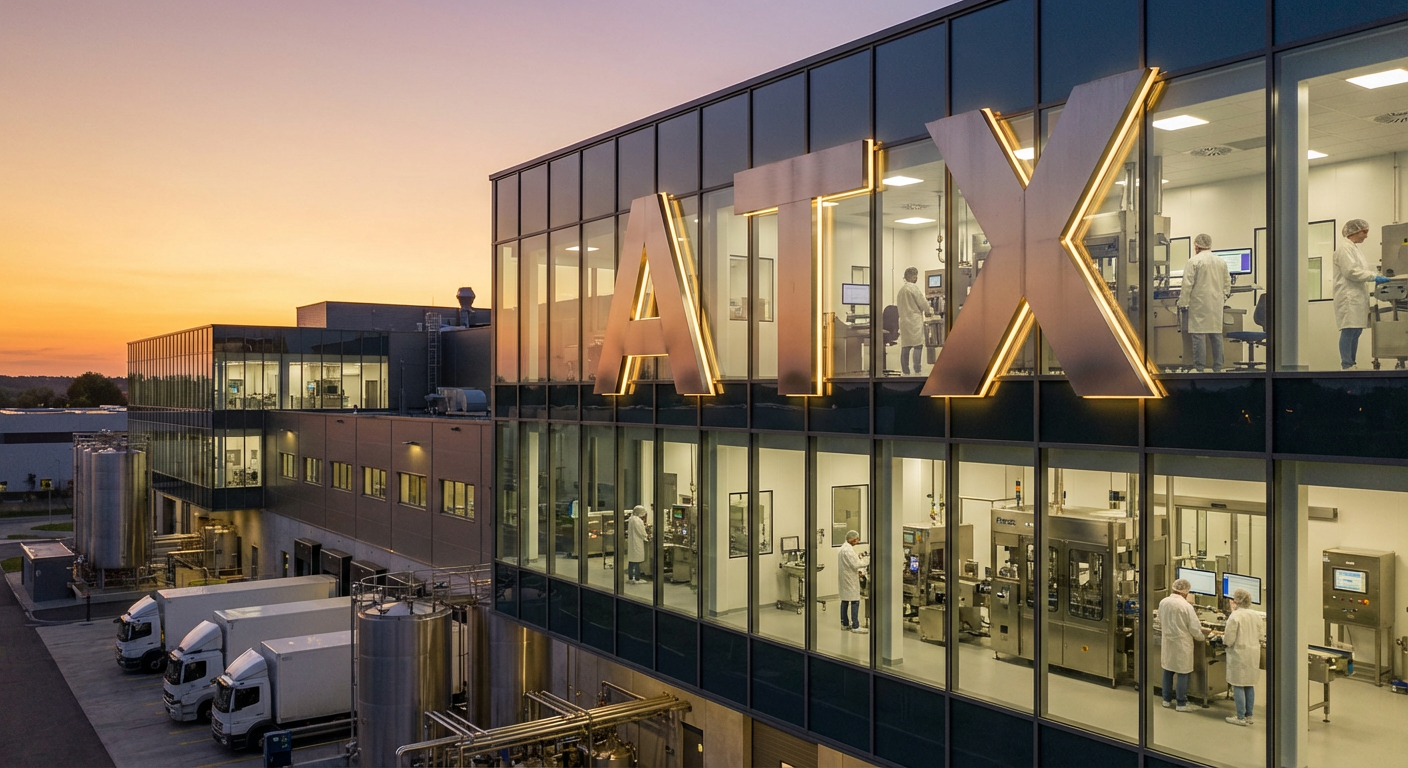
Amplia Therapeutics has completed a large-scale manufacturing campaign for narmafotinib, producing approximately 13kg of active pharmaceutical ingredient (API). The Amplia Therapeutics Narmafotinib Manufacturing Milestone represents a significant operational achievement as the company transitions from research-scale production to commercial manufacturing ahead of potential Phase 3 trials in pancreatic cancer.
The successful production campaign marks the culmination of months of process development work and demonstrates the company’s capability to manufacture at commercial scale under Good Manufacturing Practice (GMP) standards.
Amplia Completes 13kg Narmafotinib Manufacturing Campaign
Amplia Therapeutics (ASX: ATX) has transitioned narmafotinib manufacturing from a research and development facility to a commercial-ready environment. The scale-up has delivered production efficiencies and cost-savings whilst maintaining required purity and quality specifications for the drug substance.
The 13kg of narmafotinib API manufactured provides sufficient supply to support the company’s ongoing pancreatic cancer trials, including ACCENT and AMPLICITY, as well as other studies currently in planning stages. This newly manufactured drug substance will be converted into oral capsules for use in clinical trials.
This manufacturing milestone enables:
- Supply security for current ACCENT trial and newly opened AMPLICITY study
- Support for additional pancreatic cancer studies in various stages of planning
- Demonstrated commercial-scale manufacturing capability ahead of potential registrational studies
- Cost efficiencies through transition from R&D-scale to commercial production
The company has collaborated closely with its contract development and manufacturing organisation (CDMO) partner to ensure seamless transition to large-scale production under GMP standards.
When big ASX news breaks, our subscribers know first
What is Active Pharmaceutical Ingredient (API) Manufacturing?
Active pharmaceutical ingredient refers to the biologically active compound in a medication that produces the intended therapeutic effect. API manufacturing represents a critical step in drug development, as it involves producing the core chemical substance that will ultimately become the finished medicine patients receive.
The transition from small research batches to commercial-scale API production requires rigorous process development. Companies must demonstrate they can consistently manufacture the drug substance at larger volumes whilst maintaining precise quality standards and chemical purity specifications.
GMP manufacturing standards are internationally recognised requirements that ensure medicinal products are consistently produced according to quality benchmarks. These standards cover all aspects of production, including facility hygiene, equipment validation, documentation protocols, and staff training. Regulatory authorities such as the Therapeutic Goods Administration (TGA) and Food and Drug Administration (FDA) require GMP compliance before approving drugs for commercial sale.
For biotechnology companies approaching Phase 3 trials, demonstrating commercial-scale manufacturing capability reduces regulatory risk and provides confidence that sufficient drug supply exists to support larger patient populations in registrational studies. This manufacturing readiness represents a key operational milestone in the path toward potential market approval.
Commercial Manufacturing Transition Delivers Cost Efficiencies
Amplia’s transition from R&D facility to commercial CDMO partnership has delivered production efficiencies at scale. The company has successfully transferred manufacturing processes whilst maintaining the strict quality control and documentation standards required for clinical trial supply.
The scale-up to 13kg production represents a substantial increase from previous research-scale batches. This transition has enabled cost-savings through improved production efficiencies, reducing the per-unit cost of drug substance manufacture.
Chief Operating Officer Commentary
“Amplia continues to develop its manufacturing processes to meet phase-appropriate standards as we move towards a registrational study. This successful large-scale API synthesis campaign is an important step in ensuring we are prepared for the next stages of clinical development,” said Dr Rhiannon Jones, Chief Operating Officer of Amplia, who has overseen the production campaign.
The establishment of commercial manufacturing capabilities positions the company to meet the supply requirements for potential Phase 3 registrational trials, which typically involve significantly larger patient populations than earlier-stage studies. Having this manufacturing infrastructure in place before trial initiation reduces timeline risk and demonstrates operational maturity to regulatory authorities.
Pipeline Supply Secured: Supporting ACCENT and AMPLICITY Trials
The 13kg of narmafotinib API provides supply security for Amplia’s clinical development pipeline. The drug substance will support the ongoing ACCENT trial, which has already demonstrated promising efficacy data in first-line advanced pancreatic cancer patients.
ACCENT trial data has shown a confirmed response rate of 35% when narmafotinib is combined with chemotherapies gemcitabine and Abraxane. This compares favourably to the 23% response rate reported in the benchmark MPACT study for gemcitabine and Abraxane alone. The trial has also reported an interim median progression-free survival (PFS) of 7.6 months.
The newly opened AMPLICITY trial is now recruiting patients at sites in Australia and the United States under an Investigational New Drug (IND) application. This study is investigating narmafotinib in combination with the chemotherapy FOLFIRINOX in advanced pancreatic cancer patients.
| Trial Name | Patient Population | Treatment Combination | Key Result/Status |
|---|---|---|---|
| ACCENT | First-line advanced pancreatic cancer | Narmafotinib + gemcitabine + Abraxane | 35% confirmed response rate, 7.6-month interim median PFS |
| AMPLICITY | Advanced pancreatic cancer | Narmafotinib + FOLFIRINOX | Recruiting in Australia and US under IND |
The next operational step involves converting the API into oral capsule formulation for distribution to clinical trial sites. This finished drug product manufacturing represents the final stage before drug substance reaches patients in clinical studies.
What Comes Next for Amplia’s Manufacturing Strategy
Amplia’s immediate priority involves converting the 13kg of API into oral capsules suitable for clinical trial use. This formulation work will ensure drug product is available to support patient recruitment in both ACCENT and AMPLICITY trials.
The company has established GMP-compliant manufacturing processes that can be scaled further if required for potential Phase 3 registrational studies. These larger trials typically require substantially more drug supply to treat hundreds of patients across multiple international sites.
Having commercial-ready manufacturing capability in place before initiating registrational trials reduces execution risk. It demonstrates to regulatory authorities and potential partners that the company possesses the operational infrastructure necessary to support commercialisation if clinical trials succeed.
The manufacturing transition from R&D to commercial scale represents a key operational maturity milestone. This capability positions Amplia to advance narmafotinib through later-stage development with reduced supply chain risk.
The next major ASX story will hit our subscribers first
FAK Inhibitor Opportunity in Pancreatic Cancer
Focal Adhesion Kinase (FAK) is a protein over-expressed in pancreatic cancer and gaining increasing attention as a therapeutic target in solid tumours. FAK plays a role in cell migration, survival, and proliferation, processes that cancer cells exploit to grow and spread.
Pancreatic cancer presents a particularly fibrotic tumour environment, characterised by dense connective tissue surrounding cancer cells. This fibrotic barrier can limit the effectiveness of chemotherapy by preventing drugs from adequately penetrating the tumour. FAK inhibition may help reduce this fibrotic response, potentially improving chemotherapy access to cancer cells.
Narmafotinib is positioned as a highly potent and selective inhibitor of FAK. The drug has demonstrated promising data in preclinical cancer studies and is now being evaluated in combination with standard chemotherapy regimens in pancreatic cancer patients.
The manufacturing milestone supports Amplia’s broader strategic focus on developing FAK inhibitors for fibrotic cancers, including pancreatic and ovarian cancer. Pancreatic cancer represents a significant area of unmet medical need, with limited treatment options available for patients with advanced disease. The strong interim data from the ACCENT trial, combined with now-secured drug supply, positions the company to advance its clinical programme toward potential Phase 3 evaluation.
Want More Biotech News Like This?
Amplia’s manufacturing milestone represents exactly the type of operational progress that can create significant value for biotech investors. For readers seeking regular updates on ASX-listed biotech, healthcare, and technology companies, the Big News Blast delivers breaking news and comprehensive analysis directly to email inboxes—completely free.
Over 20,000 active investors already receive these alerts covering emerging opportunities across non-resource sectors including biotechnology, healthcare technology, financial services, and industrials. Readers can join by clicking the ‘Free Alerts’ button in the menu at StockWire X to receive timely notifications when companies announce material developments, clinical trial results, or commercial milestones that may impact investment decisions.