

Protocol finalised, PRROSE trial moves toward site activation
Amplia Therapeutics (ASX: ATX) and the Australia New Zealand Gynaecological Oncology Group (ANZGOG) have finalised the clinical trial protocol for the PRROSE Phase 2 ovarian cancer study, marking a meaningful progression milestone following the trial’s initial announcement in May 2026. The study targets women with high-grade serous ovarian cancer (HGSOC) who demonstrate poor response to up-front standard-of-care platinum-based chemotherapy prior to planned interval debulking surgery. With the protocol now complete, ethics and site governance submissions are the immediate next step, with site activation and patient recruitment planned before the end of 2026.
The PRROSE trial announcement in May 2026 confirmed the investigator-initiated structure, with ANZGOG taking on the sponsor and coordinator role, a design that reduces Amplia’s direct trial costs while generating clinically meaningful data across a second fibrotic cancer indication.
What the PRROSE trial sets out to do
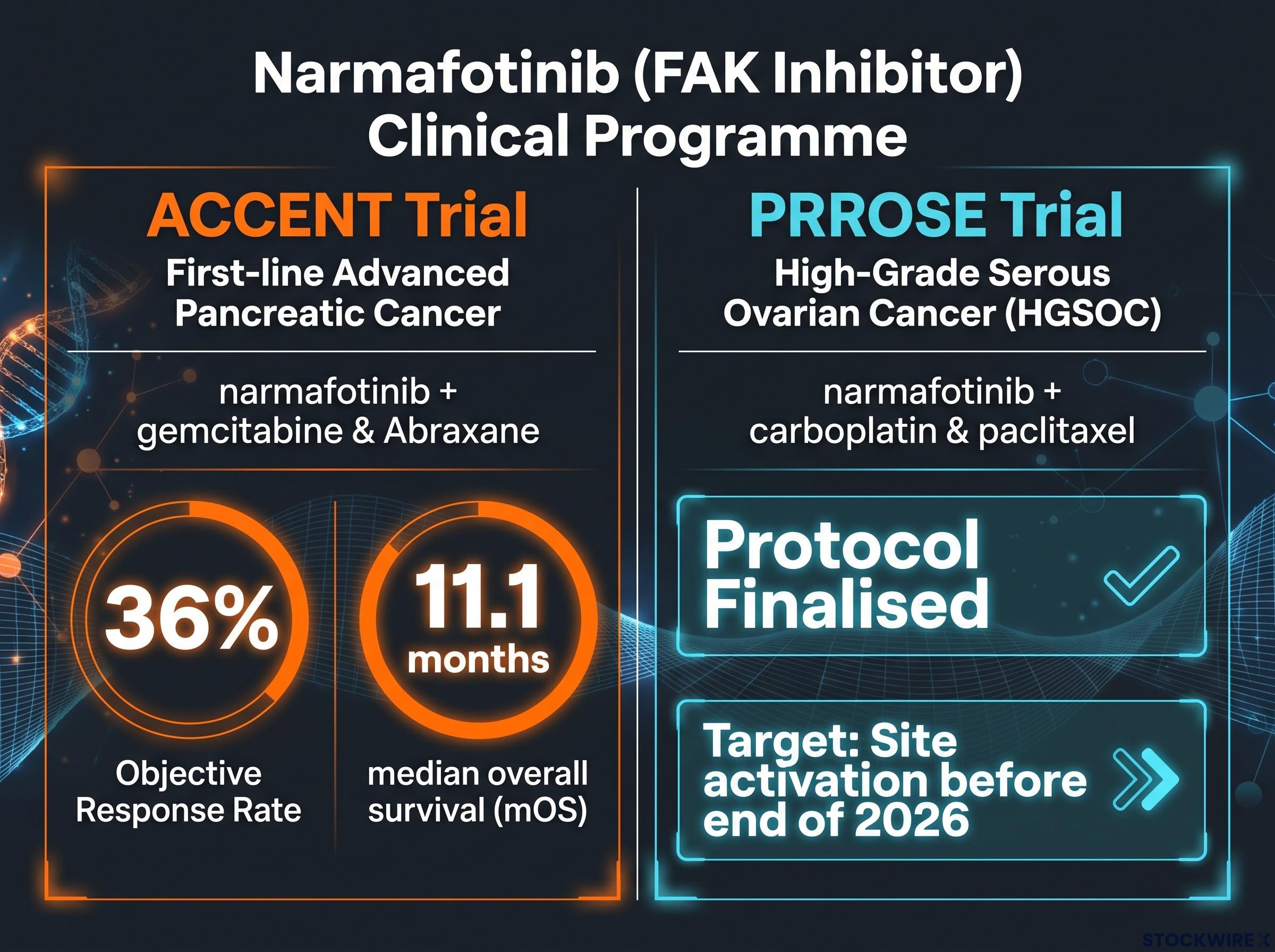
The PRROSE trial will evaluate the safety of narmafotinib, Amplia’s FAK inhibitor, in combination with standard-of-care chemotherapy (carboplatin and paclitaxel) in HGSOC patients. The study focuses on a patient population with a significant unmet medical need: approximately one in five ovarian cancer patients do not respond adequately to initial chemotherapy, limiting their ability to undergo surgery and contributing to poor clinical outcomes.
The study will also explore whether the addition of narmafotinib can increase the proportion of patients eligible for successful surgical resection.
Key parameters for the PRROSE trial include:
- Lead investigator: Dr Gwo Yaw Ho, Monash Health and Monash University
- Sponsor and coordinator: ANZGOG
- Target enrolment: Approximately 26 patients
- Sites: Selected clinical sites across Australia and New Zealand
- Site activation target: Before end of 2026
Dr Chris Burns, CEO and Managing Director, Amplia Therapeutics
“This is an important study for a patient population who currently have limited treatment options. We are grateful to the ANZGOG team, working closely with our clinical team at Amplia, for their diligent efforts to complete the trial protocol. We now look forward to finalising ethics submissions with the goal of opening trial sites before the end of the year.”
When big ASX news breaks, our subscribers know first
Understanding FAK inhibition and why it matters in ovarian cancer
Focal Adhesion Kinase (FAK) is a protein over-expressed in pancreatic cancer and an increasingly important target in solid tumours. FAK inhibitors like narmafotinib are designed to interfere with tumour survival mechanisms and the pathways that can make cancer cells resistant to chemotherapy.
Garvan Institute preclinical findings published in July 2026 identified four distinct mechanisms through which narmafotinib supports combination therapy: tumour fibrosis reduction, enhanced chemotherapy penetration, reduced metastatic spread, and downregulation of chemo-resistance genes, providing independent biological validation that spans all three of Amplia’s active clinical programmes.
In the context of HGSOC, this is particularly relevant. Poor chemotherapy response is the central clinical problem in the patient population PRROSE targets, reducing surgical eligibility and driving adverse outcomes. By combining narmafotinib with standard-of-care chemotherapy, the trial aims to assess whether FAK inhibition can address this resistance and improve the pathway to surgery.
For investors evaluating Amplia’s pipeline, this is an important consideration. The company’s development strategy is built around FAK inhibition across multiple cancer indications. PRROSE extends that approach into ovarian cancer, broadening the clinical validation of the underlying platform alongside the active ACCENT pancreatic cancer trial.
ACCENT trial progress reinforces narmafotinib’s clinical momentum
The ACCENT trial, which is evaluating narmafotinib in combination with the chemotherapies gemcitabine and Abraxane in first-line patients with advanced pancreatic cancer, provides supporting context for the PRROSE study. The ACCENT trial has achieved an objective response rate of 36%, described as superior to chemotherapy alone, with a median overall survival (mOS) of 11.1 months reported.
Pancreatic cancer, like ovarian cancer, is characterised by a fibrotic tumour environment in which FAK plays a significant role. The activity observed in ACCENT offers a relevant, if distinct, data point as narmafotinib advances into the ovarian cancer setting through PRROSE.
Dr Gwo Yaw Ho, Lead Investigator, PRROSE trial
“Completion of the study protocol enables us to move towards evaluating this promising therapeutic approach in patients with high-grade serous ovarian cancer who are at increased risk of poor outcomes. We look forward to initiating the study and exploring the potential clinical benefit of combining narmafotinib with chemotherapy.”
What comes next for Amplia and the PRROSE trial
With the protocol finalised, the near-term milestones for PRROSE are clearly sequenced. Investors should track the following:
- Ethics approval submissions — imminent following protocol finalisation
- Site governance approvals across Australian and New Zealand clinical sites
- Site activation — targeted before the end of 2026
- Patient recruitment commencement following site activation
Amplia now operates a dual-indication clinical programme in pancreatic and ovarian cancer, both underpinned by its FAK inhibitor platform. PRROSE represents the company’s next scheduled catalyst, with site activation before year-end the key milestone that investors and the broader oncology community will be watching.
Ready to Track the Next Milestone in Amplia’s Ovarian Cancer Programme?
The PRROSE Phase 2 trial represents a significant expansion of Amplia Therapeutics’ FAK inhibitor platform into ovarian cancer, targeting a patient population with limited treatment options and a clear unmet medical need. With ethics submissions imminent and site activation targeted before the end of 2026, the near-term catalyst timeline is well defined.
Investors seeking a deeper understanding of narmafotinib’s clinical development across both the PRROSE and ACCENT programmes can explore Amplia Therapeutics’ full pipeline and investor resources at ampliatx.com. Staying across the ethics and site activation milestones will be key as the programme advances toward patient recruitment.