
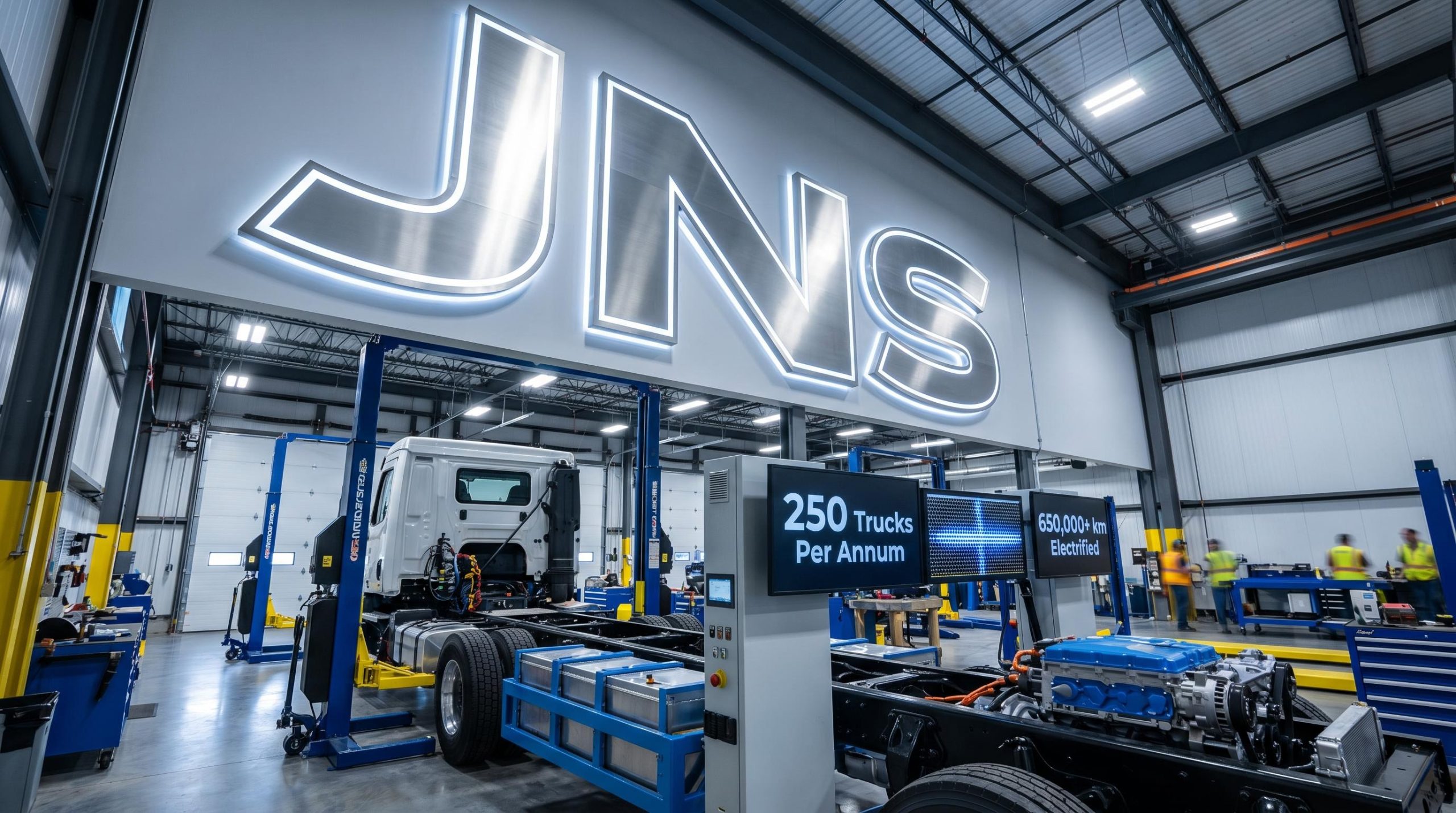
Janus Electric launches dealer-led national conversion network with South Australian facility
Janus Electric has moved from early-stage deployment to a distributed, dealer-led national conversion network, launching its first South Australian conversion centre in partnership with Archer Heavy Equipment. The facility represents Australia’s first dealer-led conversion centre, complementing existing headquarters operations in Fountaindale, NSW, and expanding national capacity to convert diesel trucks to electric drivetrains at scale.
Initial capacity at the Archer facility is expected to reach approximately 50 truck conversions in year one, with plans to scale to 150-200 conversions annually as demand builds. The launch will be marked by an industry event showcasing Archer’s flagship demonstrator — a fully converted electric heavy vehicle powered by Janus Electric’s swappable battery drivetrain platform.
This milestone signals a shift from early-stage deployment to a distributed, dealer-led national conversion network, establishing the foundation for scaled electrification of Australia’s heavy vehicle fleet.
When big ASX news breaks, our subscribers know first
National dealer network to deliver at least 250 conversions annually
Janus Electric is currently in discussions with partners across multiple states to expand its national conversion network. Additional dealership agreements are expected before year-end across:
- Victoria
- Queensland
- Western Australia
At initial rollout, the dealer network is expected to deliver conversion capacity of at least 250 trucks per annum, establishing the foundation for scaled electrification of Australia’s heavy vehicle fleet.
By combining vehicle conversion, battery infrastructure, and dealership rollout into a unified platform, Janus Electric is positioning for national-scale deployment aligned with emerging government funding priorities. This approach contrasts with fragmented, single-asset projects, positioning Janus for coordinated deployment that aligns with policy frameworks favouring networked infrastructure models.
What is heavy vehicle electrification and why does it matter?
Heavy vehicle electrification refers to converting existing diesel trucks (Class 6–8) to electric drivetrains rather than purchasing new electric vehicles. This approach allows fleet operators to transition their existing assets to electric power without the capital intensity of full vehicle replacement.
Janus Electric’s swappable battery model uses modular batteries that can be quickly exchanged at Charge & Change stations, eliminating long charging downtime. Trucks operate on battery packs that are swapped out when depleted, allowing near-continuous operation whilst batteries charge separately at depot facilities.
This matters for investors because heavy transport remains one of the hardest sectors to decarbonise. Freight currently consumes approximately 30% of Australia’s diesel, leaving the sector highly exposed to fuel price volatility and supply chain disruption. Janus offers a commercially viable conversion pathway available now, rather than waiting for new electric truck manufacturing to scale.
Approximately 80% of Australian heavy vehicles operate less than 200 kilometres per day on repeat routes, making them well suited to depot-based charging and battery swap models. This challenges the common perception that charging infrastructure is a constraint — Janus’s model works within existing operational patterns, requiring infrastructure deployment at centralised depot locations rather than across vast geographic areas.
Operational track record and commercial momentum
Janus Electric has established a proven operational track record across Australia and the United States, demonstrating both technology reliability and commercial traction. The company’s operational statistics validate the technical viability of its conversion platform and swappable battery infrastructure.
| Metric | Figure |
|---|---|
| Trucks converted (Australia & US) | 28 |
| Kilometres electrified | 650,000+ |
| Battery swaps completed | 3,600 |
| Charge & Change stations operating | 11 |
| Contracted conversions (Australia) | 111 |
| Average range per charge | 300km (load dependent) |
The company’s US expansion is progressing, with a Californian dealer activated, engine conversion kits exported, and first US truck conversions in progress. Janus Electric has secured first Californian government incentives of US$90,000–120,000 per truck, validating technology eligibility under one of California’s flagship decarbonisation incentive programs.
This government incentive eligibility in California provides dual validation — technology acceptance by regulatory authorities and a replicable funding model for other jurisdictions. The US$90,000–120,000 per truck incentive range substantially de-risks the conversion economics for fleet operators and demonstrates that Janus’s platform meets strict technical and environmental standards required for government support programs.
Economic and operational benefits for fleet operators
Conversion costs are significantly below new electric truck purchases, allowing fleet operators to avoid the capital intensity of full vehicle replacement. This cost advantage enables fleets to transition to electric power whilst preserving existing vehicle assets and avoiding the extended lead times associated with new vehicle orders.
Fleet operators can expect an estimated 30–60% reduction in operating costs through the transition to electric drivetrains. Additional benefits include lower maintenance requirements due to fewer moving parts in electric drivetrains, reduced exposure to fuel price volatility, and rapid deployment timelines that allow operators to begin realising cost savings quickly.
Ben Hutt, CEO, Janus Electric
“The demand is growing every day, and the economics are increasingly compelling, but even with conversion costs significantly below new electric trucks, these are still meaningful upfront investments for operators already under pressure from energy costs.”
These cost savings create an immediate value proposition for fleet operators, which drives conversion demand and recurring revenue from battery swaps. The operational economics become increasingly compelling as fuel prices remain elevated and regulatory pressure on emissions intensifies across transport sectors.
Policy momentum and the case for government support
Recent policy developments signal growing recognition of the opportunity in heavy transport electrification. The Australian Renewable Energy Agency’s ‘Driving the Nation’ programme announced a $25.3 million investment into electric truck infrastructure in March 2026, representing a significant policy commitment to the sector.
Current programmes such as ARENA’s Driving the Nation are increasingly favouring networked, shared infrastructure models rather than isolated projects. This policy trend aligns with Janus Electric’s national deployment approach, positioning the company favourably for government funding programmes that prioritise coordinated, national-scale deployment.
Ben Hutt, CEO, Janus Electric
“What’s needed now is the catalyst of government support. Targeted government incentives, aligned across Federal and State levels, would accelerate uptake materially and get more electric trucks on the road, faster.”
Policy alignment represents a potential catalyst for accelerated deployment. Janus’s networked model, combining vehicle conversion, battery infrastructure, and dealership rollout into a unified platform, positions the company favourably for government funding programmes seeking to deploy infrastructure at scale rather than supporting fragmented, single-asset projects.
Why South Australia is the natural launch market
South Australia presents a compelling environment for heavy vehicle electrification, underpinned by one of the highest penetrations of renewable energy in the grid globally. This energy profile creates strong synergies with Janus Electric’s swappable battery model.
Batteries can be charged during periods of high renewable generation, typically during daylight hours when solar generation peaks. Stored energy can then be deployed efficiently across freight operations throughout the day and evening, improving utilisation of renewable generation that might otherwise be curtailed. Battery infrastructure can contribute to grid stability and energy balancing by absorbing excess renewable generation during peak production periods and deploying that stored energy when grid demand requires.
In high-renewable grids such as South Australia, this model allows transport demand to act as a flexible load, improving utilisation of renewable generation whilst supporting grid stability. This creates a dual benefit of significantly lowering operating costs for fleet operators (estimated 30–60% reduction in energy costs), and improving utilisation of renewable energy at a system level.
Jared Archer, Managing Director, Archer Heavy Equipment
“We’re seeing strong demand from the Adelaide carrier community to convert diesel trucks to electric. Operators can see the cost savings and the operational benefits, and many are ready to convert immediately. We now have the technical capabilities and support in place to make this happen.”
High-renewable grids create a structural advantage for electric heavy vehicle operations. Lower costs for operators improve the economic case for conversion, whilst better utilisation of renewable generation at a system level makes the model more compelling in markets pursuing decarbonisation targets. This alignment between commercial economics and policy objectives positions South Australia as an ideal launch market for national expansion.
Next steps for Janus Electric’s national rollout
Additional dealership agreements are expected before year-end across Victoria, Queensland, and Western Australia, expanding the national conversion network beyond the initial South Australian facility. The national conversion capacity target is at least 250 trucks per annum from the dealer network at initial rollout, with potential to scale further as additional facilities come online and existing centres ramp production.
Continued US expansion represents a secondary growth vector, with Californian operations progressing and government incentive eligibility validated. Janus Electric is establishing the foundation for scaled electrification of Australia’s heavy vehicle fleet, combining vehicle conversion, battery infrastructure, and dealership rollout into a unified platform aligned with emerging policy frameworks.
Key upcoming milestones include:
- Additional dealership agreements (Victoria, Queensland, Western Australia) before year-end
- Scale Archer facility to 150-200 conversions annually
- Continue US dealer activation and conversions
Want the Next Clean Energy Breakout in Your Inbox?
Join 20,000+ investors getting FREE breaking ASX news delivered within minutes of release, complete with in-depth analysis. Click the “Free Alerts” button at Big News Blast to start receiving alerts the moment market-moving announcements hit the ASX across Tech, Healthcare, Finance, Manufacturing and more.