

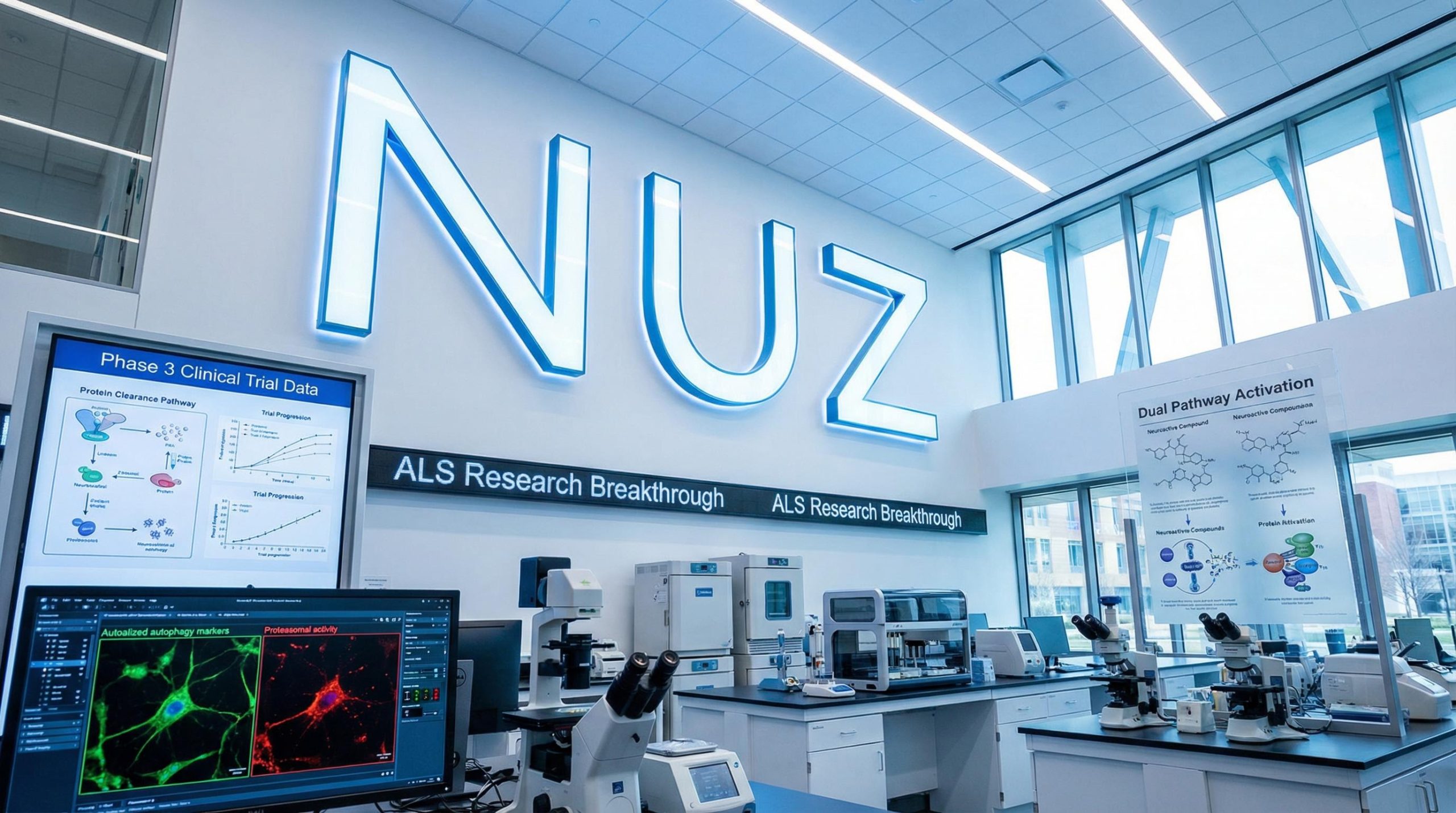
Neurizon Therapeutics (ASX: NUZ) has released new Neurizon NUZ-001 protein clearance data demonstrating that its lead compound activates two distinct cellular systems responsible for removing damaged proteins in neurons. The preclinical findings show NUZ-001 increases activity in both autophagy and proteasomal pathways, representing a multi-pathway approach that may differentiate the therapy from single-target treatments in neurodegenerative disease.
Neurizon preclinical data reveals NUZ-001 activates dual protein clearance pathways
The preclinical study measured protein clearance activity in human iPSC-derived neurons, a physiologically relevant cellular model. Results demonstrated that both NUZ-001 and its sulfone metabolite reduced levels of p62 and LC3, two established markers of autophagic activity. These reductions indicate enhanced autophagic flux, meaning cells are more efficiently clearing aggregated proteins through this pathway.
In parallel, NUZ-001 treatment increased proteasomal activity at multiple concentration levels, measured using the Proteasome Glo assay. Statistical significance was achieved across both pathways (p<0.05 vs vehicle control), providing quantifiable evidence of dual-pathway activation.
This represents a differentiated mechanism compared to therapies targeting only autophagy or only the proteasome. By activating both systems simultaneously, NUZ-001 may support a broader restoration of cellular protein balance in neurons affected by neurodegenerative disease.
The finding that both the parent compound and its metabolite demonstrate similar activity profiles suggests the biological effect may be sustained following administration, a factor relevant to clinical translation.
When big ASX news breaks, our subscribers know first
Understanding protein clearance and why it matters in ALS
Neurons maintain protein homeostasis through natural quality-control systems that identify and remove damaged or misfolded proteins. When these clearance systems function properly, cells remain healthy. When they fail, abnormal proteins accumulate, leading to neuronal dysfunction and cell death.
Two primary pathways manage this clearance process. Autophagy handles bulk degradation of larger protein aggregates, essentially breaking down damaged cellular components in specialised compartments. The proteasome provides selective removal of smaller protein aggregates, targeting specific proteins marked for destruction.
In Amyotrophic Lateral Sclerosis (ALS), impairment of these protein clearance pathways is a recognised central feature. Neurons become overwhelmed by accumulating protein aggregates, contributing to the progressive motor neuron degeneration that characterises the disease.
| Autophagy Pathway | Proteasome Pathway |
|---|---|
| Bulk degradation of larger aggregates | Selective removal of smaller aggregates |
| Processes damaged organelles and protein clumps | Targets specific proteins marked for destruction |
| Measured via p62 and LC3 protein levels | Measured via proteasomal activity assays |
| Critical for cellular housekeeping | Essential for protein quality control |
Targeting protein clearance represents a biologically rational approach to ALS because it addresses a fundamental mechanism of disease progression rather than treating downstream symptoms.
Why multi-pathway activation could prove advantageous
Single-pathway therapies face a limitation. If only autophagy is enhanced but the proteasome remains impaired, the cell still struggles to maintain protein balance. Conversely, boosting proteasomal activity alone may not address larger protein aggregates that require autophagic processing.
NUZ-001’s ability to activate both pathways simultaneously may offer broader cellular benefit. The two systems work complementarily, with autophagy handling bulk clearance and the proteasome providing precision removal. Enhancing both creates a more comprehensive restoration of the cell’s natural protein management capacity.
The company’s preclinical data specifically measured p62 and LC3 protein levels to assess autophagy, both of which decreased following NUZ-001 treatment. Simultaneously, the Proteasome Glo assay demonstrated increased proteasomal activity. These dual effects were observed at multiple concentration levels and achieved statistical significance compared to vehicle controls.
Study methodology and key findings
The experiments used human iPSC-derived neurons as the cellular model. These induced pluripotent stem cell-derived neurons provide physiologically relevant human cells rather than animal models, strengthening the translational relevance of the findings.
Researchers measured established biomarkers for each pathway. For autophagy, they quantified p62 and LC3 protein levels, normalising results to total nuclei count. For proteasomal activity, they used the Proteasome Glo assay with activity normalised to vehicle control. Rapamycin served as a positive control for autophagy activation.
Sergio Duchini, Interim Executive Chair
“These findings provide additional insight into the biological activity of NUZ-001 and reinforce our understanding of how it may support key cellular processes disrupted in neurodegenerative diseases. The observed activity across multiple protein clearance pathways is particularly important, as impairment in these systems is widely recognised as a central feature of diseases such as ALS. While these results are preclinical, they contribute to the growing body of evidence supporting NUZ-001 as we continue its evaluation in the HEALEY ALS Platform Trial.”
The study yielded three core findings:
- NUZ-001 reduced p62 and LC3 protein levels, indicating enhanced autophagic flux and more efficient degradation of protein aggregates
- NUZ-001 sulfone metabolite showed a similar activity profile across both markers, suggesting sustained biological effect
- Proteasomal activity increased following treatment, demonstrating activation of a second, complementary clearance pathway
The fact that both parent compound and metabolite demonstrated activity strengthens the therapeutic profile. Metabolites often form in the body following drug administration, so biological activity from both forms suggests the clearance effect may be maintained over time.
Building the clinical case for NUZ-001 in ALS
These preclinical mechanism data arrive as NUZ-001 undergoes evaluation in the HEALEY ALS Platform Trial. The findings contribute to a growing evidence base supporting the biological rationale for the therapy, demonstrating measurable activity on cellular systems known to be impaired in ALS.
Neurizon’s strategy targets underlying disease biology rather than symptomatic management. By activating endogenous protein clearance pathways, NUZ-001 may support neuronal resilience against the accumulation of toxic protein aggregates. This approach differs from therapies that address downstream consequences of motor neuron dysfunction.
The multi-pathway mechanism could differentiate NUZ-001 in a competitive ALS treatment landscape. While several experimental therapies target single aspects of disease biology, NUZ-001’s dual activation of autophagy and proteasomal systems represents a broader intervention in cellular protein homeostasis.
Looking forward, the company is focused on:
- Continued evaluation in the HEALEY ALS Platform Trial to assess clinical efficacy
- Potential applicability to related neurodegenerative disorders where protein clearance impairment plays a role
- Growing the evidence base supporting NUZ-001’s biological activity and mechanism of action
NUZ-001 remains an investigational product and is not approved for commercial use in any jurisdiction. The preclinical findings strengthen the scientific foundation supporting clinical development but require validation in human trials.
For investors, the release of mechanistic data during ongoing clinical evaluation provides scientific validation of NUZ-001’s activity at the cellular level. Demonstrating that the compound functions as intended in human neuronal models de-risks the clinical thesis by confirming biological activity on the targeted disease mechanisms. The multi-pathway approach may offer competitive differentiation if clinical data support efficacy.
Want the Next Biotech Breakthrough in Your Inbox?
Join 20,000+ investors receiving FREE breaking ASX biotech news within minutes of release, complete with in-depth analysis. Click the “Free Alerts” button at StockWire X to get market-moving announcements delivered straight to your inbox the moment they break.