
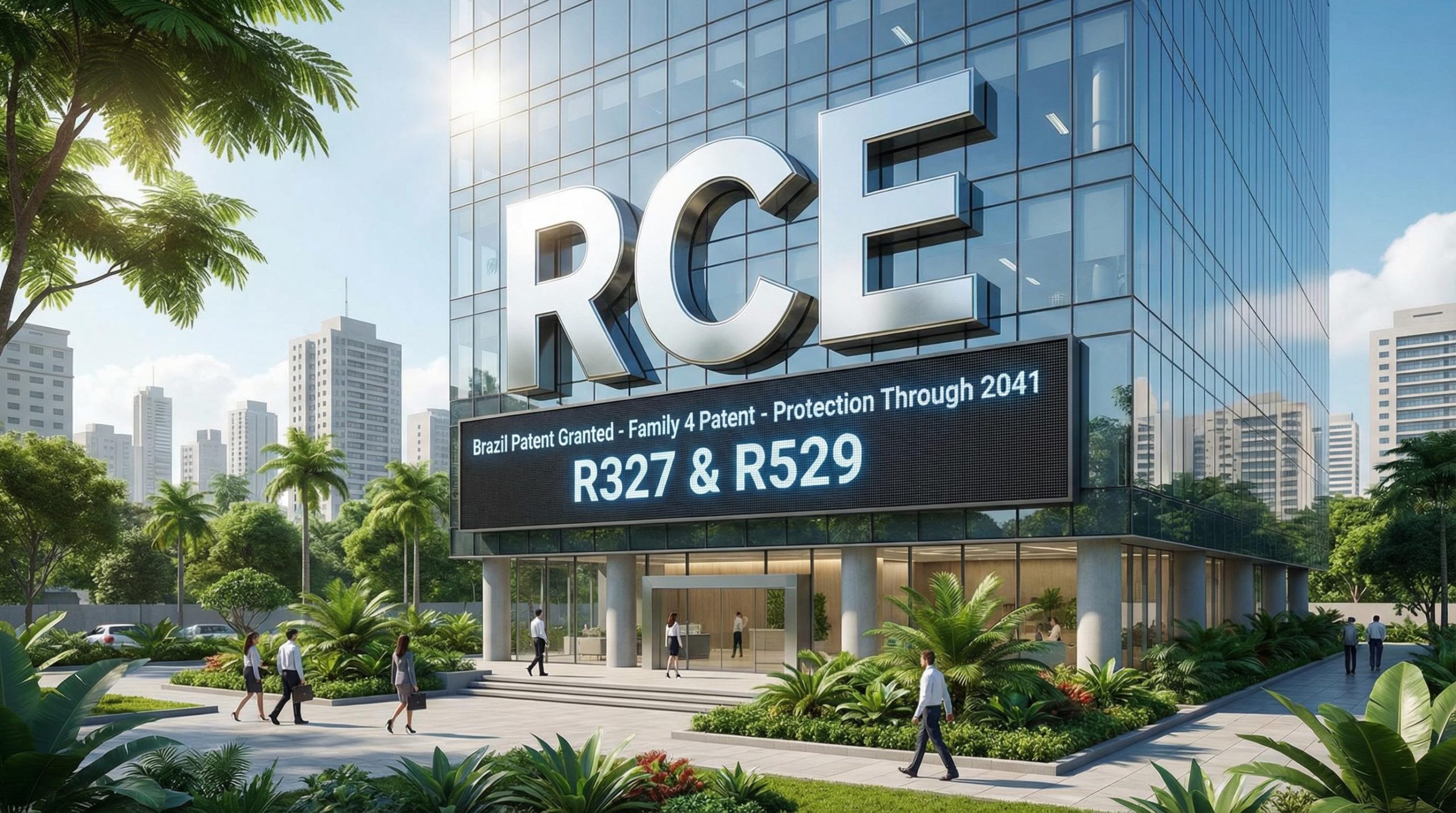
Recce Pharmaceuticals secures Brazilian patent for RECCE® anti-infectives through 2041
Recce Pharmaceuticals (ASX: RCE) has announced the Recce Pharmaceuticals Brazil patent grant, with the Brazilian National Institute of Industrial Property (INPI) formally granting a Family 4 patent covering R327 and R529. The patent provides protection extending to 2041.
This marks Recce’s seventh Family 4 patent globally, joining Australia, Canada, China, Hong Kong, Israel and Japan. Brazil represents South America’s largest antibiotics market, strengthening Recce’s commercial positioning ahead of potential product approvals.
Long-dated intellectual property protection in a major pharmaceutical market reduces commercial risk and enhances the company’s negotiating position with potential licensing partners or acquirers as clinical programmes advance.
When big ASX news breaks, our subscribers know first
What the Brazil patent covers
The patent granted by INPI encompasses both therapeutic applications and administration methods for Recce’s anti-infective platform. This broad protection maximises future commercial flexibility across multiple indications and delivery formats.
The Brazilian patent claims relate to RECCE® 327 (R327) and RECCE® 529 (R529), covering:
- Process for preparation of RECCE® anti-infectives
- Treatment applications for bacterial infections and viral infections
- Specific validated indications including Acute Bacterial Skin and Skin Structure Infections (ABSSSI), Diabetic Foot Infections, Burn Wounds, Lung Infections (Ventilator-Associated Pneumonia/Hospital-Acquired Pneumonia), Urinary Tract Infections, Gonorrhoea, Influenza and SARS-CoV-2
- Administration routes by oral, inhalation, transdermal delivery or injection (intravenous, intramuscular and into the bloodstream)
- Formulations including aerosol, gel, topical foam, ointment and impregnated dressings for application to skin or mucous membranes
The breadth of claims across multiple indications and delivery methods provides Recce with strategic optionality as it progresses its clinical development programmes.
Understanding patent families in biotech
A “Family 4 patent” refers to a specific group of related patent applications filed across multiple jurisdictions, all deriving from the same original invention disclosure. Patent families allow biotech companies to protect the same underlying technology in different geographical markets.
For drug developers, patent protection provides market exclusivity that justifies the substantial capital required for research and development. Without this protection, competitors could replicate products immediately upon approval, eliminating the commercial incentive to fund lengthy clinical trials and regulatory processes.
Each granted patent in a key market reduces commercial risk by securing exclusive rights to manufacture and sell the protected therapy. This exclusivity attracts licensing partners, supports premium pricing post-approval, and strengthens the company’s position in acquisition or partnership negotiations.
Brazil’s antibiotics market opportunity
Brazil represents a strategically important market for Recce’s anti-infective pipeline. As the largest antibiotics market in South America, it provides a meaningful long-term commercial runway if the company’s candidates achieve regulatory approval.
| Metric | 2024 | 2033 Projected |
|---|---|---|
| Brazil antibiotics market revenue | USD 774.5 million (~AUD 1.09 billion) | USD 964.3 million (~AUD 1.36 billion) |
| CAGR (2025-2033) | — | 2.4% |
A growing market exceeding USD 1 billion with intellectual property protection through 2041 provides Recce with commercial optionality over the next two decades. This assumes clinical success and regulatory approval for its anti-infective candidates.
Recce’s intellectual property portfolio is focused on protection in leading antibiotic markets, with Brazil being one of the world’s largest and the largest in South America.
Global patent portfolio now spans seven jurisdictions
The Brazil patent grant expands Recce’s Family 4 patent coverage to seven countries. Further Patent Cooperation Treaty (PCT) submissions are in respective stages of review or allowed status.
Recce now holds Family 4 patents in the following jurisdictions:
- Australia
- Brazil
- Canada
- China
- Hong Kong
- Israel
- Japan
A diversified global patent portfolio positions Recce to pursue commercialisation or licensing across multiple major pharmaceutical markets. This reduces geographical concentration risk and provides flexibility to enter partnerships on a regional or global basis.
The company’s strategy of securing protection in leading antibiotics markets aligns with the commercial value of its anti-infective platform, particularly for R327 which targets serious bacterial infections including superbug forms.
Management commentary
Chief Executive Officer James Graham framed the Brazil patent grant as reinforcing Recce’s intellectual property-first commercialisation strategy.
James Graham, CEO, Recce Pharmaceuticals
“We thank the Brazilian National Institute of Industrial Property for their recognition of Recce’s platform technology. Patent protection is fundamental to Recce, and we are encouraged by the expansion of our patent portfolio into Brazil, South America’s largest antibiotic market. As we look to address the urgent and growing global burden of antibiotic-resistant superbugs, this granted patent is yet another intellectual property milestone.”
The statement emphasises the foundational role of intellectual property in Recce’s development strategy as it advances towards potential commercialisation.
What comes next for Recce Pharmaceuticals (ASX: RCE)
Recce’s anti-infective pipeline comprises three patented, broad-spectrum, synthetic polymer candidates designed to address antibiotic-resistant superbugs:
- R327: Intravenous and topical therapy being developed for serious and potentially life-threatening infections due to Gram-positive and Gram-negative bacteria, including superbug forms
- R435: Oral therapy for bacterial infections
- R529: Therapy targeting viral infections
The World Health Organization (WHO) added R327, R435 and R529 to its list of antibacterial products in clinical development for priority pathogens, recognising Recce’s efforts to combat antimicrobial resistance.
The US FDA granted R327 Qualified Infectious Disease Product (QIDP) designation under the Generating Antibiotic Initiatives Now (GAIN) Act. This provides Fast Track Designation and 10 years of market exclusivity post-approval in the United States.
R327 is included on The Pew Charitable Trusts’ Global New Antibiotics in Development Pipeline as the sole synthetic polymer and sepsis drug candidate in development.
Recce wholly owns its automated manufacturing, which supports current clinical trials. The Brazil patent adds to a regulatory and intellectual property foundation that could support future licensing discussions or partnership negotiations as clinical programmes advance.
Want to Explore Recce’s Anti-Infective Patent Portfolio?
The Brazil patent extends Recce’s intellectual property protection to 2041 in South America’s largest antibiotics market, adding commercial optionality as R327 and R529 progress through clinical development. This seventh Family 4 patent strengthens the company’s negotiating position with potential partners.
For detailed information on Recce’s global patent strategy, clinical pipeline, and regulatory milestones, visit the Recce Pharmaceuticals investor centre. Access comprehensive updates on the company’s anti-infective platform and development timeline.