
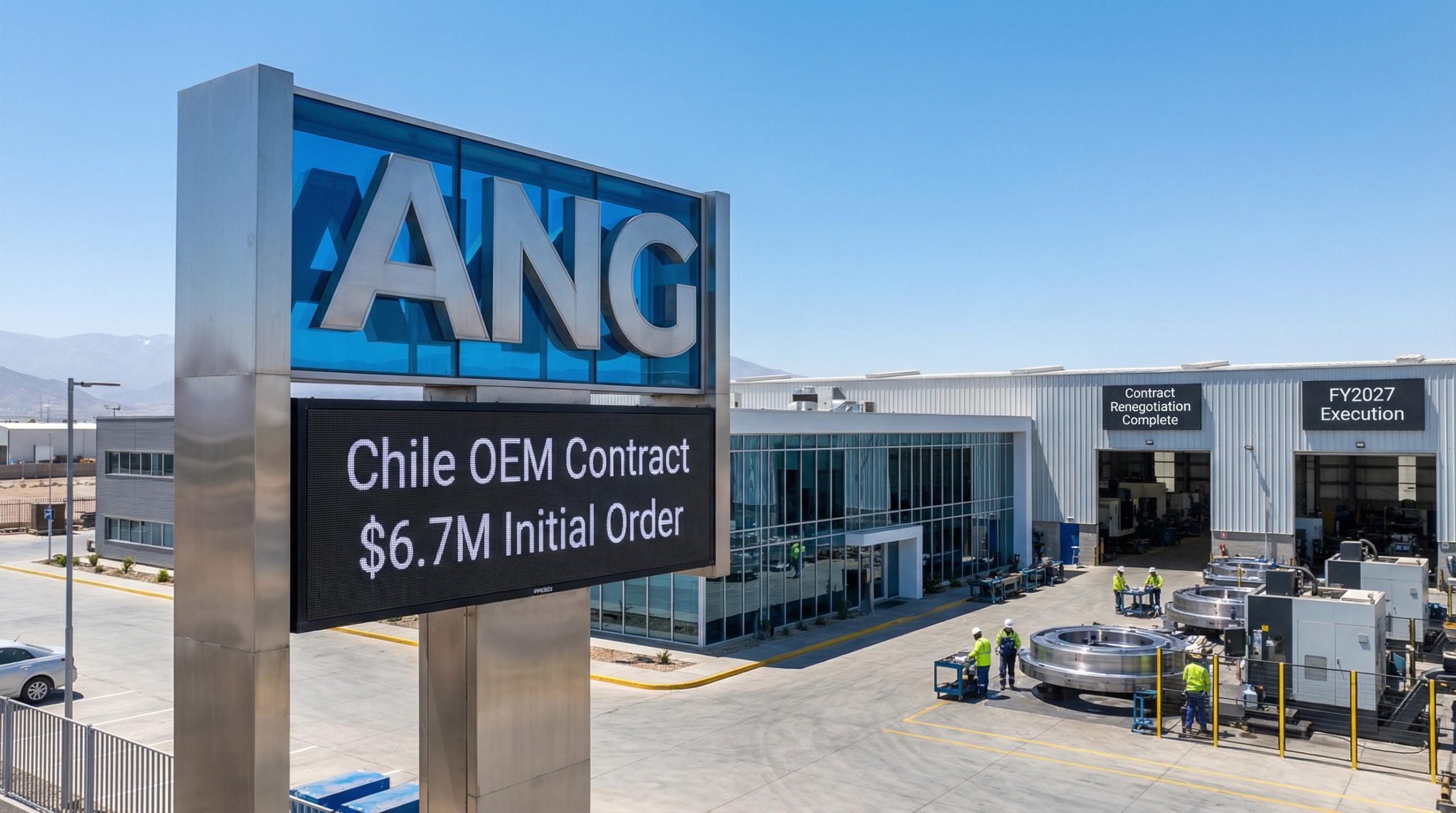
Austin Engineering renegotiates Chile OEM contract to restore profitability
Austin Engineering (ASX: ANG) has successfully renegotiated its Chile original equipment manufacturer (OEM) contract, securing improved pricing and payment terms after suspending the previously loss-making arrangement. The renegotiated Austin Engineering Chile OEM contract includes an initial purchase order valued at $6.7 million, with deliveries expected to commence from May 2026 and execution occurring principally into FY2027.
The legacy contract had been generating recurring EBITDA losses for Austin’s South American operations. Management demonstrated disciplined capital allocation by suspending new orders under the unprofitable terms while maintaining the strategic customer relationship. The remaining orders under the previous contract iteration are scheduled for completion in April 2026.
The revised pricing structure aims to return the contract to targeted profitability levels, addressing both direct bottom-line impacts and flow-through inefficiencies across Austin’s Chilean operations. The volumes associated with the renegotiated contract are not material to FY2026 and do not impact the company’s current guidance for the fiscal year.
Austin expects the relationship with the OEM customer to continue beyond fulfilment of the initial order, reflecting the strategic importance of both the customer and Austin’s position in the Chilean mining equipment market.
When big ASX news breaks, our subscribers know first
Why contract discipline matters for mining equipment suppliers
OEM contracts involve manufacturing equipment to another company’s specifications, often with fixed pricing agreed months or years in advance. While these arrangements can provide revenue certainty, they expose manufacturers to input cost volatility and operational inefficiencies that erode margins over time.
The risks inherent in fixed-price OEM arrangements include:
- Input cost inflation: Rising steel, labour, and freight costs cannot be passed through to customers under fixed-price terms
- Specification complexity: Custom manufacturing requirements may demand more resources than originally estimated, reducing operational efficiency
- Payment timing: Extended payment terms can strain working capital, particularly when combined with thin margins
Austin’s situation demonstrates why suspending unprofitable volume can be more value-accretive than maintaining revenue at any cost. The legacy contract was not only generating direct losses but also consuming operational capacity that could be deployed more profitably elsewhere in the business.
South American turnaround gains momentum
The Austin Engineering Chile OEM contract renegotiation forms part of a broader operational improvement programme across Austin’s South American business. The cessation of recurring EBITDA losses from the legacy contract represents a tangible step in the region’s turnaround, alongside other operational enhancements being implemented in Chile.
Management’s willingness to suspend loss-making activities while preserving the customer relationship signals a structured approach to regional profitability recovery. The renegotiation maintains Austin’s market position with a strategically important customer whilst establishing commercial terms that reflect the engineering value Austin delivers.
Sy van Dyk, CEO and Managing Director
“Our determination to take in hand operational issues under our control is strongly reflected in this re-negotiation. The legacy OEM contract significantly detracted not only directly from our bottom-line profitability, but also in the flow through impacts to efficiency elsewhere.”
The improved payment terms secured in the renegotiation should also support better working capital management, a key focus area for Austin’s Group strategy.
Contract timeline and financial impact
The transition from legacy terms to the renegotiated contract follows a clear timeline, with the company maintaining operational continuity throughout the changeover period.
| Milestone | Timing |
|---|---|
| Legacy orders completed | April 2026 |
| New contract deliveries begin | May 2026 |
| Initial order execution | Principally FY2027 |
| Initial order value | $6.7 million |
The phasing of deliveries into FY2027 means investors should not expect material financial contribution in the current fiscal year. However, the removal of recurring losses provides an immediate benefit to South American operational performance.
Austin’s focus on margin quality and cash conversion
The renegotiation reflects management’s stated priority of disciplined contract management and pricing outcomes that reflect Austin’s engineering capability. Rather than chasing revenue volume, the company is pursuing sustainable profitability and improved cash conversion across the Group.
Sy van Dyk stated: “Austin will continue to focus on disciplined contract management, pricing outcomes that reflect the value of its engineering capability, and improving cash conversion across the Group.”
This approach carries particular significance given Austin’s historical challenges in South American operations. By demonstrating willingness to walk away from unprofitable work, management signals a fundamental shift in commercial discipline that should support margin recovery over time.
Key investment takeaways from this announcement:
-
Margin prioritisation: Management is demonstrating commercial discipline by renegotiating unprofitable contracts rather than accepting revenue at any cost, a positive signal for long-term profitability.
-
South American turnaround progress: The contract renegotiation contributes to broader operational improvements in Chile, with the cessation of recurring EBITDA losses providing tangible evidence of regional performance recovery.
-
Strategic relationship preservation: Austin maintained its position with a strategically important customer whilst securing improved commercial terms, balancing market presence with financial discipline.
Want Breaking Industrial News Before the Market Reacts?
Join 20,000+ investors receiving FREE ASX industrial sector alerts within minutes of release, complete with expert analysis. Big News Blast delivers breaking announcements straight to your inbox before the market moves. Click the “Free Alerts” button to start receiving real-time coverage of contract wins, operational updates, and sector developments.