
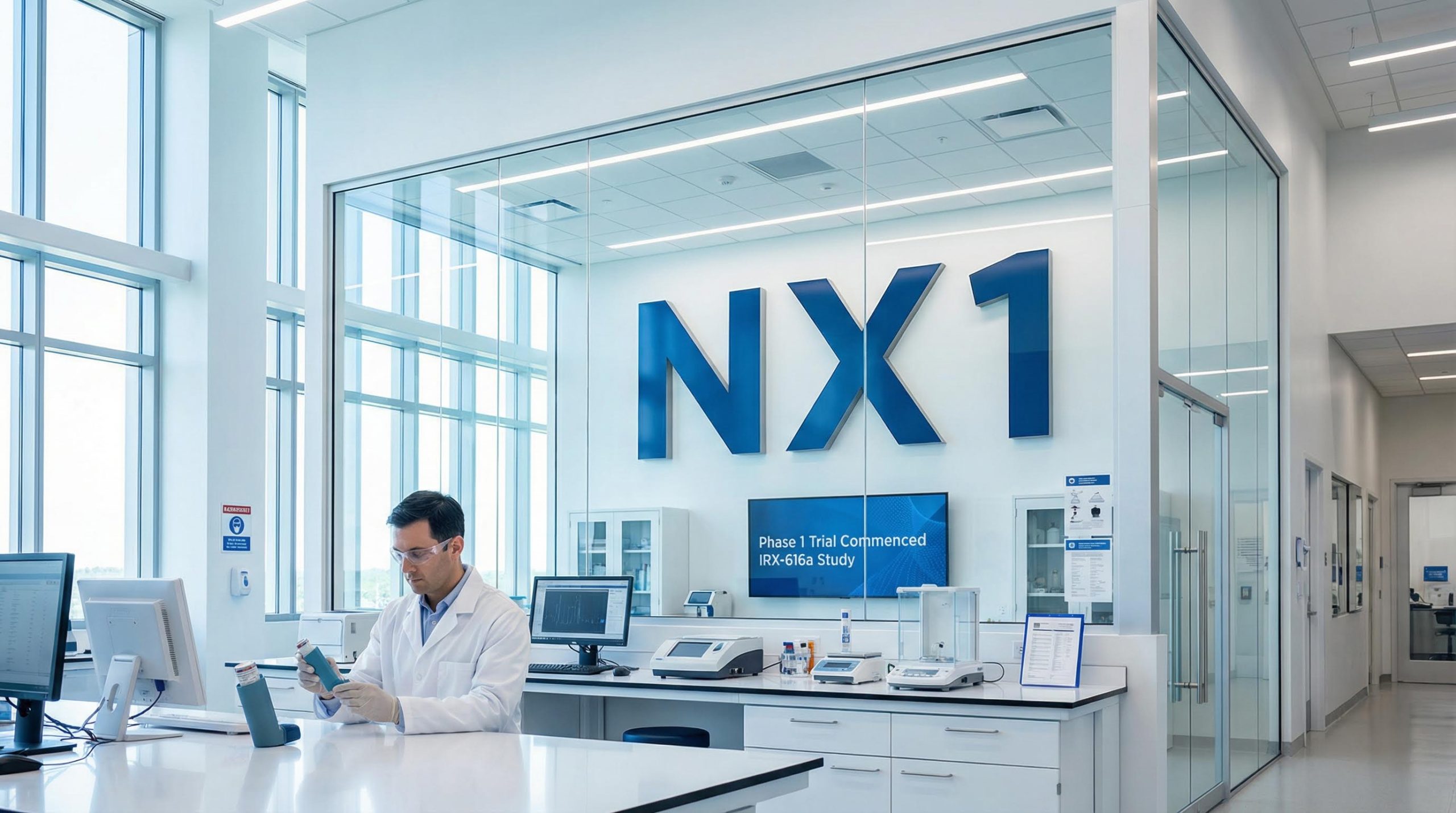
Nexalis Therapeutics has screened the first eligible participant in its Phase 1 clinical trial of IRX-616a, marking the commencement of first-in-human testing for its inhaled cannabidiol (CBD) treatment targeting panic disorder. The randomised, double-blind, placebo-controlled study will enrol up to 24 healthy volunteers across three dose cohorts at CMAX in Adelaide, with an independent Safety Review Committee overseeing dose escalation.
Nexalis Therapeutics screens first participant in Phase 1 trial for inhaled panic disorder treatment
The Phase 1 study (Protocol IRX616-003) represents a clinical milestone for (ASX: NX1), advancing the company’s differentiated delivery platform into human validation. IRX-616a delivers 2.5 mg of CBD per actuation via a pressurised metered-dose inhaler, designed for rapid systemic absorption in acute panic situations. The inhalation route bypasses first-pass hepatic metabolism, potentially enabling faster onset compared to traditional oral medications.
The study’s four key elements are:
- Trial commencement: First eligible participant screened and recruited in first-in-human IRX-616a study
- Study design: Randomised, double-blind, placebo-controlled single ascending dose trial with independent Safety Review Committee oversight
- Delivery platform: Inhaled CBD designed for rapid systemic absorption and fast onset
- Study objective: Define pharmacokinetic, safety and tolerability profile to inform clinical development in acute anxiety-related indications
Chief Executive Officer Darryl Davies stated the screening marks an important first step in advancing the treatment toward addressing unmet need in panic disorder. The company is developing what it describes as a world-first, given there are currently no FDA-approved drugs for treating panic disorder via inhalation.
When big ASX news breaks, our subscribers know first
How inhaled CBD differs from traditional anxiety treatments
The inhalation delivery mechanism represents a departure from conventional oral medications used to manage anxiety disorders. When CBD is inhaled, it enters the bloodstream directly through the lungs, bypassing the liver’s metabolic processes that break down orally administered drugs before they reach systemic circulation. This pharmacokinetic difference potentially allows for faster onset of action, a critical consideration for acute panic episodes where rapid symptom relief matters.
Traditional oral anxiety medications typically require 30 to 60 minutes to produce noticeable effects as they must pass through the digestive system and liver before entering the bloodstream. During a panic attack, which can cause severe physical symptoms including rapid heartbeat, shortness of breath, and intense fear, this delay presents a treatment gap. The pressurised metered-dose inhaler format aims to address this gap by delivering CBD directly to the respiratory system for immediate absorption.
No FDA-approved inhaled treatments currently exist for panic disorder, positioning IRX-616a as a potential first-mover in this delivery format for the indication. The company is pursuing US FDA approval via the 505(b)(2) regulatory pathway, which allows sponsors to rely on existing safety and efficacy data for components of their formulation, potentially accelerating development timelines.
Phase 1 study design and endpoints
The trial follows a rigorous structure designed to establish baseline safety and pharmacokinetic parameters before progressing to patient populations. Participants will be enrolled across three sequential dose cohorts, with sentinel dosing and staggered enrolment protocols implemented to maximise safety oversight. Progression to each subsequent dose level requires Safety Review Committee approval based on review of accumulated safety data.
| Parameter | Detail |
|---|---|
| Trial Phase | Phase 1 first-in-human |
| Design | Randomised, double-blind, placebo-controlled |
| Participants | Up to 24 healthy volunteers |
| Dose Format | Single ascending dose across 3 cohorts |
| Oversight | Independent Safety Review Committee |
The primary objective is to characterise plasma pharmacokinetic profiles of CBD and its major metabolites following single inhaled doses under fasted conditions. This data will inform appropriate dosing regimens for subsequent trials. Secondary objectives focus on comprehensive safety evaluation, including monitoring of adverse events, laboratory parameters, vital signs, electrocardiogram (ECG) assessments, and Columbia-Suicide Severity Rating Scale (C-SSRS) monitoring.
The C-SSRS monitoring is particularly relevant given the study’s focus on mental health indications, ensuring participant wellbeing throughout the trial. The study is being conducted at CMAX in Adelaide, a specialist early-phase clinical research unit with experience in first-in-human studies.
Market opportunity and development timeline
Panic disorder affects a substantial patient population, characterised by recurrent, unexpected panic attacks and persistent concern about future episodes, often leading to significant functional impairment. The Total Addressable Market for anxiety disorders and depression treatments is projected to reach US$13.3 billion by 2027, providing a substantial commercial opportunity for effective new therapies.
Darryl Davies, Chief Executive Officer
“Screening the first participant in our Phase 1 IRX-616a study marks an important first step in advancing IRX-616a toward the development of a potential treatment for panic disorder. Establishing the pharmacokinetic and safety profile in this first-in-human study is a critical foundation as we progress toward addressing the significant unmet need in acute panic and anxiety-related conditions. We are delighted to be developing a world-first, given there are currently no FDA approved drugs for treating Panic Disorder via inhalation.”
The Phase 1 trial is expected to complete dosing of the last participant before the end of June 2026, at which stage the company plans to commence Phase 2 trials in the patient population. This timeline provides near-term catalysts for the company as it advances toward potential FDA submission via the 505(b)(2) pathway.
Nexalis has secured a funding facility of up to $52.3 million to accelerate development across its clinical pipeline, providing capital to progress IRX-616a alongside other programs. The upcoming milestones include:
- Complete Phase 1 dosing (target: June 2026)
- Initiate Phase 2 in patient population
- Progress toward FDA submission via 505(b)(2) pathway
Broader pipeline context
IRX-616a sits within a diversified clinical pipeline at Nexalis, which includes three programs in active development. The $52.3 million funding facility supports advancement of IRX-211 for Breakthrough Cancer Pain and SRX-25 for Treatment-Resistant Depression, alongside the panic disorder program. All three programs share a common therapeutic approach focused on rapid-onset delivery mechanisms to address acute symptoms where treatment speed matters.
This multi-asset strategy provides multiple opportunities for clinical and commercial success, reducing dependence on any single program. The company describes itself as an Australian clinical-stage drug development company developing rapid onset therapies to address unmet medical needs in pain management and mental health sectors. Clinical indications have been selected in consultation with regulatory authorities, targeting areas where current treatment options may carry dependency concerns or fail to provide sufficiently rapid relief.
The company has stated it will announce further updates from the trial as material milestones are achieved.
Get Healthcare Breakouts Before the Market Reacts
Join 20,000+ investors receiving FREE breaking ASX healthcare news and in-depth analysis delivered within minutes of announcement. Click the “Free Alerts” button at Big News Blast to get clinical trial updates, regulatory milestones, and market-moving developments the moment they break.