
Adisyn Achieves 20dB Radar Reduction in Graphene Stealth Tech Proof-of-Concept
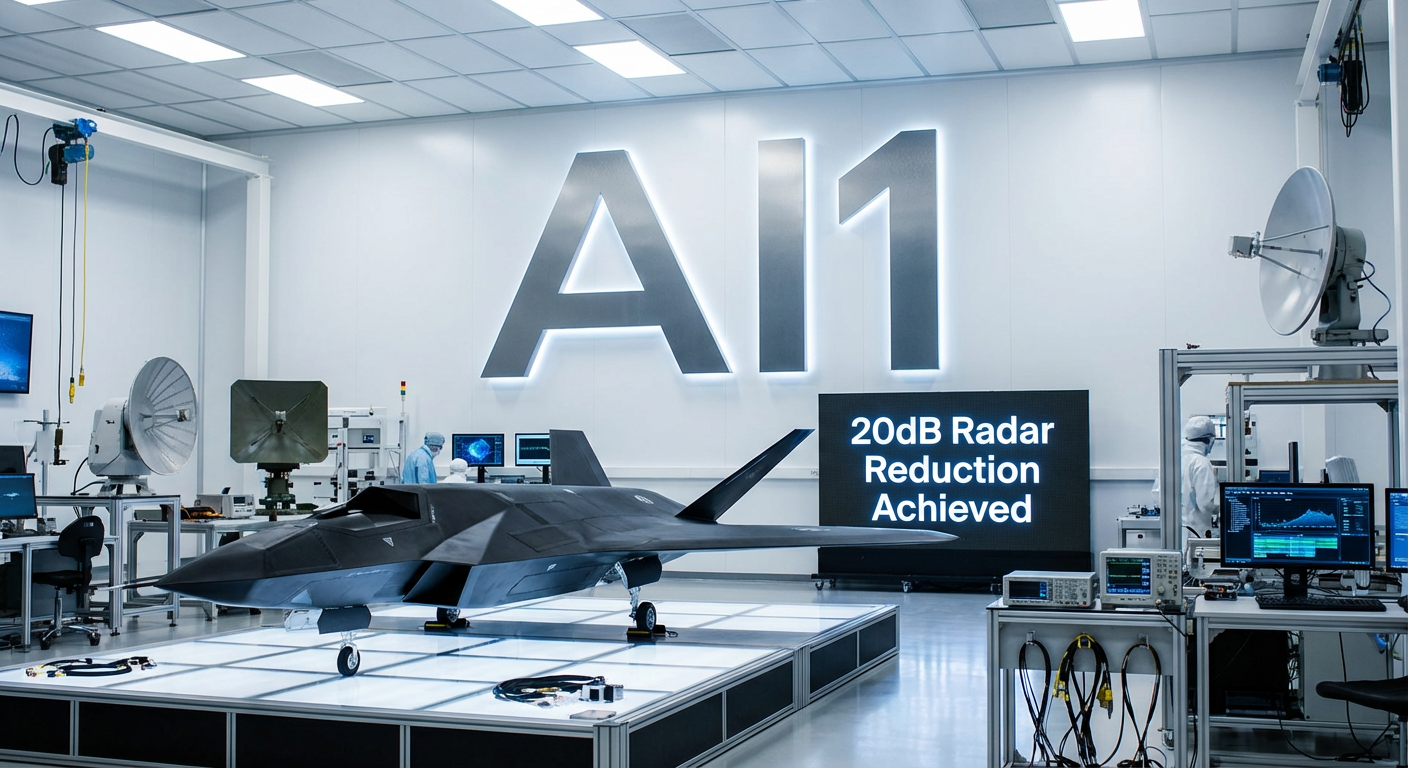
Adisyn (ASX: AI1) has completed initial proof-of-concept testing demonstrating that Adisyn graphene radar signature reduction technology can achieve up to 20dB reduction in radar reflection coefficient relative to baseline materials. The testing, conducted in collaboration with Ramot, the technology transfer company of Tel Aviv University, represents a secondary commercial opportunity that leverages the company’s existing graphene expertise without distracting from its core semiconductor interconnect program.
Laboratory testing of graphene-enhanced composite materials confirmed the 20dB reduction under controlled conditions, with further optimisation work now targeting 30dB reduction. The company holds a 12-month exclusive option to acquire perpetual rights for the technology under the existing collaboration framework, subject to agreed terms.
What radar signature reduction means for drone and defence applications
Radar signature management addresses a critical design consideration in the UAV, aerospace and defence sectors, particularly as unmanned platforms become smaller, lighter and more widely deployed. A decibel (dB) reduction in radar reflection directly translates to a smaller radar cross-section, the size of the target as “seen” by radar systems.
The practical implications are substantial. According to the company’s technical assessment, achieving the target 30dB reduction would shrink a radar cross-section by a factor of 1,000.
Physical Radar Cross-Section Impact
“If your drone originally appeared to a radar system as a 1-square-metre object, it now reflects radar waves with the intensity of an object measuring only 10 square centimetres, roughly the size of a large insect.”
This magnitude of reduction creates two tactical advantages in operational environments. First, it shrinks the reaction window available to adversaries. Even if the drone is eventually detected, detection occurs very close to the target, giving interception systems such as rapid-fire anti-aircraft guns or jammer networks only seconds to lock on and engage.
Second, it enables exploitation of ground clutter. Small drones already fly low and use topographical masking, but combining low-altitude flight with 30dB reduction makes the platform virtually invisible to many terrestrial radar systems, as it gets lost in the “clutter” of ground reflections.
Key performance metrics and targets
| Metric | Current Result | Target |
|---|---|---|
| Radar reflection reduction | 20dB | 30dB |
| Physical radar cross-section reduction factor | ~100x | ~1,000x |
| Commercial rights option | 12-month exclusive | Perpetual (if exercised) |
The company is at an early stage of technical validation. However, the Board considers that successful optimisation could position Adisyn within a specialised segment of the advanced 2D materials market focused on signature-aware composite systems. Technology has potential application in UAV, defence, aerospace, and advanced composite materials markets where radar signature management is critical.
When big ASX news breaks, our subscribers know first
Development pathway and scientific leadership
Following completion of the proof-of-concept, the research team will continue laboratory optimisation work. Further validation would be required to assess scalability, performance consistency, and commercial viability before any commercial deployment pathway is established.
The radar research program is led by Professor Pavel Ginzburg, Full Professor of Electrical Engineering at Tel Aviv University. Professor Ginzburg provides academic oversight of the program’s proof-of-concept phase, bringing specialised expertise in:
- Radar physics
- Electromagnetics
- Scattering control
Professor Ginzburg has published extensively in these fields, adding credibility to the technical claims and de-risking the early-stage R&D pathway through established academic methodology.
Commercial rights structure
Under the existing collaboration framework with Ramot, Adisyn holds a 12-month option to receive exclusive, perpetual rights for the technology. The option period provides time for further technical validation before commercial terms are finalised. Rights are subject to agreed terms that have not yet been locked in.
The next major ASX story will hit our subscribers first
Core semiconductor program remains on track
The radar signature initiative leverages Adisyn’s graphene materials expertise but does not alter the company’s primary semiconductor roadmap. The company’s core focus remains firmly on the development and commercialisation of its low-temperature ALD graphene deposition technology for semiconductor interconnect applications, which is anticipated to address the performance limits of copper interconnects and deliver faster, stronger, and more energy-efficient computer processing.
Management confirmed the semiconductor interconnect program is on schedule and making great progress. Progress on that program continues in accordance with previously disclosed milestones and will be reported separately. Shareholders will receive an update on the semiconductor program in the coming weeks.
The dual-track approach reflects Adisyn’s strategic positioning:
- Primary focus: Semiconductor interconnect graphene deposition using patented low-temperature Atomic Layer Deposition (ALD) process (update due within weeks)
- Secondary opportunity: Radar signature reduction for UAV, defence, and aerospace applications
The radar signature program is being advanced as a parallel but secondary stream. It could provide additional commercial opportunities that capitalise on the company’s capability in graphene without diverting resources from the semiconductor opportunity, which remains the imperative commercial focus.
Adisyn is an ASX-listed company specialising in the development of graphene-based solutions for the semiconductor industry and the provision of managed IT services for the SME market. The company’s broader technology platform is supported by Adisyn Services, which provides managed IT solutions, including cloud, cybersecurity and artificial intelligence, primarily to Australian SMEs. Further updates will be provided as material milestones are achieved in both the semiconductor and radar signature programs.
Want the Next Tech Breakthrough in Your Inbox?
Join 20,000+ investors getting FREE breaking ASX tech news delivered within minutes of release, complete with in-depth analysis. Click the “Free Alerts” button at StockWire X to start receiving real-time alerts the moment market-moving announcements drop.