
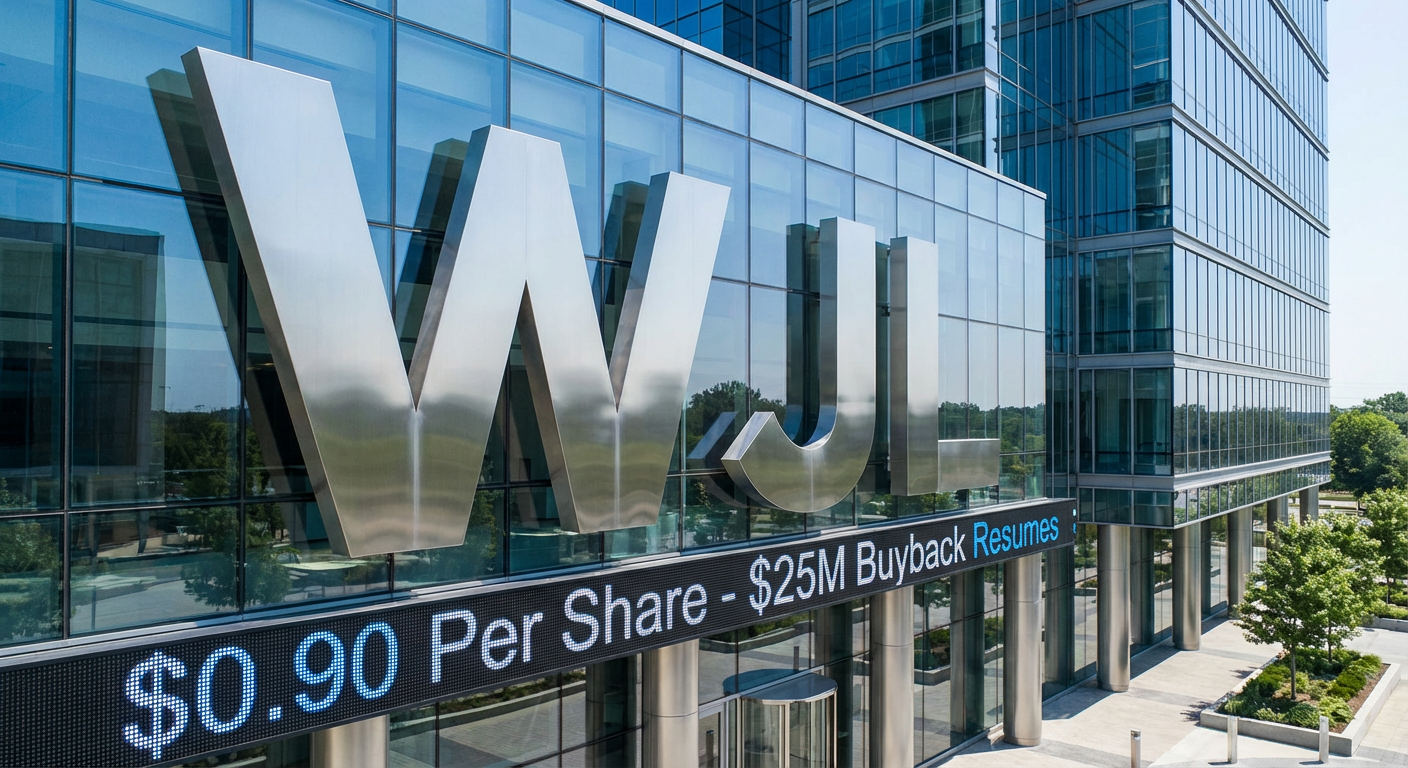
Webjet Group ends acquisition discussions, refocuses on growth strategy
Webjet Group (ASX: WJL) has formally ended acquisition talks with both Helloworld Travel Limited and BGH Capital after 12 weeks of due diligence, announcing on 13 February 2026 that neither party submitted a binding proposal consistent with their indicative offers. The board has now redirected management’s full attention to executing the company’s existing FY30 growth strategy, whilst confirming it remains open to future proposals that deliver compelling shareholder value with sufficient execution certainty.
Helloworld’s non-binding indicative offer valued Webjet shares at $0.90 per share via an all-cash scheme of arrangement, whilst BGH Capital’s revised proposal stood at $0.91 per share through an off-market takeover structure. Despite constructive engagement and full due diligence access, the Webjet board determined there was insufficient certainty that either party would deliver a recommendable binding proposal within an acceptable timeframe.
The decision removes a significant overhang for shareholders and demonstrates board discipline in protecting value rather than accepting proposals lacking execution certainty or appropriate pricing.
When big ASX news breaks, our subscribers know first
What happened with the Webjet acquisition proposals
Non-binding indicative offers represent preliminary proposals that allow potential acquirers to conduct due diligence before committing to binding terms. During this phase, boards assess whether indicative pricing will translate into firm, financeable offers that can be recommended to shareholders.
The distinction between Helloworld’s scheme of arrangement structure and BGH Capital’s off-market takeover approach is significant. A scheme of arrangement requires shareholder approval via a court-supervised process and typically needs 75% of votes cast to succeed, offering greater certainty of completion once agreed. An off-market takeover allows bidders to purchase shares directly from accepting shareholders without court involvement, though success depends on achieving sufficient acceptance levels.
The Webjet board’s statement that it “has not received a proposal from either party that is consistent with the respective indicative proposals or capable of being put to shareholders” indicates that binding terms fell short of initial indications. Boards require certainty of execution (including confirmed financing, regulatory approvals, and definitive transaction documents) before recommending shareholders accept any offer.
This outcome isn’t necessarily negative. It demonstrates governance protecting shareholders from uncertain or potentially undervalued transactions rather than accepting inadequate terms simply to complete a deal.
FY26 trading update confirms challenging conditions
The company’s online travel agency (OTA) brand relaunch in October 2025 has delivered encouraging trends in brand awareness and revenue per booking metrics. However, the trading environment has remained challenging in 2H26.
Webjet now expects Underlying EBITDA for FY26 to be in the range of $28 million to $29 million, excluding the performance of Webjet Business Travel. The business travel division is delivering in line with plan but represents a strategic investment phase, expected to reduce Underlying EBITDA by approximately $600,000 to $900,000 in 2H26.
| Metric | FY26 Guidance |
|---|---|
| Underlying EBITDA (excluding WBT) | $28m – $29m |
| WBT 2H26 EBITDA impact | ($600k) – ($900k) |
The guidance provides visibility on near-term performance expectations. The Webjet Business Travel investment demonstrates management’s commitment to strategic expansion despite the temporary earnings drag, positioning the division for future growth as the corporate travel market recovers.
$25 million share buyback programme resumes
Webjet has lodged the requisite notification to commence its on-market share buyback programme of up to $25 million on 13 February 2026. The buyback was paused following receipt of the Helloworld and BGH Capital proposals, which is standard practice during potential change of control discussions.
The resumption of the buyback programme represents both a capital management mechanism and a signal of board confidence in the company’s intrinsic value. Share buybacks reduce the number of shares on issue, increasing earnings per share for remaining shareholders whilst providing price support.
By resuming the buyback immediately following the cessation of acquisition discussions, the board signals its view that shares are undervalued relative to the rejected indicative offers. This provides a floor of support for the share price and demonstrates a commitment to returning capital to shareholders through this mechanism.
Strategic priorities under the FY30 plan
With acquisition discussions concluded, management returns full focus to executing the company’s FY30 growth plan. Chair Don Clarke outlined four strategic pillars:
- Driving growth in core businesses
- Expanding addressable markets
- Strengthening brand and customer engagement
- Continued technology investment to enhance customer experience
Don Clarke, Chair
“Webjet management will now be fully focused on executing our FY30 plan – driving growth in our core businesses, expanding our addressable markets, strengthening brand and customer engagement and making continued investment in technology to enhance the customer experience. The Webjet Board and management team look forward to delivering returns to shareholders over the medium and long term.”
These priorities provide clarity on the company’s strategic direction now that the M&A overhang has been removed. The emphasis on brand investment, market expansion, and technology development positions Webjet to capitalise on travel market recovery whilst building long-term competitive advantages.
What this means for Webjet Group shareholders
The cessation of acquisition discussions removes uncertainty that has potentially constrained the share price during the 12-week due diligence period. Management can now dedicate full resources to operational execution rather than managing parallel transaction processes.
The $25 million buyback programme provides immediate capital return whilst the board’s stated openness to future proposals maintains optionality for shareholders. Any future approaches would need to demonstrate compelling value and execution certainty to warrant board recommendation, setting a clear bar for potential acquirers.
Shareholders should focus on the FY30 plan execution and the OTA brand relaunch momentum. The encouraging trends in brand awareness and revenue per booking provide early validation of the strategic investment, though near-term trading conditions remain challenging. The Webjet Business Travel investment phase positions the company for growth as corporate travel demand recovers.
The board’s disciplined approach to protecting shareholder value, demonstrated by rejecting inadequate proposals and resuming the buyback, provides confidence in governance. The medium and long-term focus articulated by management shifts attention from short-term M&A speculation to operational delivery and strategic growth initiatives.
Want the Next Travel Sector Breakout in Your Inbox?
Join 20,000+ investors getting FREE breaking ASX news delivered within minutes of release, complete with in-depth analysis. Click the “Free Alerts” button at StockWire X to start receiving Consumer Discretionary alerts the moment market-moving announcements drop.