
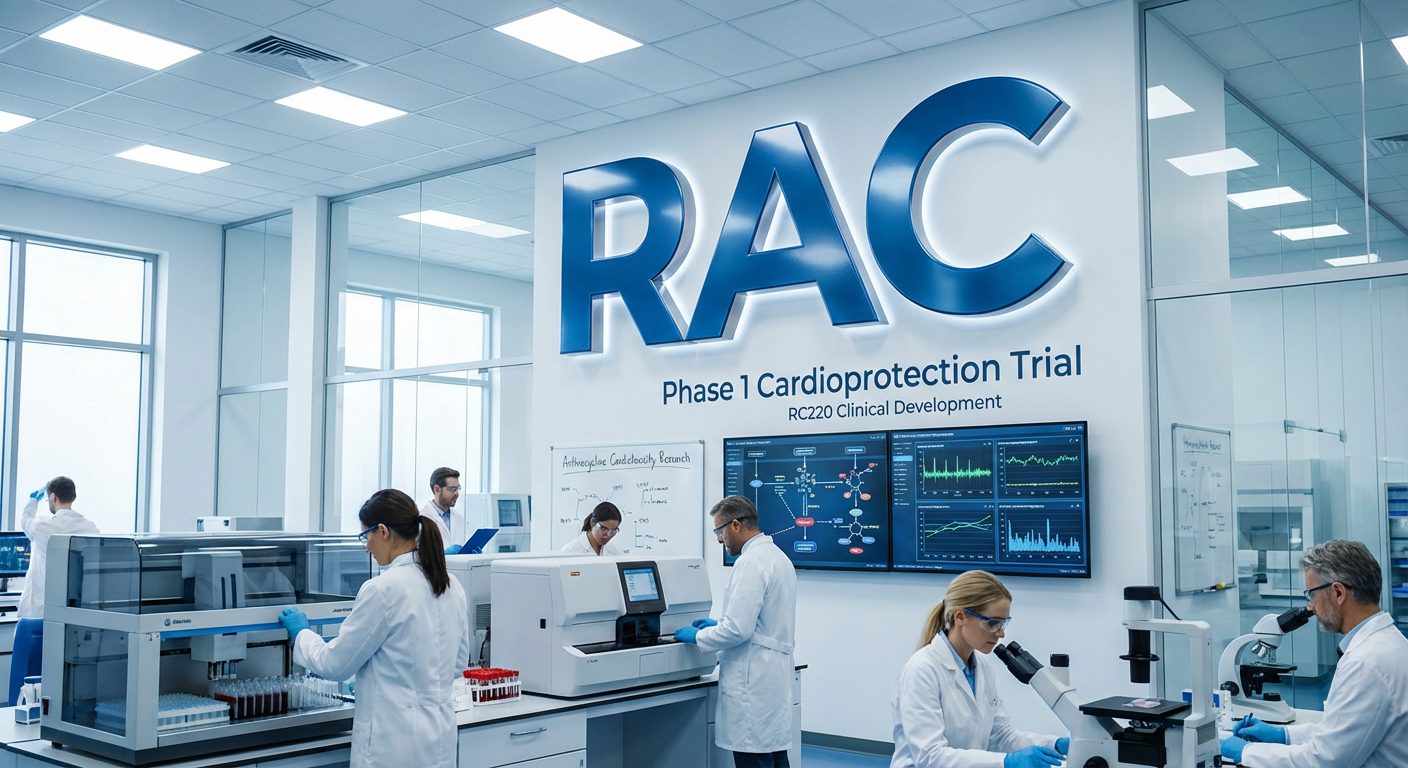
Racura develops novel blood test to accelerate RC220 cardioprotection data by two years
Racura Oncology (ASX: RAC) has developed a Racura RC220 Cardioprotection Blood Test designed to assess the cardioprotective potential of its lead cancer therapy candidate, RC220. The blood-based molecular test will use patient samples from the RAC-010 cardioprotection and anticancer synergy (CPACS) trial to quantify protective effects on the molecular pathways responsible for anthracycline cardiotoxicity. Racura scientists developed the test following the October 2025 discovery of the mechanism of action for (E,E)-bisantrene, the active compound in RC220.
The company reports the Racura RC220 Cardioprotection Blood Test could deliver clinical and scientific cardioprotection data at least two years earlier than originally planned. In the initial trial design, cardioprotective activity could only be measured after completing the Phase 1b dose expansion stage and conducting cardiac function assessments using VO2peak and other cardiac tests. The modified protocol enables measurement of cardioprotective effects during the dose escalation phase, potentially identifying the optimal cardioprotective dose of RC220 from the escalating dose levels used in the trial.
Implementation of the blood test required regulatory approval for a modified trial protocol. The Bellberry Human Research Ethics Committee (HREC) has approved the amended protocol for the three Australian trial sites. Final ethics and regulatory packages have been submitted to two Hong Kong Institutional Review Boards (IRBs) and the Hong Kong Department of Health (DOH), with approvals expected in the coming weeks. Final translated packages will be submitted to four local Korean IRBs and the Korean Ministry of Food and Drug Safety (MFDS) within the next two weeks.
Three patients are currently in pre-screening for Cohort Dose Level 1. Successful enrolment of these patients would complete the first cohort of the dose escalation phase.
When big ASX news breaks, our subscribers know first
Understanding anthracycline cardiotoxicity and why cardioprotection matters
Anthracyclines like doxorubicin are effective chemotherapy agents used across multiple cancer types but cause permanent heart damage in a significant proportion of patients. This cardiotoxicity presents a major limitation to their use, particularly in late-stage cancer patients who may already have compromised cardiac function from previous treatments or underlying health conditions.
Doxorubicin metabolism varies more than 10-fold between individuals, depending on factors including general health, organ function, and inherited metabolism genes. At the standard of care dose of 60mg/m², some patients metabolise doxorubicin rapidly with minimal side effects, while others metabolise it slowly and experience serious toxic effects. Currently, no test can accurately predict the rate of doxorubicin metabolism at the individual patient level. Clinicians can only determine a patient’s tolerance by administering the drug, monitoring side effects, and adjusting doses in subsequent treatment cycles.
This unpredictability creates a significant clinical challenge. Effective cardioprotection could expand the patient population able to safely receive these proven cancer treatments, particularly among late-stage patients who might otherwise be excluded due to cardiotoxicity risk. RC220’s dual potential to provide both cardioprotection and anticancer synergy when combined with doxorubicin addresses an unmet need in oncology care.

How the modified trial protocol works
The key modification to the RAC-010 CPACS trial involves adding an initial doxorubicin-only treatment cycle (Cycle 0) before RC220 combination treatment begins. This doxorubicin monotherapy cycle establishes a molecular baseline for tissue damage and allows correction for individual patient differences in doxorubicin metabolism.
The modified protocol structure enables the blood test to measure protective effects even during dose escalation, rather than requiring completion of the Phase 1b expansion stage. This change represents the mechanism through which Racura expects to obtain cardioprotection data at least two years earlier than the original timeline.
| Treatment Phase | Original Protocol | Modified Protocol | Purpose of Change |
|---|---|---|---|
| Cycle 0 | Not included | Doxorubicin only | Establishes molecular baseline for tissue damage |
| Cycle 1 | RC220 only | RC220 only | Unchanged from original design |
| Cycle 2+ | RC220 + Doxorubicin | RC220 + Doxorubicin | Unchanged from original design |
The modified design provides a safety screening mechanism by identifying patients intolerant to doxorubicin before they receive the more intense combination of RC220 and doxorubicin. This approach is expected to improve patient recruitment by enabling clinicians to safely exclude patients who cannot tolerate doxorubicin alone from combination dosing.
Multi-jurisdictional regulatory progress
Regulatory approval of the amended protocol required approximately six months of coordination across sites, investigators, ethics committees, clinical research organisations, and national regulators in Australia, Hong Kong, and South Korea. The process involved addressing significant differences in clinical practice and documentation requirements across the three jurisdictions.
Current regulatory status across the three jurisdictions:
- Australia: Bellberry HREC approval received, enabling three Australian sites to use the updated protocol
- Hong Kong: Final packages submitted to two IRBs and Department of Health, with approvals expected in coming weeks
- South Korea: Translated packages to be submitted to four local IRBs and MFDS within two weeks, enabling four South Korean sites to open for recruitment upon approval and site activation
Recruitment activity has recently increased despite the protocol amendment process, with three patients now in pre-screening.
CEO outlines strategic rationale for trial modification
Chief Executive Officer Dr Daniel Tillett framed the decision to modify the trial protocol as balancing short-term recruitment considerations against long-term data acceleration and patient safety.
Dr Daniel Tillett, Chief Executive Officer
“Clinical trials often present difficult management choices. New discoveries and tests can accelerate the collection of key clinical data if changes are made to the trial, but any changes could delay patient recruitment in the short term. At Racura we have always sought to do what is in the best long-term interest of patients and investors. I believe we have made the right choice to undertake these trial changes to help answer sooner if RC220 can protect the hearts of patients from the permanent and debilitating damage caused by anthracyclines.”
Cost and recruitment outlook
The modified protocol addresses two key investor considerations regarding trial execution:
-
Trial cost: No overall change expected despite the additional treatment cycle per patient. While each patient will require more treatment (a minimum of three cycles instead of two), the company reports the added patient safety offered by the upfront doxorubicin cycle is likely to improve patient recruitment, offsetting the increased per-patient cost.
-
Recruitment: Changes expected to improve recruitment rates by enabling clinicians to avoid exposing patients intolerant to doxorubicin alone to the more myelosuppressive combination of doxorubicin and RC220. This is particularly relevant in the late-stage solid tumour patient population being recruited to the trial, where safety concerns are heightened due to patients having failed multiple previous treatment rounds.
-
Current status: Three patients in pre-screening. Successful enrolment would complete Cohort Dose Level 1 of the dose escalation phase.
The modified design de-risks both patient safety and recruitment timelines simultaneously by providing an early screening mechanism for doxorubicin tolerance.
Racura’s broader RC220 clinical programme
The CPACS trial forms part of Racura’s three-pronged clinical strategy for RC220, a proprietary formulation of RCDS1 (E,E-bisantrene):
- Phase 3 programme in acute myeloid leukaemia (AML): Advanced-stage clinical programme targeting AML patients
- Phase 1a/b programme in EGFRm non-small cell lung cancer: Trial in patients with mutant epidermal growth factor receptor (EGFR) non-small cell lung cancer
- Phase 1a/b CPACS programme: Cardioprotection and anticancer synergy trial in solid tumours combining RC220 with doxorubicin
RCDS1 (E,E-bisantrene) is a small molecule anticancer agent that primarily functions via G4-DNA and RNA binding, leading to potent inhibition of the cancer growth regulator MYC. The compound has demonstrated therapeutic activity in cancer patients with a well-characterised safety profile. Recent composition of matter intellectual property filings provide 20 years of patent protection over RCDS1.
Racura Oncology is actively exploring partnerships, licence agreements, or commercial merger and acquisition opportunities to accelerate patient access to RC220 globally.
Don’t Miss the Next Biotech Breakthrough
Join 20,000+ investors getting FREE breaking ASX news delivered to your inbox within minutes of release, complete with in-depth analysis. Click the “Free Alerts” button at StockWire X to receive real-time alerts the moment market-moving biotech announcements hit the ASX.